Quicksilver, Vidajan, Azogue, Pada-rasam, Parad, Shuǐ Yín, Zhū Shā—by whatever name, Mercury and its derivatives are found in magical constructions and formulations across the globe. From baths, floor washes, and other more secretive formulations across the ATRs, Thai Saiyasart and other forms of Wicha for the construction of Barangs, to the Rasalingam of Shaivism and numerous Traditional Chinese Medicine formulas, we can observe a set of physical and metaphysical applications just as diverse as Mercury’s global proliferation.
A common use that emerges cross-culturally, however, is for a radical change in luck, especially when gambling—a natural inference from its unstable nature and ability to keep spirits restless. This is done in various ways, ranging from direct application of Florida Water mixed with a few drops of Mercury (which, although said to be effective, comes with the obvious drawbacks of health and environmental concerns) to carrying it as one plays craps, slots, keno, etc. A particularly compelling manifestation of this idea is recorded by Cat Yronwode in Nutmeg In Hoodoo Folk Magic, Spell-Craft, and Occultism:
Some people tell us that they drill a hole in a nutmeg, fill the hole with liquid mercury, and seal it with wax.
Over the years, I have seen this formulation parroted countless times across dozens of blogs and formularies, however, I had never seen one actually made, let alone a report on its efficacy as a charm. This set me on a bit of a hunt which left more questions than answers, after reaching out to rootworkers, conjure doctors, and godsiblings in Quimbanda, to invariably receive the message that they all had heard of this technique, but never seen one in person (and thereby, in action). With my contact list exhausted, I fell back on my spirits, asked them for their thoughts, and if they would consent to a project to make some of these amulets ourselves. With an affirmative in mind, a dremel tool in one hand, and a flask of Mercury in the other, I decided to take this folkloric recipe for a spin.
At the direction of my spirit allies, I prepared powders for luck, gain, and protection of the fate one chooses to enchant for, then blended them with additional charms and ingredients to balance and meld their compositions harmoniously, ensuring the final enchantment was greater than the sum of the parts. I took up 13 whole nutmegs and coated each of them in this powder. In the meanwhile, the allies who agreed to aid in the work took over my hands, wove their own enchantments, and ensured that the seed which was the animistic spirit of the talisman itself was firmly planted in the core of the work.
Once this process was completed, I drilled a small hole into each of the nutmegs and used a glass Pasteur pipette to transfer a bead of Mercury into each talisman. Next, I dripped wax from a consecrated candle into and around the hole while again incanting alongside my spirits to birth the talismans on the night of St. Expedite’s feast.
The talismans charging in their powder.
Inspired by Thai amulet cases, I decided to use tiny glass jars to contain the sealed nutmegs and serve as their home. They were chosen not only for the practicality of being able to contain other materia, but also for safety purposes—even though the wax holds the mercury firmly in place within the nutmeg, my own laboratory training had taught me it is always better to be on the safe side when handling such a material. To the charm I added a pinch of the original powder used to consecrate it, pinches of planetary powders and incenses I had made prior, additional enlivened herbal and mineral materia, drops of oils and sacred waters geared toward the sorcerous aims listed above, and further prayers and mantras.
As the nutmegs were cased and the consecration proceeded, one of my allies suggested adding an additional boon to the talisman: a cantrip by which one can gain a brief yet intense boost in luck in a critical moment. The spirit once again took my hands, and began tying, untying, tangling, entwining and retying these fates within a length of cord from my toolbox. I then cut short lengths from the cord in the direction of significant locations and assigned them by sortilege to the appropriate vessel. In order to use this extra boost in power, one needs only to simply untie the cord and burn it, scattering the ash to the winds of change. In this way, the cantrip works much like a “knotting the wind” charm, only it unleashes a powerful burst of additional luck when needed.
The talismans sealed in their cases, undergoing their final consecration.
My first run was actually created well before St. Expedite’s feast as a sort of test batch, sans the election of a significant holy day. I distributed these to close friends for purchase to see how they would fare in their hands and what boons they would bring. I decided that if I were satisfied with their results, I would make a further thirteen following the same recipe and make them available for sale, with an additional blessing of having been completed on the day of St. Expedite. The following testimonials arose from these first tests:
From my good friend, godsister in Quimbanda, and astrologer extraordinaire Sasha Ravitch:
These observations have been collected over the short period of one week and a half after receiving my nutmeg charm. Those experienced in materia magica will know that such immediate and quantifiable efficacy is the gold-standard of charms, but rarely achieved; this should speak for itself about the desirability of the charm. Upon the first weekend of carrying the nutmeg charm on my person, my entire household was exposed to Covid. We shared smokes, drinks, cups with infected friends, but somehow all three of us managed to be the only individuals in the group of 12+ people who did not come down with Covid. This already felt like demonstrable proof of the charm’s gifts, but there were many other incidents which were additionally remarkable. I was surprised and pleased to see the glamour affects the charm offers; I received a marked increase in compliments on my beauty, charisma, hair, and hands, over 120 new Instagram followers (despite not posting anything special), increased shares on different social media platforms (especially around people enjoying my use of language), and support, generosity, and increased attention from mentors and teachers. Each time I’ve taken the charm out with me, I’ve had wonderful nights where everything seemed to go my way, almost as if it were too good to be true. People were kinder–not just to me, but seemingly to each other, and I felt a general ease and sense of confidence in navigating my environment. I felt positive that things would just…work out the way I needed them to. The apparative daemons I’ve seen connected to the charm are cunning and clever but benevolent; brilliant orchestrators of my own success and happiness, and generously satisfied by offerings of smoke, a little liquor, and some affectionate kisses. I have multiple times seen them twist, tie, and untangle different strings in my environment in order to cast fortune in my favor, and have noticed no malefic or unexpected negative fall out as a result of these ministrations. I will absolutely cherish my own nutmeg charm, and already plan on procuring another for a companion. I suspect these charms, while versatile and precious in our own hands, would also be incredible tools in the hands of patron spirits, especially those compatible with the auspices of luck, fortune, and fate-spinning.
This talisman has immediately shown itself to be one of the most effective in my arsenal for the manipulation of chance, circumstance, luck and probability towards my desired ends. Intelligent, proactive, creative and very much alive, this charm is the perfect example of delivering more than I expected. While DMing for tabletop games, I’ve had to keep the talisman in a separate room so as to not influence the dice, as when it is near them the rolls I have tested produced statistically improbable combinations of good fortune. I wouldn’t hesitate to recommend this to any occultist I know.
And of course, from our very own Sfinga:
Since receiving this talisman, I’ve experimented with it heavily, taking it around with me to various venues, whispering to it and employing its enchantment, and keeping all other road-opening, fortune-bringing, and luck-enhancing charms stored safely at home so as to ensure that whatever manifestations come, they are specifically from the Mercury in Nutmeg. The results have been remarkable and phenomenally consistent. I’ve received numerous improbably discounts from store clerks right as they’re ringing me up, in one case getting a fairly expensive order cut down by more than 25% because of a clerical error I pointed out—which the merchant decided intentionally not to correct because “it’s [my] lucky day”. I took a party of four to one of the most famous German beer halls in the city on Saint Patrick’s day without any reservations, and asked the talisman to ensure we would have a place to sit together. The bouncer told us that there would be no way to get seating, and the best we could hope for would be individual spots opening up at the bar. Just as he finished his sentence, a party of four left, causing him to stare at us in bewilderment and promptly seat us there. Various machine errors would occur in the charm’s presence, ensuring further discounts and free purchases, and whenever I asked it to help me find “treasures” before heading out, I would inevitably come across precisely what I needed, guided by its spirit to enter shops I would ordinarily pass by. Intriguingly, its magic has even worked in the context of online gambling, especially with regards to lootboxes, gacha games, and rare item drops in MMORPGs. I’ve joked many times to Key about my thanks for his help in feeding my magic-for-better-items-in-games addiction!
I was not only deeply satisfied with the results, but moreover glad that they had brought such boons into the lives of my friends. Excited by how thoroughly they had been tested, I felt comfortable to proceed in finishing off the second round, and, with Sfinga and Salt’s encouragement, make them available for purchase here.
If you would like your own, be it for gambling, good fortune, or all manner of luck-enhancement, I am happy to offer the rest of this special set made on St. Expedite’s feast for $100 USD each. I will not be making any more until the following year, so this will be a limited run. To work with the charm’s spirit, simply whisper your desires to the bottle and carry it on your person when you are traveling, or keep it by your work desk, your computer, the cash register of your business, or any location you wish to see its influence. If you are ever in a bind and require the winds of fortune to blow strongly for you, untie and burn the cord, scattering the ashes where you see fit.
All talismans have been sold out as of April 27, 2022! Thank you all so much for your support!
I’m beyond thrilled that Key has joined us on this blog! After years of deep friendship between the three of us, plenty of sorcerous collaboration, and a great many late-night Discord calls discussing all manner of philosophy, magic, and jailbreaking our way through various texts, it’s a real joy to collaborate in blogging as well. Spending time together in person this month had been such a boon (the hope is to meet up again soon in the coming months!), and we’re already plotting a whole new host of experiments to try out and materia to make, including some Boxgrove Manual and Book of Oberon fun.
Within a few hours of picking him up at the airport, we had already begun to plan out our first working. We had both been itching to conjure, create, bewitch, and just collaborate together post Key’s licença, and had a great many ideas already in mind, but we both wanted to do something that very night—we were just not yet certain as to what. Our answer dawned on us when, on a trip to the local grocery to pick up extra offerings for each other’s spirits, our gaze landed on the pound cake aisle, and our minds wandered to one of our favourite mutual folk saints.
St. Expedite has been a phenomenal ally to us both. In my case specifically, his repeated swift intercession has earned him a place even in my Eastern Orthodox family’s homes, with various relatives submitting their own petitions to me to offer on their behalf. For Key, he’s formed a powerful component of his ever-increasing court of treasure hunting alchemists. We’ve both experimented with various charms, talismans, and workings received from the hands of the good Saint, and decided it was as good a time as any—that is, right now—to create a powder we had been independently receiving the pieces of the recipe for over some time. While we petition St. Expedite’s intercession in moments of dire need, the intention behind this powder is to have on hand a dust consecrated to his virtues to include in all manner of other workings, made under the auspices of this martyr’s fervent and miraculous hands.
I had been saving a jar of dirt collected on his feast from Our Lady of Guadeloupe Church in New Orleans (complete with some dust and pebbles from his famous statue housed within), that one of our godbrothers in Quimbanda had mailed to me. Initially, I kept thinking that I would use it on his next feast, being this year’s, to finally create this powder. The message both of us received simultaneously was loud and clear—the only “election” when it came to the timing of its creation was now, immediately. While we could certainly put the finishing touches on its consecration, and birth other sets of materia magica from it later on the feast, it was imperative that we work then and there in the spirit of “today”.
The recipe in progress.
The base is fairly simple: cinnamon, basil, rosemary, ginger, hyssop, chamomile, lemongrass, white sage, ground nutmeg, laurel, mint, lavender, honey, rum, red wine, and rose petals—all prayed to and enlivened—formed a potent beginning for a dust dedicated to quickening manifestations and bringing immediate success, especially in matters of wealth and road opening. To this was added a powdered slice of pound cake from an entire loaf offered to the Saint, the aforementioned dirt, a burnt and powdered copy of Psalm 23 from a Bible, the verses of Psalm 77: 14-15 written across five bay leaves that were subsequently enchanted and powdered, and pinches of Spica and Regulus powders (elected by Salt). At one point, one of my spirits manifested, commanding Key to taste the mixture, at which point he immediately divined the final series of elements that were needed (and will naturally remain secret). One decidedly Orthodox ingredient that we included is my very own Thursday Salt from 2021, the famous rye flour and coarse rock salt combination made in many Slavic households on Orthodox Maundy Thursday.
Key’s oil from his initial batch, which he also outfitted with an enchanted gambling die.
The mixture additionally received drops of Key’s personal St. Expedite oil as well as our good friend Mahigan’s Oil of St. Expedite. We can both highly recommend his work over at Kitchen Toad and were delighted to include his oil alongside Key’s own. I’ve tested both oils thoroughly, and both have ensured that events which were fixed to take place months in the future occurred within a few days or even the same day, cutting down deadlines and bringing shipments to the doors of the small businesses of my family and friends swiftly.
At the time that Key had made his recipe, which included separate consecrations and steps on Palm Sunday, Ash Wednesday, Good Friday, and finally Easter Sunday, he had also divined a mojo hand to compliment the oil with. The bag itself must be made from a red cloth that served as the cape of the Saint’s consecrated statue for a certain period of time, to which is added a series of ingredients including the charmed die, and secured on the outside with a cross formed by a cinnamon stick and a skeleton key. The final product of the powder was added to this hand as well, at which point it was given its name and fully ensouled.
The finished powder resting by his statue at my icon corner.
In the spirit of the powder itself, everything had to be consecrated and made immediately, today. Once it was sufficiently prayed over and activated, and its corresponding fixed candle consumed, we scooped it into its mother jar and tossed in a prayer card anointed with both oils. Since then, including this powder in workings, as part of candle-fixing blends, or as components in herbal talismans has ensured for consistently fast manifestation rates.
There are plenty of more St. Expedite-related workings to come, especially as Key and I prepare to create some new goodies for the saint leading up to his feast. In the meanwhile as we work on more materia, consider checking out the following article by our good friend and godbrother Matt Venus of Spiritus Arcanum to learn more about the good saint: [LINK]. If you’re in the mood to make a powder to the saint yourself, consider petitioning him for a similar recipe to be revealed and make it as soon as you’re able in preparation for his feast, or, you can buy a bottle from Mahigan [HERE] for the same purpose (and consider his excellent candles, oils, and rosaries too!).
Over the past nine days, I recently had the immense honor to visit some very magical friends, namely Sfinga (at whose home I stayed for a much-needed reunion—we had not seen each other in person since my initiation into Quimbanda last October, where she was present to facilitate the rituals, having just seated her own Pomba Gira as well), and the talented Mahigan of Kitchen Toad. This trip was amazing—alongside traveling, dining, drinking, beautiful conversations, and other revelry amongst friends, we had the opportunity to dance with and walk among our spirits and the beautiful menagerie of wights in the otherworldly ecosystem of the city.
Among all the magical shenanigans we got up to, from creating powders and talismans (posts forthcoming!) to conjuring spirits and performing firmeza at her tronco, Sfinga and I decided we wanted to perform some form of larger, grimoiric, conjuration. After looking through her extensive library, my spirits brought my attention to one of the books on her shelf: Nicolás Álvarez’s The Key to Necromancy: Volume II from Enodia Press. Sfinga and I immediately began to scan through the text and settled on a ritual that can only be performed under the light of a full moon on Friday—which happened to be the very next day.
The ritual is a straightforward, four-page long jaunt that promises “To Bring A Good Spirit Into A Glass”, requiring only a circle, a glass of water in which the spirit can manifest, some incense, and a conjuration. The grimoire states that while the ritual must be performed on a Friday full moon, the planetary hour in which it takes place can be flexible. Instead, the angels summoned (as well as the rite itself) will take on the character of the hour, and if the conjuration lasts past a full hour and into a new one, it will take on a hybrid nature between the two planets. In order to determine which planetary hour we should summon the spirits in, I performed a brief prayer and divined via geomancy, taking the planetary association of the judge as my answer, being Mercury.
We drew out the circle in chalk on the floor, and prepared frankincense and myrrh, consecrated black-handled knives for the two of us, a leatherbound journal to record the seals and information we receive, and a glass of water in which the spirit may appear at the easternmost point of the circle. In the grimoire, it is specified that the sun should be able to shine into the glass of water, and since we performed the rite indoors, we set a candle consecrated on a Regulus election behind the glass, into which we submerged the fourth pentacle of the Sun (engraved and consecrated by Sfinga and our mutual close friend, for the perception of spirits). We donned our Solomonic rings and pentacles, traced out the circle with the knives, fumigated it with incense, and finally, stepped inside its borders to begin the conjuration.
The grimoire states that the spirits will “certainly appear to you” after three repetitions of the conjuration at most. The entire command is surprisingly short, so this took us by some surprise, though we posited that the power was likely in the timing of the Friday full moon on which date these spirits are sworn to appear, much like with the Tuba Veneris. As for the spirits themselves, the intention of the rite is to conjure the angels Coronthon, Mutheon, and all their companions, so that they visibly appear in the glass and answer every question truthfully. Álvarez suggests in the footnotes that Coronthon is the same as Coronzon, the spirit present in the 1665 edition of Reginald Scot’s Discoverie of Witchcraft, in the spell “How to conjure the Spirit Balkin the Master of Luridan“. In this rite, Coronzon is referred to as a mighty prince, who guards the operator from harm, and whose name is given twice on the bear-skin girdle. Our goal was to learn as much about these spirits from their own words as possible, to determine their nature, offices, relations to each other, powers, secret seals, and verify for ourselves their power and accuracy.
We felt the pressure in the atmosphere build during the first two repetitions, though there was no immediate manifestation. However, during the third repetition, the winds shifted outside and several knocks were heard on the wall, accompanied by trembling in the earth (the floor quite literally shook physically in the house, like there was a minor earthquake). We were especially intrigued by this, given that we were not performing the rite outside, but rather indoors, with the sun streaming through the window into the glass magnifying the fourth pentacle of the Sun.
After the third repetition and a brief delay, a white pillar of light appeared in the glass, which appeared physically like a door to the heavens opening, out of which stepped a mighty figure. He was quickly accompanied by a companion spirit, and the two were in turn joined by a swarm of other exquisite beings. The first two spirits identified themselves under oath as Coronthon and Mutheon. While we will keep the record of their appearance private, it is important to note that both, while clearly non-human, took on more explicitly human forms than how Sfinga and I are both typically used to perceiving angels. The conjuration does instruct the spirits to appear in their “nicest form and shape”, and we later commented to each other that this was likely why they were so pleasing and ethereal to behold.
Our interrogation of the spirits proceeded, with questions of office, abilities, history, and nature answered rapidly and pleasantly, all while a retinue of fiery spirits and angels continued to pour forth from the heavenly door to surround Coronthon and Mutheon. This back-and-forth continued for close to an hour, with Sfinga furiously recording everything that was heard in the leather journal. Their responses were heard clearly, and both of us were able to quickly and effortlessly communicate about them back and forth without any delay or pause. The spirits were surprisingly pleasant to speak with, eloquent yet direct in their responses, while being polite and forthcoming when questioned. Both of us were able to simultaneously receive identical messages, visions, omens, etc. throughout, at one point even becoming aware of the other’s thoughts telepathically, communicating wordlessly our reactions and thoughts. Neither of us had ever experienced such a melding before—generally, when performing such rituals with another sorcerer, the rituals would typically take on the character of one person becoming the conjurer (giving the questions) and the other the seer (being responsible for receiving the answers), even if these roles were not determined prior to the rite. Yet in this case, the manner in which the angels communicated was so clear to us, that we would simultaneously hear the same responses down to the syntax used, and even talk over each other at the same time to communicate the very same impression and vision. When our thoughts began to merge, it felt as if we were instinctively communicating with each other as spirits, without the delays of flesh.
As the hour Mercury came to an end—at which point the grimoire specifies that the character of the spirits would hybridize with next hour, being Lunar—a bead of wax atop the candle slid down the side, forming a waterfall of fire which ultimately carried the flame off of the wick into the vessel. The flame quite literally glided down the side of the candle, plunged into the base of the copper vessel in which it was being burnt, and extinguished itself in the pool of wax below. Then, the wick re-ignited atop the candle, and continuously expanded to become a large pillar of fire enveloping the crown, becoming two distinct flames, then four, then back to one in response to specific lines of inquiry (which again were answered swiftly and pleasantly). The retinue of spirits surrounding the angels changed as well, taking on a more ephemeral and wisp-like character.
At one point in the evocation, we began to remark to each other that we could see sparks flying forth from the mouths of the spirits as they spoke, at which the candle began to sputter and pop violently, sending small flames that physically danced around the circle, sprayed into the air, and at one point jumped into the circle, where they mysteriously persisted on the floor until they were extinguished with the blade of one of the black-handled knives.
After Sfinga petitioned the spirits to be granted a particular boon (in line with what the spirits themselves confessed to their offices and powers being), a large ball of wax climbed and aggregated atop the candle, ignited, then fell into the base below, taking with it yet another flame that continued to burn until the end of the ritual. This ball appeared as a meteor falling from the sky, piercing the atmosphere, and continuing to burn once in the Earth. The candle collapsed immediately after this, yet, most intriguingly, the wick itself physically rose from the pile to stand upright without wax, coated itself entirely in flame, and continued to burn. It looked exactly like a figure rising from a grave, as instead of extinguishing itself in the pool of melted wax, it simply rose until it was perfectly erect vertically. Witnessing the candle’s flame be manipulated so freely and dramatically, including extinguishing itself only to rise and re-ignite in direct response to questions (and in physical manifestation to the visions given) was especially beautiful.
Interestingly, the grimoire states that that one “must also have and know the characters of the planets on the day on which you want to do the operation”. We took note of this prior to the conjuration itself, and later found precisely why this clause was included. The angels frequently produced these seals in the glass, as well as to our spiritual perception, in response to questions (as in “delay until such and such planetary hour”, “do that ritual on such and such day”, etc.). For example, after Sfinga finished her petition and was granted the request, I wanted to obtain the exact same result, but was told to wait until a different planetary hour, whose character would imprint upon this boon and manifest it in a way that would be most conducive to me. Sfinga immediately perceived the same instruction, having a simultaneous vision that I both a) wanted to do the same petition as her (I had not articulated this verbally in the circle) and b) was told to summon Coronthon and Mutheon later during the exact same planetary hour I received instructions for.
We received secret seals for the two of them, and were given several operations to carry out in accordance with the lore they revealed on their nature, what kinds of angels they are, what their offices are, and what they are capable of granting, so that we can call them up without the ritual and circle framework in the future and continue to work with them in our own capacities. Further work with them, through these seals and signs, can now take place for the both of us without having to wait for the next Friday full moon. Suffice to say, this was an incredible experiment and one we can both whole-heartedly recommend as a fairly simple yet marvelously potent rite for anyone to carry out, provided the timing is right.
Happy New Year everyone! I’m B. Key. After a July 2021 guest post describing the evocation of Faust’s Mightiest Sea-Spirit, Sfinga and Salt, two of my best friends, graciously invited me to become a third author for this blog. To kick things off, I decided to develop a brief miscellany of sorcerous chemistry and external alchemy. By day I’m a biochemist, so this blend of interests never fails to stir the spirit to put pen to paper.
—
For the past two millennia, alchemy, with its myriad and diverse cultural interpretations, has been practiced in an uninterrupted and ever evolving march toward inner and outer reunification with divinity. Forming medicines and other precious substances from baser materials, lengthening our lives to the point of immortality, wielding magic, commanding spirits, and deepening our connection to the Gods are not without pitfalls. In these ~2200 years, the chase continues to leave the fragmented notes and the emperors, philosophers, physicians, and chemists who penned them in behind, all reunified with the divine in death, instead of life.
To pick up the fragments of the past and piece them back together again, and to add our own scrap to the pile in hopes that one may, some day, craft from it the Philosopher’s Stone, drink from the Font of Life, see Gold in the crucible instead of Lead, is unto itself a goal both most high and tantalizingly attainable. From these records, we find a both a “science simply composed of one and by one, naturally conjoining things more precious, by knowledge and effect, and converting them by a natural commixtion into a better kind” (Roger Bacon, The Mirror of Alchemy), as well as “…the knavery and confederacy of conjurors, the impious blasphemy of enchanters, the fruitless beggerly art of alchimistry, and the horrible art of poisoning” (Reginald Scot, The Discoverie of Witchcraft).
For Hermes said of this Science: Alchemy is a Corporal Science simply composed of one and by one, naturally conjoining things more precious, by knowledge and effect, and converting them by a natural commixtion into a better kind.
Roger Bacon, The Mirror of Alchemy
Ahead is a small collection of personal techniques, selected to demonstrate sorcerous applications, both duplicitous and sincere, of chemical materia and the synthesis thereof. With the guidance and inspiration of spirit and deity, each of these works will take on a life of its own, as all things shall, and become a gateway to new endeavors, each as disparate and expansive as the notes left behind.
A disclaimer: The following experiments involve the use of strong acids, caustic solutions, powerful oxidizing agents, heavy metals, and their products. It is extremely dangerous to attempt any of the following, especially if you do not have formal laboratory training and an environment with the equipment and space to carry out these experiments in a contained and professional manner. Of special concern is the experiment by which one can see a serpent—if deciphered and enacted, the byproducts and waste created by this reaction are extremely dangerous, highly toxic, difficult to clean, require specialized facilities to dispose of, AND some may be regulated in your municipality.
To have 30 Pieces of Silver Take up your Copper, and wash it in a mixture of good vinegar and salt in excess until impurities have fled. In a good flask, dissolve lye, about 12 grams, into 100 ml of water that has been distilled, and heat, but do not boil. Once warm, add granules and fragments of Zinc. Dry your Copper of vinegar, and add it to the lye, atop the Zinc.
Your Copper shall be Silver, after half of an hour. On Holy Wednesday, take up this silver in your left hand, ideally during the darkness of Tenebrae, and kiss an icon of Christ. Turn, and do not look back until you arrive at a potter’s field. Bury the coins, begging the spirits of place take them, which they will refuse if all is done properly. Leave the place, and return only to unearth them at the dawn of Easter Sunday. Know that these coins are now of great use in trafficking with spirits, especially those who shun the Lord. To have Gold from this Silver, heat it upon a plate.
To Transmute Lead into Gold Add Aqua Fortis to an equal measure of pure water, and toss in some Lead shot. Heat until the Lead is gone. Boil pure water, and add to this one gram of Potassium Iodide, a splash of good vinegar, and the humor of Lead. As this cools, it shall take on the luster of Gold, until Gold itself falls like snow out of the menstruum. It shall snow for one day and one night, until it can be recovered.
To Have Stigmata Baptize the Salt born of Potash and Sulfur and apply him to your palm. Take up the stone Molysite, reduce him to dust, baptize him, and apply him to the other. Pray fervently, and know stigmata shall appear without damage to the hand.
To See an Evil Serpent Hear, O my son, and receive my sayings, this secret of secrets, hidden from the eyes of all but God. Hear, O my son, the Serpent of the Garden has not strayed far from his Bride our Mother. Hear, O my son, that His sons Salt and Mercury stalk the Earth. Hear, O my son, that those same serpents conjured to thwart Moses may be called through our Art at great peril to Body and Soul!
Aqua Fortis, itself distilled, shall feast upon Mercury, and emit a miasma so potent as to ravage the lungs of beasts. From him, his brother, Salt, shall be born a Red Oroboros. Boil Him to free the White tail from a Black mouth and return him to the Water of His birth, but know that he too will bring an equally perilous miasma.
Baptize Him, and with Him cast Salt born from the marriage of Potash and Sulfur. Know, O my son, A plague of Fog shall descend upon the land, and know He is in it. Take Him into the desert, as Enoch, and exorcise him with Fire. An Evil Serpent shall appear before you, and know He will escape you by shedding His skin. Hear, O my son, that all parts of Him are corruption.
Michael Maier, Mary the Jewess, from Symbola Aurea Mensae Duodecim Nationum (1617)
To Know the Weather by means of a Wonderful Vessel Add 900 mL of good spirits (100 proof vodka works well), three blocks of Camphor, 30 grams of Saltpeter, and 30 Grams of Sal Ammoniac to a pot and heat until all is dissolved. Decant this liquid into a clear glass vessel, leaving some air, and seal. Allow to rest outdoors for a night, and know the liquid inside now produces wonderful omens by which to know the weather, which are as follows:
If it is clear, the weather will be as clear
If it is cloudy, the weather will be as cloudy
If it is cloudy and there are small stars, the weather will be perilous
If there are stars, expect fog. If it is winter and the sun shines, expect snow
If there are large flakes throughout, it will be overcast, and may bring snow
If there are crystals at the bottom, expect frost
If there are threads near the top, expect wind
To refresh the vessel, heat him in a bath until the liquid within is clear of all debris, and let him rest overnight once more. Know the vessel must always rest outdoors away from sunlight, lest he cease to function.
To Harm and Bring to Obedience Those Spirits That Conjure Tempests Before The Circle(twice proven) Mix together 6 parts saltpeter, 4 parts sugar, some Sulfur, and some Asafoetida, then cast some of this upon the fire with this exorcism:
Abraham got up early in the morning to the place where he stood before the Lord, and he looked toward Sodom and Gomorrah, and toward all the land of the plain, and beheld, and, lo, the smoke of the country went up as the smoke of a furnace into the eyes and nose and mouth and lungs of NN. And it came to pass, when God destroyed the cities of the plain, He destroyed the enchantments, beguilements, deceptions, deceits, and of NN and filled the eyes and nose and mouth and lungs of NN with the Fire and Brimstone which is prepared for all rebellious disobedient obstinate and pertinacious spirits.
To have a Luminous Phial Heat almond oil in a vessel. Add to it phosphorous, 12 grains per half ounce of oil. Allow the oil to cool, then decant into phials until mostly, but not entirely filled. When uncorked, the phial shall glow.
To Have Mercury MIx a liter of pure water with about 400 grams lye. Add Sulfur, about 50 grams. Apply heat until he is gone, then allow to cool. It will appear as Blood. Add Cinnabar and wait. Add Aluminium, pounded thin, by parts until it is in excess. Add an equal volume of pure water. Allow to rest for one night, then decant the menstruum. Wash him with water; repeat until impure mercury is seen. To purify him, wash him in a bath of Potassium Permanganate. Again with water until pure. Wash in a bath of diluted Aqua Fortis. Wash again with water until pure. Filter and recover the Mercury, now pure.
To have a Pigment favored by Venus and her Spirits MIx 256 grams of Blue Vitriol with 700 ml pure water in a flask and heat. Mix 96 grams of Soda Ash with 300 ml of pure water in a flask and heat. Once both are liquefied, add the second to the first in many small parts. Allow to rest for one night, then recover the pigment by filtration. Boil away the fluid that passes through the filter to yield strong Natron.
To have the Oil of Vitriol Burn Sulfur and Saltpeter together in the presence of steam.
A reading list and selection of sources: Henry Cornelius Agrippa, Joseph H. Peterson – Three Books of Occult Philosophy (2000) Al-Razi, Gerard of Cremona – Liber Luminis luminum (1974) Roger Bacon – The Mirror of Alchemy (1597) Henry Beasley – The Druggist’s General Receipt Book, 9th Edition (1886) T. L. Davis – Pyrotechnic Snakes, Journal of Chemical Education (1940) Ekmeleddin İhsanoglu (ed.) – Cultural Contacts in Building A Universal Civilization: Islamic Contributions (2005) Jerry Alan Johnson – Daoist Mineral Magic (2006) Jerry Alan Johnson – Daoist Internal Alchemy: Neigong & Weigong Training (2014) David A. Katz – An Illustrated History of Alchemy and Early Chemistry (1978) Albertus Magnus, Joseph H. Peterson – Egyptian Secrets of Albertus Magnus (2006) Lawrence M. Principe – Chymists and Chymistry: Studies in the History of Alchemy and Early Modern Chemistry (2007) Reginald Scot – The Discoverie of Witchcraft (1584) Christopher Warnock, Nicholaj de Mattos Frisvold – The Book of the Treasure of Alexander: Ancient Hermetic Alchemy and Astrology (2012) Martha Windholz (ed.) – The Merck Index: An Encyclopedia of Chemicals and Drugs, 9th Edition (1976)
Over the past five years, my main form of divination that I most consistently consult, both for myself and on behalf of clients on Instagram, has been favomancy. A while back (and it has been a while, hasn’t it? Salt and I have been finding ourselves so busy with our schooling, magic, and work schedules over the pandemic, but we are looking to get back into writing on here more regularly) I wrote a brief article on Kumalak specifically, a form of favomancy (divination by beans) that is especially known from Kazakhstan to the Balkans. The chart or image that it produces is that of a steppe horseman, whose body, horse, and the conditions of his journey are analysed through the virtues of the elemental configurations of each square. Relaying past, present, and future, spirit-divined omens, and mathematical configurations with their own interpretations (be they certain numbers of beans in a row, the sum of both diagonals, notations on the vertical columns, or even more advanced shapes that can occur with practice), this chart is especially versatile for all manner of magical and mundane questions.
Yet with respect to favomancy as a genre of divination, speaking especially to the Balkans as it is my area of language access, there are a great many charts that are used depending on the region, the diviner’s preference or training, or the inherited tradition. Generally, regardless of chart style the actual layout of the divination will appear visually identical: a 3×3 grid with each square having between 1 to 4 beans. As I described in the Kumalak post, they are generated by whispering a bajalica or oral charm over the 41 white beans (or corn, coffee beans, pebbles, etc.) taken in the right hand, giving the question, then casting them onto a surface, usually a red cloth. The beans are then collected into a pile, after which they are pushed outwards to the sides such that three piles remain. The diviner subtracts four from each pile until a number equal to or less than four remains, and places these beans into each of the corresponding squares in the first row. The process then repeats until all nine squares are filled, pushing the leftover piles back into one group and separating them again each time guided by the spirits.
Regardless of chart style, the bajalica I learned to give can be translated from Serbian as: “Forty-one beans, forty-one brothers and sisters, as you know how to germinate, make green, and feed the world, likewise you know of the fate of (question)”. There are many other versions of this charm which replace, add to, subtract from, or rearrange the order of the verbs, but the basic framework of the bajalica can be found across Balkan languages, including in Bulgarian, Greek, and Romanian. This charm is repeated several times, with the individual words comprising it being continually emphasised and intoned rhythmically, until the required trance is obtained and the spirits flow through to command the beans to land firmly. The divining spirits then guide the hands to separate the piles and create the glyph of the chosen chart. Many other charms can also be found, including ones that are far more explicitly Christian, Muslim, and even those referring to the powers of Slavic polytheism.
Different diviners will have different means of dealing with the final leftover pile: some will subtract threes until one, two, or three remain as a kind of final verdict or judge; with one being fortune, two being misfortune, and three being middling fortune, or fortune but only after a long delay or hardship is resolved. Others might create a new layer to the chart, sometimes referred to as the “foundation”, out of every remaining group of four, and use these numbers to calculate how long it would take for the end result promised in the chart itself to manifest. Another technique involves taking three remaining beans (or having three beans set aside for this purpose on top of the necessary 41) to cast for quick yes/no checks. If the beans do not have any natural grooves on one side, these would be marked so that they can be differentiated depending on if they land marked side up or down. These extra “checks” to see if the rows have been interpreted correctly as they are worked through can be performed in myriad ways. A popular one I am also aware of involves casting one bean alongside a small piece of bread (an item few Balkan amulets and charms are made without, given that it represents fulfilment, joy, and prosperity/manifestation), a coffee bean, and a coin. Depending on which of the latter three the bean lands next to, the character of the question and the interpretation are further developed, with the bread symbolising health, vitality, and manifestation, the coffee bean symbolising misfortune and bitterness, and the coin symbolising wealth and trade. The distance between all four is also further interpreted throughout the session.
For the main chart’s construction, 41 beans specifically are always used. This is a number with a long history in our folk magic, with numerous stories behind its origin. One folktale states that the Devil poked 41 holes into Adam while God was away searching for (not creating!) a living spirit to place inside his clay body, and that upon his return, he stuffed 40 of those holes with medicinal herbs so that the spirit will not seep out. Yet, since there is still one hole that has not been patched, Adam (and man by extension) was made mortal, succumbing to ageing. Hence, healing spells and folk remedies should include at least 40 herbs, or an herb in 40 parts, stored in flasks of rakija or baked into slava bread. Another tale, recorded from Bosnia [here], depicts the daughter of the Prophet, Fatimah bint Muhammad, as a gifted diviner of favomancy, and that she knew of a style that used double the amount of beans: 82. In order to conceal her art from her father who was about to walk in on her performing a reading for a friend, she hid half the beans in her dress, and as such only 41 are remembered. For some, this means that the readings themselves can only ever tell “half the picture”. For others, this means that spirits must necessarily fill out the missing shadows of the beans, and speak from beneath the ground where they grow from and from the skies where they reach to in order to give the clearest picture.
As for the charts themselves, we saw in Kumalak that the generated image is a steppe horseman. Here are a few other variants I have used just in the past month during readings:
—
The Bed
Woman’s head / Pillow / Man’s head Woman’s heart / Hearth / Man’s heart Woman’s legs / Threshold / Man’s legs
While this style seems on the surface to be concerned with matters of love, it is actually exceptionally versatile. The gendered language of the chart is due to its image: that of a woman waiting for her husband to return home from a journey. In all manner of questions, the querent is represented in the left column as the “woman”, and the subject matter at hand as the “man” on the right. Each square tells us something about the thoughts, internal vs. external motivations, preconditions, influences, and spiritual makeup of the querent, the subject matter, their relationship, and the potential obstacles and aids on the path to the question’s resolution. As such, it can be used even to assess the likelihood of a magical working succeeding, with the right column telling us about the journey and ultimate conditions/obstacles of the ritual, the left column describing the sorcerer’s ambitions, efforts, and existing alliances, pacts and resources, and the middle column depicting the ways in which each row’s theme crosses over from one to another, and how successful the translation is. Mostly used for love and familial concerns, I’ve made use of it for all sorts of topics, including workplace relationships, matters of employment, applications, sorcery, spirit pacts, and more. The beans themselves are not read elementally as in Kumalak, but rather numerically with their own unique attributions for this style.
We can see that the core features of the above chart are preserved here. Here, gendered language can be taken seriously in an ancestral reading, regarding the mother and father’s sides literally. More commonly, the mother squares are taken as the ancestry itself, and the father squares as belonging to the social community the client is participating in. Naturally, these can easily be understood as spiritual ancestors and spiritual/initiatory communities. The fortune squares, linked to the threshold, tell us of how the blessings and negative omens actually manifest, and the chimney, hearth, and threshold vertically tell us of the health of the situation, the stability of the querent, and the innate gifts, abilities, and destiny or purpose. This chart is used to understand spirit allies, inherited gifts and curses, the will of local as well as ancestral spirits, and the talents and merits of the querent. The beans can be read numerically or elementally, depending on the reader and their spirits.
—
“Gazing into beans”
Income / Head / Hand Affairs / Heart / Expenses Departures / Foot / Returns
I’m never quite sure what to call this one. It is, at least in my experience, by far the most common chart used in Serbia where I’m from. Generally, this is not even referred to as a chart or style, but simply as the method of of divination by favomancy itself, just as how tarot or playing card readings may be called “gazing into cards”, and reading by tea leaves or coffee beans “gazing into tea” and “gazing into coffee” respectively. The beans themselves are not read elementally, rather numerically, with the odd numbers being positive (three being better than one) and the even numbers being negative (four being worse than two). One is generally representative of news, communication, movement, and beginnings; two referring to trouble, indecisiveness, imbalanced states, fortune undulating, and two-faced people and situations; three referring to fortune, luck, love, and happiness; and four referring to misfortune, sorrow, being overwhelmed, juggling too many responsibilities and projects, and being burdened.
Income and Affairs on the left specifically should be prefaced with “problems with…”, in that they refer to issues in the querent’s life in the material and social spheres (in spiritual questions, this is extrapolated to the matters of spirit in each). Head and Heart discuss the mental and emotional states respectively, and Departures and Returns tell us of the efforts and rewards on the progression of the matter at hand. The Foot represents not only the journey, but also how whatever leaves in Departures and whatever comes back in Returns actually manifests, and how it is integrated into the life of the querent. The Hand and Expenses are always read together as a pair, with the former signifying the resources capable of sating the latter. In the case of the Hand, this is the only square where the beans are treated even more numerically, with four in this case being a positive omen of plenty. That said, four still retains its relationship with being overwhelmed and burdened. If the number in the Hand outweighs that of the Expenses, then the querent has the resources necessary to tackle any debts they accumulate along their journey, with more dramatic differences being generally considered more fortunate, with the reverse being true as well. That said, a three in Expenses is a highly favourable omen, as is a three in the Hand; this does not mean they cancel each other out or that the querent has “just enough”, but rather that they do not struggle with their debts as it is, and they have sufficient resources for whatever they must tend to in the present. A four in the Hand and three in Expenses, for example, suggests someone with so many resources that it suffocates them; a rich man with so many duties to tend to and employees and investors to report to that he is unable to enjoy his wealth (save for that he can live comfortably in terms of debts). Meanwhile, a four in the Hand with four in Expenses shows us that the querent is able to meet their significant debts with their equally significant resources, but that the balance is always threatened, and that at any point their situation may come crashing down. This is especially indicative of high-stakes gamblers, traders, and those who are self-employed or take commissions.
As always, in matters of spirit these squares will be interpreted in the appropriate translations. Furthermore, each chart style has its own significant omens that supersede other interpretations, much like the “Three Stars” or a row of all threes that I mentioned in the Kumalak article, as well as various other configurations involving the sums of the diagonals, horizontal combinations, and so on.
—
Given that the primary physical materia used for this divination style is generally organic (beans or corn), it is understood that the tools will themselves take on the quality of the reading and capture its essence. As such, a positive reading for love can be seen as a physical testament on behalf of the spirits as to the luck of the situation. These beans may then be cooked and fed to the beloved. Similarly, for wealth, they may be planted and grown to be later harvested, such that all daughter beans from the original reading would carry the same money-drawing power. Those for healing can be placed in a flask of rakija and used to spray down the sick person, incorporated into baths, and used as tokens of reminders to the spirits petitioned to heal that they have sworn to lend their aid and must work hard for that end.
Beans which have read on the nature of a curse can trap a portion of the curse, and as such should be handled carefully, disposed of at crossroads and burnt at graveyards, with care being taken to not inhale any of their smoke. If the beans have absorbed too much negative fortune, they are likewise disposed of. A reader will often go through many sets over the year, and special attention is paid to those sets given and consecrated directly to specific spirits to be their mouthpieces in this world, so that they do not get tainted by the nature ignoble questions. In the case of one of my mentors, whenever she sees a client she insists that they pick corn from her farm and bring it to her, picking off the 41 grains themselves. This way, the spiritual essence of the client is already inside the corn as they pass it to her, given their effort in the harvest and selection.
These are only a sample of some of the more popular charts one can come across by speaking with professional diviners, as well as the general protocols for the actual beans themselves. Of course, what is most important in any matter of divination is the light trance, offerings, and communion with the spirits overseeing the reading themselves. In time, diviners will receive their own charts with their own meanings assigned to the number of beans unique to their spirits, and these are often the ones that those I know make the most use of directly, and as such are also not the kinds that can be shared publicly. In my own practice, I will read for clients using whichever style best suits the question (or whichever my divining spirits recommend), and over time this has become a natural and fluid process. Generally, most diviners will use only one or two styles that are known, keeping those received from their spirits to themselves for more private matters. In truth, each chart is equally capable of answering any question one can think of; the decision ultimately rests on what one’s own spiritual faculties prefer to read with, as well as the preferences of their spirits in weaving and expressing the client’s story to them. The central image that the chart generates should always be one which speaks to both reader and client alike in lending assistance to the decryption of the question, its future, and fortune.
Since I initially wrote about my journey crafting the tools necessary to work the Tuba Veneris as my chosen ritual magic grimoire in 2019, I have regularly received e-mails, communication, and all manner of questions concerning what exactly happened since I completed my toolkit. Even in Discord servers and other chat groups that I’ve joined, as soon as I’ve noted my blog, the first question I receive privately tends to be about my experiences with this rarely-worked little grimoire, what my results so far have been, and what the nature of the spirits are, their offices, powers, manifestations, and deeds. It has been two years since that fateful Friday new moon when I consecrated all of my tools—including the second Horn I had mentioned procuring—and I have not publicly noted outside of my private circles of friends what exactly has transpired with the book since. An update is certainly well overdue.
Since the August of 2019, when I performed the consecration and burial of the tools by a riverbank once more, I have been working with the implements and conjuring the six spirits fairly regularly. I had mentioned in an earlier post that one of my goals was to test whether using either Horn made a difference. To reiterate: the first Horn was consecrated on a separate Friday new moon with my Seal and Book, and the second was carved, consecrated, and re-buried with all the original tools once more on the next Friday new moon the same year, in August. The only difference between them, besides the date of consecration, was that I knew that the first Horn had been severed during a Friday afternoon, but the person who had sold it to me could not recall precisely what time.
The second, however, was intentionally cut precisely during the necessary time according to the grimoire, and I wanted to check whether there was any difference between the two in terms of potency during the conjurations. It turns out that there was ultimately none, or at the very least none that I could detect. The spirits, when summoned, appeared readily regardless of which one I spoke the call through, and their manifestations were equally as potent. I concluded that the consecrations on both were sufficiently carried out, and have decided to save the first as a shrine piece on an area I have dedicated specifically to Venus and Anael as a result of all the work I have carried out with this text, and her continued patronage of the art. I use exclusively the second, not just because of its origin, but rather because its size is more pleasant to wield and the engravings I had made appear far more striking, bold, and pleasing to my eye. Below are the images of this Horn prior to consecration, shared with the permission of my spirits:
I’m really so thrilled with how it came out, and that I managed to fit all the seals of the six spirits on the one side without having to squish any of them, naturally growing in size as the horn itself expands in width. I tried to make haste with the engravings during that hour in order to have enough time to both consecrate the tools through the smoke, and run outside to the nearby forest by where I live to bury them at river that passes through it. I was working on a giant table where I had printed out Jeffrey S. Kupperman’s recreations of the seals (from Teresa Burns and Nancy Turner’s translation of the Tuba Veneris) in order to better copy them, already dressed in my outdoor clothes for the trek. I really did not want to have to wait for the Venus hour well past midnight for convenience’s sake (even witches and Quimbandeiras must sleep, allegedly), so I wanted to make sure I could do everything in the same planetary hour—a task thankfully made possible by my home’s convenient location by that forest and river.
There is actually an amusing story to go along with the second Horn’s consecration. That August afternoon, as I was sitting with my spirits in eager anticipation of the nighttime Venus hour, one of my familiars reminded me to once more read over the grimoire’s text. It suddenly dawned on me that the engraving tool one uses to for the Seal and Horn must be “a new and pure iron or steel instrument”, and my engraving pen was certainly not new or pure—I had used it for the first time on the prior round, and since then it has seen much use creating Salt’s astrologically elected talismans, Solomonic pentacles, and all manner of such instruments. As soon as I realized this, I sprinted out the door and grabbed the bus to the nearest hardware store to purchase a new one with only a few hours to go, and returned home victorious with a sufficiently virgin tool. This was certainly a humourous lesson for me in always double-checking my inventory before such important dates!
Needless to say, rolling out my beloved Circle, unwrapping my Book, Seal, and Horn from their linen coverings, lighting a healthy green taper and preparing a copper dish in which to scald the wax seal of the spirit (should it be disobedient) has become a fairly regular Friday evening activity over the past two years. I set out initially to work this text out of a curiosity, and later sincere magical intrigue, as I detailed in my first post [here]. It’s a fascinating text with many strange, almost pagan elements to its setup, with a ritual structure that is not only simple but uniquely short. The tools were attractive to me, and my spirits had given me the go-ahead to attempt it. Now, I can happily confirm that the entire process was deeply worth the effort. While an unpopular text in early modern magic and grimoire tradition circles, I hope that my reflection as someone who has worked the book to the letter, having crafted each tool precisely to its specifications, may encourage others to attempt the same work.
This text has become my primary grimoire of choice in its efficacy, power, and speed—when I have need of the assistance of its six spirits, or simply desire to work with them again instead of one of my allies in Balkan traditional witchcraft, Quimbanda, or any other system and initiation I keep more closely to my chest, I will await the Friday evening Venus hour of that week and call them forth with the Horn. In the past two years, I have never needed to recite the conjuration more than three times for the spirit to visibly appear—a record that has certainly shocked me, given that the calls are so short, consisting almost entirely of a few lines of barbarous words, bookended by the chosen spirit’s name. The manifestations of the six have varied with intensity, though their presence has always been entirely unmistakable. They have often paced the Circle’s edge, disturbing physically the objects in the room, causing apparitions and poltergeist phenomena in my ritual space, bringing with them changes of weather outside, shadows, streaks, haze, mist, pressures and alarming sensations in the body, deep trances and visions of their forms, and visible, physical manifestations of their beings in the air.
To this day, the six seals I made out of green wax and soot two years ago have remained undisturbed. Friends who have visited me and seen the space where I keep them have remarked that not a single one is blemished—this is because I have never had need to make use of the disciplinary procedure by which the spirits are reprimanded for being uncooperative, in which you heat the copper Seal around your neck in the candle flame and place it over the wax to melt and torment the being. Not a single conjuration have I experienced the spirits rebelling. I have consistently approached them politely, emphasizing amicable cooperation between the two of us in the name of Archangel Anael and the Holy Trinity, and have implored them to swear to speak the truth clearly and without any ambiguity by those same names, and have not been found wanting. Even the most sinister of the six, who speak in sly, envenomed tongues and slither about the perimeter of Circle, words dripping with lurid cunning, have kept to their oath, honoured my efforts as one who has carried out the work, and done good on their tasks I have set them out to accomplish. I suspect that one of the reasons I have never needed to take a more aggressive approach is because I speak every command, negotiation, and even mundane comment to them in our communications directly through the Horn. Another likely one is also that my guardian spirits and familiars are always ever-present with me, so even in the Circle itself I am never fully facing the daemons alone.
Ultimately, the results I have achieved with the grimoire have been superb. They have brought treasures, financial upheavals for family, assisted in business as well as domination, ruined enemies with curses, given accurate information as spies upon chosen targets and institutions, manipulated bureaucracies in the favour of friends, and assisted with all Venusian matters. They have revealed instructions for amulets, tools, and talismans (often favouring copper as the main medium—an old copper blade I’ve used for years as a witching knife has also come to serve a dual function now with the Tuba Veneris), assisted with other folk magic I have brought into the circle with them (including rootwork!) and further assisted with education, language acquisition, given details on the spirits of other grimoires and their uses, provided verified shortcuts to other such texts, and provided knowledge of “hidden” and “occult” virtues of various kinds.
While the grimoire itself does not differentiate between the offices and powers of the six spirits, only stating generally what the abilities of the work itself are for the magician, I have since filled my Book’s pages with notes in the same dove quill and ink on their individual characters, forms, special talents, preferred manifestations, and so on after much experimentation. I have also kept a log of their myriad successes within the pages as proof of their cooperation and further incentive to build on this working relationship between us. Many other familiars from across systems, as well as deceased magicians I have conjured for assistance and further education in better sorcery, have since lent their advice and nurtured my progress with the Tuba Veneris in how to better work with these six. It has certainly been nothing short of exhilarating, and I have been encouraging friends to give the grimoire a try when they are willing and able to dedicate the time to it, and naturally if their own spirits advise it. Perhaps by the following year, by the time the next Friday new moon rolls around, we will have some other testimonials and guest posts on here concerning the same!
Regarding the six spirits, I will be keeping the information I have learned about them to myself, sharing only with those who are also actively working the grimoire and can prove that they have made tools. They have on many occasions expressed to me that this entire work was one given to the text’s author by Anael, as a shortcut in and of itself into her arcana. Much as one might conjure one of the 72 demons of the Goetia, or from any other such spirit list, and once having successfully manifested them, implore the demon to reveal a secret name, seal, hand gesture, timing, or other such instruction to swiftly (and without all the lengthy conjurations and procedures!) manifest their powers again for the magician on account of their cemented pact, it appears that the procedure detailed in the Libellus Veneri Nigro Sacer is, at least according to the spirits as they’ve spoken to me, one such example of a “revealed” method of efficiently accessing the servants of Anael as the Black Venus. What exactly the “Black Venus” is apart from the planet at night is also a mystery I have explored, not only through this book but also in my own witchcraft. Needless to say, the six have often stressed that this very “little key” as they have called is not one that has been often worked, and that they have historically been rarely called by only a handful of sorcerers compared to other grimoiric spirits they are aware of, and whose hierarchies they have intimate knowledge of. As such, I think it is fitting to keep the book’s treasures among those who are actively engaged with it and can be counted as friends in magic.
As it is now among my main systems that I regularly go to, I am in the process of furnishing a shrine space dedicated to Anael and Venus, complete with the pentacles of Venus from the Key of Solomon, copper pots that house their seals among other materia and charms, various talismans and amulets I’ve made with the spirits’ instructions, my Book and tools, and other such items. I plan on painting a good kamea as well as a kind of “table of practice” for some of them to sit on as well, just because I think it would be fun, frankly. Much as with any grimoiric practice, once one makes the initial compacts with the spirits, the work will take on a new life of its own, merging with the organic elements of magic already present within the sorcerer’s life, receiving input and commentary from their spirits and allies, taking shape in their lives and in the heart of the needs to which they conjure the spirits forth to address.
What started out as a fun little side project has become a staple of my craft. It would be lovely to discuss the more intimate details of the work with those who come to attempt the grimoire in the future, and I sincerely hope that my testimony that this is indeed a worthwhile system to pursue may inspire others to do so as well, and to further shed light on this rarely-discussed text. The most difficult element is the Horn itself, given the manner in which it must be procured (severed from a live bull during the Friday Venus hour). My recommendation is to perform a road opening with one’s spirits to bring about the Horn more easily, whether by divining among a selection of horns for purchase which one was cut at the right time, or by meeting the right person who is preparing to dehorn a steer on their farm and paying them for the extra trouble of waiting for such an hour to do so.
All other elements are remarkably easy to procure and craft, and the conjuration itself is incredibly short and efficacious. Even the Seal is easy to make; one need only to buy a fresh pair of tin snips to cut the hexagonal shape from a copper stamping blank and affix a jump ring and chain for easier wearing during the appropriate times. I was especially careful to ensure that every step was carried out during the appropriate Venus hours, just to be absolutely certain, but I would encourage those interested in the text to always consult their own spirits for the process. After all, I went through an additional step with the Horn, washing it not only in the required “Vitriol dissolved in vinegar”, but also a bath made up of seven Venusian herbs, each prayed over in the Venus hour, in order to further empower the bull’s spirit and align it with the purpose of the work.
If anyone decides to embark on the journey and would like advice or feedback, I am an e-mail or DM away. Happy conjuring!
It’s been a very busy year and a half for both myself and Salt. The complexities of the pandemic aside, we’ve both been hard at work with not only our day jobs but also our efforts in the myriad traditions of sorcery and witchcraft that we both individually and collectively celebrate our pacts in. We continue to honour and give gratitude to all the incredible spirits that support and empower our efforts, as well as our incredible friends and mentors in magic and life. Not only have the skies cleared significantly, but so many of the seeds we have both planted have really grown and bore fruit, allowing us the time to update this blog more regularly and soon, offer even more services through it. We are elated to keep sharing with you all! Expect more on traditional astrology and the grimoires soon from the ever-erudite Salt, and more on folk magic, saints, and Balkan witchcraft from yours truly. For now, please enjoy this guest post from one of our best friends and brothers, the incredibly talented witch B. Key. ~ Sfinga
———
Two years ago, my brother Salt wrote a review of the Enodia Press’ Doctor Johannes Faust’s Mightiest Sea Spirit by Nicolás Álvarez. His glowing review is compelling, and one should give it a brief read to see what first drew my interest to various “Faustian” grimoires.
My own knowledge of the German language and fondness for the spirits of treasure—those that guard, bestow, or otherwise patron the hunt of—naturally lead me to undertake the operation presented in Darmstadt MS 831, or the “Conjuration and Call of the Sea Spirit Quirumudai”.
A note from Alvarez in the manuscript’s introduction further piqued my interest—the only known mention of the spirit Quirumudai, apart from this text, is a brief comment on a paper-strip in possession of the Herzogin Anna Amalia Bibliothek. Upon reading his transcription, I was left wondering—What is this spirit? Why are we finding his name alongside the Archangels Anael and Uriel? What is the nature of this spirit that it can co-mingle in this way?
To address all of these questions, I decided to proceed with the operation at earliest convenience and ask the enigmatic Quirumandani myself, as is befitting of any sorcerer. The operation itself is neither particularly difficult nor particularly lengthy, spanning only four pages of text and requiring, it seems, no tools beyond the circles and sigils provided.
Before proceeding, I would like to highlight two points at which I disagree with Alvarez’s translation of the original text of Darmstadt MS 831, presented in the first edition of Mightiest Sea Spirit (Enodia Press). I am normally hesitant to do this, as the translation is mostly faithful to the text, and Alvarez is performing a great service in transcribing these texts in the first place—however, these two errors genuinely affect the successful completion of the ritual prescribed. I would like to add that I have not seen subsequent editions of Mightiest Sea Spirit (as mine is a first), so I hope that this post can call attention to these errors in the event they are not corrected in subsequent editions.
Alvarez’s translation reads as follows:
During the waning moon, one should begin to perform the operation, but in the following manner: You must undertake this operation on Wednesday, Thursday, and Friday, close to water, then you shall proceed the citation on Saturday morning at 3 o’clock in the following manner.
Doctor Johannes Faust’s Mightiest Sea-Spirit (Enodia Press), p. 80
I find that this portion has two problematic adaptations that deviate from the text of Darmstadt MS 831: First, the German text specifies a “zunehmende Mond“, meaning waxing moon, not waning. Second, the source text specifies not that one must be in physical proximity to water those three days, but “…bei Wasser und Brodfasten…“, or, must fast by water and bread.
Because of these adjustments, I waited until the next new moon, and began my fast on bread and water alone for three days (not a particularly difficult feat, living and working near a bakery), reserving myself to study the text, consult my spirits, and fortify myself spiritually.
I set out to perform the ritual in the final nocturnal hour of Mars (I believe this to be the intended meaning of “on Saturday morning at 3 o’clock ” in the text) on Saturday, arrived at a tucked away ritual site along the bank of the Mississippi river, cleared away some debris, and drew the circle on the ground with the prescribed prayers.
I armed myself with a handful of Solomonic pentacles (namely, the 5th of Mars and the 4th of the Sun) and the black handled knife from the same tradition (a beautiful and treasured gift from Sfinga, having received her blessing under the light of a potent +11 Mars election discovered by Salt), then set foot into the circle with the prescribed prayers for this as well. I offered additional prayers for success to the Four Evangelists inscribed within, and to St. Christopher to preserve me from the dangers of the sea.
I placed the character under my left foot as dictated and began the conjuration. With each recitation of the conjuration, I felt a heavy, humid stillness press harder onto the edge of the circle, bearing down upon it with the force of the nearby rapids. Once this tension was built, I received a psychic impression to switch to the next oration: “The Call on Quirimundany”.
After a single recitation of this, the spirit appeared, pulling himself out of the water onto the bank. He appeared at first as a hazy, blue, semi-transparent mote of fog that distorted the color of the water behind it to a dark, bloody red. This mote of smoke shifted into the form of a man who had drowned, swollen and pallid in complexion, each of his four limbs broken and shattered to stand at unnatural angles from his body.
He pulled himself toward the edge of the circle a handful of times; each time he was rebuffed by the aforementioned instruments, being ultimately constrained into the “character” that is laid upon the ground before the circle. Because of this, I suspect this “character” to act analogously to the triangle of the Ars Goetia or the Crystal of Barrett’s The Magus, being an instrument in which spirits are constrained to manifest. This character began to glow blue with the same haze that the spirit first brought once he stood upon it.
I welcomed the spirit in the prescribed way, at which point he began to speak quickly and eloquently, like a mad professor who, in his age, only thinks aloud. Interestingly, the spirit spoke primarily in English, which surprised me, as the text states that the spirit will speak German (a language I am conversant in as well) in this hour.
I had written out a proposed pact on parchment before the evocation, so I now produced this, read it aloud, and held it to the edge of the circle for the spirit to either add additional clauses or sign. In response to components of this pact taken directly from from Darmstadt MS 831, among some other, more private clauses, he responded with something that continues to fascinate me at the time of writing, which is: “I have agreed to these terms before, I shall agree to them once more with the following addenda“, at which point we began negotiations.
At my request, he expounded upon how and when his results will manifest, and the nature of the seal to be engraved on the shell as described in the text. I believe that this shell would have been physically granted were I to have performed the operation at a more proper “sea” in which they are already found, however I was told to purchase a shell from a particular shop, and engrave the seal into it myself the following day. I returned the document to the edge of the circle, at which time the spirit embossed physically his seal upon the parchment, which I later traced in ink for my own reference.
The final terms seemed amicable to both the Sea Spirit and myself, as well as to the spirit allies in attendance, however, the cautionary tales of the good doctor Faust himself are not lost on me, so I remain ever vigilant.
At this point in our interaction, one such ally spirit informed me that the hour of Mars was coming to a close, and it was time to dismiss Quirumudai, so I repeated the prayer for that purpose three times, along with a litany of psalms for purification and spiritual fortification. I left the circle, inspected the area for any debris or other tokens left behind, and left without looking back.
The following day, I went forth to the shop referenced and purchased a shell that matched the image the spirit provided. I etched into the shell his revealed seal, and wrapped this tool in a cloth for safekeeping.
When the time dictated by our pact came, I produced the shell, set it upon a table, and spoke the phrase “Quirimundani Alam!” alongside another call he described for this purpose. This caused the shell to rattle back and forth physically, and a grey, astral mist to fly forth to form the spirit in the chair across from me. I had an impression that the bones in his limbs were still shattered, but set back into position, covered in the grey robes of thick morning fog that obscure the waters of the sea. We had a brief discussion, during which I delegated a handful of tasks to him, and asked for him to teach me a working or cantrip that can be performed with him. He spoke to me of a procedure reminiscent of a spell to produce rain in Joseph Peterson’s Secrets of Solomon for the same purpose, which I shall test at the next possible opportunity. Satisfied, I dismissed the spirit to set about his work.
In the final hours of the specified time frame for the first treasure-obtaining task, as I began to wonder if the spirit had been unable to fulfil his goal, I received a peculiar message from an acquaintance, offering freely to me that which I had specifically requested the sea spirit bring forth.
The following series of posts is intended to be a basic guide to the various cycles of the seven planets within Medieval Astrology, including both Persian-Arabic and Latin sources. In particular, throughout this we will be paying special attention to the motion of the planets, and the role this plays in their condition, which goes beyond just retrograde and direct! For this post, we’ll be observing what we call “ascending in the apogee of the eccentric” or the deferent circle.
So to begin with, we most often find the techniques relating to the apogee alongside a scattering of other techniques in medieval texts. We can find them in works such as Abū Maʿšar’s Great Introduction (Yamamoto and Burnett, 2019), Al-Qabisi’s Introduction to the science of Astrology (Dykes, 2010), Al-Biruni’s Book of instruction in the elements of the art of Astrology (Wright, 1934), and also Ibn Ezra’s work On Nativities (Sela, 2013). It is especially prominent in works of Medieval Perso-Islamic Astrology, however by the 1500’s in Europe, it seems to have considerably fallen out of favor and to have been ignored as a dignity or power of the planet.
What does ascending in the apogee mean? Essentially, it refers to the planet and its distance to the earth. The further away from the terrestrial earth a planet is, the more dignified it was considered. Conversely, a planet closer to us, becomes closer to the nature of the terrestrial, more corruptible and perishable. This technique then, aims to assess whether a planet is close to us, or distant from us, in order to judge its strength and quality. It is a laborious process, but alongside the Solar Phases and strength by Latitude(and planetary dragons, otherwise called nodes) they comprise some facets of Astrology that are often neglected today. Hence I have selected them to be the first in this series of posts.
Now, to understand this technique, we do need to know some Astronomical terms. Geocentric Astronomy, especially in this period, often draws on the Almagest of Ptolemy (usually accompanied by a lengthy commentary from its translator) and what we are engaging with here relies on the model presented by Ptolemy (Toomer, 1984). In particular we need to understand epicycles, and the deferential Circle. I am not going to present the entire theory of epicycles here, as it would distract from the main points. However, hopefully some explanation in the form of the following diagram will be sufficient.
As you can see, the circle of the deferent encircles the eccentric point in the centre. Conversely, the epicycle moves itself along the circle of the deferent. When a planet is “outside” the deferent circle (far from the earth) we call the planet direct. When a planet is “inside” the deferent circle via his epicycle, we call him retrograde; when he’s on the circle itself, we say he is in his stations. The deferent ring moves around the Ecliptic, which means each part of the deferent has its own “Zodiacal Longitude,” i.e: 0 degrees of Aries, 5 degrees of Cancer and so on, with the “Start” always beginning at the Vernal Equinox, or 0 Aries. The next part that is important for us to note is that the centre of this epicycle is called the mean longitude of a planet. This mean longitude, or the middle of the epicycle, moves across the deferent in its standard secondary motion, from east to west. Its motion is uniform, constant, unceasing and unchanging in Ptolemaic thought. It does not retrograde, there is no tangible body to be found here. It is an invisible axis point around which the planet circles, whilst the epicycle itself circles around the eccentric point. This uniformity of movement, is also the reason we use the mean longitude in considerations like the solar revolutions.
Now, in the above diagram, you’ll note that we also defined the apogee and perigee of the eccentric circle. But we also need to note that there is an apogee and perigee of the epicycle. They are depicted in our image, marked as PE and AE. These are based on the location relative to us on the earth. The pink line cutting through the middle of the epicycle, is known as the apsidial axis in modern Astronomical terms. The same term is applied to the one cutting through the deferent.
Thus, we have two apogees and two perigees. The first is the epicycle’s apogee; the second is the deferent’s apogee. We’re going to talk about the deferent’s apogee for now, saving the epicycle’s apogee for the future, as the calculations are considerably laborious and involve us having to find the verus locus of the planet using tables of anomalies if we want to make use of the technique itselfvia Ptolemy. Whilst I do intend on writing on this topic, it is more properly treated on its own once we have become acquainted with the calculation of mean longitude, which is a pre-requisite for the calculation of the “epicycles” anomalies and how we might consider this, in Modern Astronomy where there is no such thing as an epicycle.
I also want to add a brief note here. Judging from Al-Biruni’s work, it was common for contemporary astrologers to mainly emphasize the deferential motion. On the one hand, he criticizes this and seems to consider the epicycle’s apogee more important. On the other, it does show that the deferential apogee was thought to play an important role in the planetary motions regardless. When we look in these older texts and see the various terms “equation of centre” and “increasing in number,” these are referring to the tables of anomaly used to calculate a planets true position in the epicycle. Conversely, the tables of mean motion are relatively easy to understand with a little engagement, and so I have chosen to start with the deferential motion.
Finding the Degree of the Mean (Eccentric) Apogee
With this out of the way, how do we find the degree of the deferent’s apogee? In Islamic Astronomy, we find one method presented by Al-Biruni, building on Ptolemy’s theory and adjusting it for precession. The theory he puts forth in his The Book of Instruction in the Elements of the Art of Astrology is that the planetary apogee (upon the deferent) moves according to precession. The rate of motion for the deferent is the rate of precession. According to Al-Biruni, that is 1˚ for every 66 Arabic years, or 64 years in the Gregorian calendar; Astrologers today typically use 1˚ per 72 years for precession of the fixed stars, we also have the modern Astronomical rates of procession which are as follows.
The Apsidial lines of the planet’s today follows the following key, according to Mohammed Mozzafari.
Below is an example of Biruni’s calculations. The year in which he wrote this portion of his text was 1029AD, or 420AH. Thus we can surmise (sticking to his technique) the following longitudes for the apogee of the deferent. You can also find alternative values in Introductions to Traditional Astrology (Dykes, 2010).
Planets and their Deferent Apogee, a table according to Al-Biruni
Apogee Longitude in 420 AH; According to Biruni
Apogee Longitude Values adjusted for precession according to Al-Biruni
Year: 2020 Key: 1˚ per 64 Gregorian Years Value added: 15˚29’
Perigees (180˚ from the Apogee)
Saturn
6˚48′ Sagittarius
22˚17’ Sagittarius
22˚17’ Gemini
Jupiter
16˚43′ Virgo
02˚12’ Libra
02˚12′ Aries
Mars:
08˚33’ Leo
24˚02’ Leo
24˚02’ Aquarius
Sun
24˚32′ Gemini
09˚01’ Cancer
09˚01’ Capricorn
Venus
24˚32′ Gemini
09˚01’ Cancer
09˚01’ Capricorn
Mercury
23˚43′ Libra
08˚12’ Scorpio
08˚12’ Taurus
*Note, there may be some inaccuracy as pertaining to the precise minute ’ of the table. However, the degree itself should be fine.
A planet is considered to be in its eccentric apogee when its mean longitude (the middle of it’s epicycle) is within the eccentric apogee. The same, of course, applies for the perigee. Thus, we cannot for this technique apply the true longitude of the planet as we usually see it in our Astrological software, but instead must calculate this ourselves via the mean longitude of the planet.
Calculating the Mean Longitude of the planets
I will now present the following method, utilized by Ptolemy, in observing the mean longitude of the planets. Following it will be a modern table of the orbital cycles of the planets using modern astronomy, usable should you wish to adapt these values to more modern ones. I’d also note that mean longitude has other uses than simply the relationship of a planet with the apogee of the deferent, including a role in the mean conjunctions of Saturn and Jupiter, often phrased as the “Great Conjunctions,” as Ben Dykes succinctly puts forth [here]. There is also the option of calculating these mean longitudes using Ptolemy’s values online, thankfully due to this excellent [tool].
Abbreviations used in calculation:
Difference in Time = DT
Difference Times Motion = DTM
Stored Value = SV; this is the number you add to the next calculation
Preserved Value = PV; this is the final value of that particular position.
DTMF = Difference Times Motion Final, i.e.: DTM + SV, (Do not calculate this for sixths, simply use the DTM)
Formula
Calculate difference in time, IE: How many days and hours between the two dates?
Consult the table below, starting from the far right hand side. Take the value on the far right there and times it by the DT. This is called the DTM, or difference times motion.
Then divide the value of DTM by 60, take the integer of this answer, and add it to the next calculation. We call this the SV, stored value. (an integer is a whole number, IE: You need to ignore decimal places and make sure not to round it up or down)
Then take the same DTM, and modulus 60, this gives us the remainder, or how much is left in this time.
Then move onto the next calculation (IE: From sixths to fifths) and repeat the process, making sure to add the SV from the previous before calculating the remainder.
The formula is as follows, and an example is provided also.
Date A – Date B = DT
DT x TableValue = DTM
DTM + SV = DTMF (Ignore this step the first time, IE: when calculating sixths)
DTMF / 60 = SVn(make sure only to use the Integer value, ignoring decimals)
DTMF % 60 = PV
The Example
For our example let’s say we are calculating the mean longitude of Jupiter. Let us say that the difference in time for our hypothetical motion to keep things simple, is measuring between 5 precise days. Thus, we observe the table of his daily motions as follows:
Degrees
Minutes
Seconds
Thirds
Fourths
Fifths
Sixths
0
4
59
14
26
46
31
The Example calculation with notae:
Sixths
5 x 31 = 155, thus we say that Jupiter moves 155 sixths in this time period.
Each time the number reaches 60, we add 1 to the next calculation. (IE: Fifths) and keep the remainder with the sixths. To see what we add to the 5ths, and what we keep in the sixths when we make our new table, consider the following calculations for the SV and the PV. If you wish, you may choose to ignore the PV until you begin to calculate the motion in seconds as we don’t typically consider them in the chart. But if you plan on observing new dates based on your new calculations as the starting date in the future, it might be wise to keep them.
Sixths, Calculating the Stored Value/SV
To see what you add to the next value, take the number obtained and divide it by sixty. Ignore decimals and use the actual integer or whole number given, (do not round it upwards, ever.)
155 / 60 = 2.58333333, so we will add 2 when we calculate the fifths.
Sixths, Preserved Value/PV
155 % 60 = 35, so our final value for sixths, if we were going to make a new table, is 35 Sixths.
Fifths
5 x 46 = 230 + 2 = 232
232 / 60 = 3.86666 (so SV = 3)
232 % 60 = 52 (So we keep 52 in our fifths position)
Fourths
5 x 26 = 130 + 3 = 133
133 / 60 = 2.216666666666667 (so SV = 2)
133 % 60 = 13
Thirds
5 x 14 = 70 + 2 = 72
72 / 60 = 1.2
72 % 60 = 12
Seconds
59 x 5 = 295 + 1 = 296
296 / 60 = 4.93333333333 (so SV = 4)
296 % 60 = 56
Minutes
4 x 5 = 20 + 4 = 24
24 / 60 = 0.4
We do not have any SV, so we do not need to calculate a PV. The total motion in minutes, is therefore 24
Degrees
0 x 5 = 0
Since there was no SV when we observed the Minutes, we do not add anything here and his motion in degrees remains zero. Thus, Jupiter, in the course of five days has not moved a full degree of mean longitude
With this, our final table for five days of motions, now looks something like this. You’ll note I haven’t included the thirds and fourths in his final position. However it is certainly valuable when they do, and are desirable when calculating over very long periods of time.
Jupiter
Degrees
Minutes
Seconds
Thirds
Fourths
Fifths
Sixths
Starting Point 3˚2’3” Aries —› Position now
3
26
59
–
–
–
–
Amount of mean motion he has moved in 5 days:
0
24
56
12
13
52
35
Adjusting to more precise values – Minutes & Julian Days
Now, most of the time when we consider two different dates, they will typically be more than five days apart, and also making use of hours, minutes, etc. When we want to consider the mean longitude over for a long period of time, to begin with, it is typically it is best if we use the smallest value we have (i.e. the hourly mean motions of the planets). Thus, you’ll note that what I described as difference in time does not necessarily equal to one day, but can also apply to hours, minutes, seconds and so on.
Ptolemy gives us hourly values, which is more than enough for most purposes. So, if we were to consider the above calculation for 5 days, rather than DT = 5, DT now = 120 (5 sets of 24 hours). But what if we need to calculate minutes? Well, a minute is a 1/60 fraction of an hour. Thus we just need to divide the hourly motion by 60 to get the result for one minute of mean motion.
Therefore, if we are considering a nativity, and the birth was at 5 hours and 20 minutes, we would calculate the first 5 Hours as was said above. For the remaining 20 minutes, we would calculate them separately, and then we would divide the result.
A quick way of calculating this formula would be to take the hourly mean motion and divide by 60. Then multiply the resulting answers based on how many minutes you had left, as per the following brief and easy formula.
Formula for Adjustments by minute
Mean motion per hour / 60 = Motion per minute.
Motion per minute x number of minutes desired = final result for the adjustment.
IE: We want to add on 15 minutes to our previous calculation.
Now, Jupiter’s hourly motion in seconds = 12”.
Therefore:
12 / 60 = 0.2
0.2 x 15 = 3
Therefore, we would need to add 3 more seconds to the calculation for Jupiter’s mean longitude. If we obtain a decimal number, but no integer (i.e. 0.35584484 as a random example) we can take the decimal number, multiply it by 60, and add the integer from that number to the next table, though this shouldn’t be a common occurrence for most planets.
Julian Days
The most precise way to calculate difference in time, when it is over a long period of time, is using Julian Days. This doesn’t refer to the Julian Calendar, but rather a system created in order to count days, with day 0 beginning from the date January 1, 4713 BC in the Julian Calendar. This topic has been spoken about at length by others elsewhere (see here) and so there isn’t much need for me to explain it, however if you are learning astrology I do advise at least attaining a cursory understanding of them, if not the formula as it is the preferred dating system in astronomical systems.
With that, here are the tables of mean motion, taken from G.J Toomer’s edition of Ptolemy’s Almagest.
Table of motion via mean longitudes for the seven planets taken from the Almagest (Toomer, 1984)
Note on the tables: Mercury and Venus in the Ptolemaic system are considered to share the same mean motion with the Sun, which is the centre of their epicycle. Hence Mercury never has more than 28 degrees of elongation from him, and Venus 48 degrees. Their difference with the Sun lies not in their mean longitude, but in the true and apparent longitude (that is, in motion along the epicycle). I would also note that when a planet moves over 360˚, Ptolemy keeps the remainder, much as we have done. Thus the Moon’s yearly motion in mean longitude is not the large number she actually travels, but her difference in location from the starting point from where we begin our measurement.
Saturn
Degrees
Minutes
Seconds
Thirds
Fourths
Fifths
Sixths
Yearly motion
12
13
23
56
30
30
15
Monthly (30 day) motion
1
0
16
45
44
25
30
Daily Motion
0
2
0
33
31
28
51
Hourly Motion
0
0
5
1
23
48
42
Jupiter
Degrees
Minutes
Seconds
Thirds
Fourths
Fifths
Sixths
Yearly motion
30
20
22
52
52
58
35
Monthly (30 day) motion
2
29
37
13
23
15
30
Daily Motion
0
4
59
14
26
46
31
Hourly Motion
0
0
12
28
6
6
56
Mars
Degrees
Minutes
Seconds
Thirds
Fourths
Fifths
Sixths
Yearly motion
191
16
54
27
38
35
45
Monthly (30 day) motion
15
43
18
26
55
46
30
Daily Motion
0
31
26
36
53
51
33
Hourly Motion
0
1
18
36
32
14
39
Sun/Venus/Mercury
Degrees
Minutes
Seconds
Thirds
Fourths
Fifths
Sixths
Yearly motion
359
45
24
45
21
8
35
Monthly (30 day) motion
29
34
8
36
36
15
30
Daily Motion
0
59
8
17
13
12
31
Hourly Motion
0
2
27
50
43
3
1
Moon
Degrees
Minutes
Seconds
Thirds
Fourths
Fifths
Sixths
Yearly motion
129
22
46
13
50
32
30
Monthly (30 day) motion
35
17
29
16
45
15
0
Daily Motion
13
10
34
58
33
30
30
Hourly Motion
0
32
56
27
26
23
23
Mean Longitudes of the Planet’s from January 1st, 2020, 12pm, Greenwich, England (Ptolemy method)
Julian day: 2458850.0000000
(Starting from 0 Aries, the vernal equinox)
Sun: 271˚ 25’ 48”
Moon: 342˚03’20”
Saturn: 287˚14’42”
Jupiter: 275˚58’26”
Mars: 214˚59’33”
Venus: 271˚ 25’ 48”
Mercury: 271˚ 25’ 48”
You may use these to calculate the mean longitudes of the planets at your own desired date. Note that these are considered using Ptolemy’s values, and so there are certainly arguments one can put forth that they are outdated. On account of this I have calculated a corrected mean motion of the planets using better values from NASA. Note that they may still lack precision.
Modern tables of orbital periods
Here is a modern table of the planetary orbits, taken from NASA’s planetary fact sheets for those who’d prefer more precise values. Note that I have included the inferiors here, but we need to remember: their mean longitude were considered equal to the Sun in Geocentric astronomy/astrology and so those particular values aren’t all that useful for our purposes in this particular context.
Planet
Days to complete a revolution in the Tropical Zodiac
Saturn
10,746.94
Jupiter
4,330.595
Mars
686.973
Sun
365.24217
Venus
224.695
Mercury
87.968
Moon
27.3217
The formula of correction and notes to the table
Here follows the formula I have used in order to calculate this corrected longitude; with thanks to my friend, B. Key for his help in determining the best way to go about these initial corrections.
I will also note, that where the table has said year, it refers to a solar or tropical year, and thus is 365.24217 days, rather than simply 365 days.
Terms used:
VT = Value of time (I began with the solar year, 365.24217, to calculate daily motion)
PO = Planetary orbit (in days) value, as above
FR = Fraction result
POS = Position
POSI = Position Integer (IE: The integer number preceding a decimal point in POS)
POSD = Position Decimal points. (IE: the numbers following the integer)
NTPOSI = Integer to place in next table (as as POSI)
NTPOSD = Decimals to round to get the next tables POSD.
Formula for year
Year (or time)/ PO = FR
FR x 360 = POS
POS % 360 (if the POS is over 360. IE: the Moon)
Place POSI within table (the whole number)
POSDx60 = NTPOSI and NTPOSD
Repeat process until yearly table is filled out.
Formula for time when under one year in length
1 unit = days
365.24217 / 365 for tabledays;
tabledays x30 for months;
tabledays / 24 for hours
Therefore, years values in table: time = 365.24217
Month values in table: time = 30.019904383561643835616438356164
Days values in table: time = 1.0006634794520547945205479452055
For hours: time = 0.04169431164383561643835616438356
Corrected Tables of Mean Motion in Longitude for the Seven Planets
Saturn
Degrees
Minutes
Seconds
Thirds
Fourths
Fifths
Sixths
Yearly Tropical motion
12
14
5
27
14
25
17
Monthly (30 day) motion
1
0
20
10
27
30
35
Daily Motion
0
2
0
40
20
55
1
Hourly Motion
0
0
5
1
40
52
17
Jupiter
Degrees
Minutes
Seconds
Thirds
Fourths
Fifths
Sixths
Yearly Tropical motion
30
21
44
34
35
16
37
Monthly (30 day) motion
2
29
43
56
16
3
0
Daily Motion
0
4
59
27
52
32
6
Hourly Motion
0
0
12
28
39
41
20
Mars
Degrees
Minutes
Seconds
Thirds
Fourths
Fifths
Sixths
Yearly Tropical motion
191
24
2
52
37
5
17
Monthly (30 day) motion
15
43
53
39
40
2
4
Daily Motion
0
31
27
47
19
20
4
Hourly Motion
0
1
18
39
28
18
20
Sun, Mercury, Venus
Degrees
Minutes
Seconds
Thirds
Fourths
Fifths
Sixths
Tropical year
360
0
0
0
0
0
0
Monthly (30 day) motion
29
35
20
32
52
36
9
Daily Motion
0
59
10
41
5
45
12
Hourly Motion
0
2
27
56
42
44
23
Moon
Degrees
Minutes
Seconds
Thirds
Fourths
Fifths
Sixths
Tropical year
132
33
17
38
18
37
32
Monthly (30 day) motion
35
33
8
50
49
12
7
Daily Motion
13
11
6
17
41
38
24
Hourly Motion
0
33
21
19
37
3
7
Corrected Mean Longitudes of the Planetsfor January 1, 2000, 12:00PM
With this information in our hands, it’s time to actually see whether according to what we have calculated so far, if a planet isascending in the apogee of its eccentric circle (that is, the deferent). This is a fairly easy process, as what we do in this consideration is observe the meanlongitude of the planet, and whether it is ascending (moving towards the apogee) or descending (moving towards the perigee). The values for these have already been given (using historical, not corrected values). Thus, quadrants 1 and 2 represent a planet descending from its apogee. It is a place of weakness, with quadrant 2 weakest of all, and quadrant 1 more like one who is descending towards weakness. Quadrants 3 and 4 represent the climbing of the planet, that is to say, it is a place of strength, and quadrant 4 is stronger than 3, because 3 is more like a recovering from weakness. Thus we might decide to label them as follows, in the same manner we see the Solar Phases treated in Guido Bonatti’s Liber Astronomiae (Dykes, 2010):
Quadrant 1) Strength moving towards weakness;
Quadrant 2) Most Weak
Quadrant 3) Weakness moving towards Strength;
Quadrant 4) Most Strong.
The Effects of a planet ascending in its Apogeeand its implications
Ibn Ezra in his Book of Reasons (Sela, 2007) says of a planet ascending in its eccentric circle (the deferent) that for the planet, it is the same to a horseman as having a horse with excellent legs. Further, a planet in its apogee is close to the zodiac, thus it resembles a soul; when it is low (besides its perigee) and close to the earth, it is more like a body instead. We see then that we have two conditions, one of strength and one of weakness. These two conditions are divided between moving towards strength, or being naturally strong and continuing in increase; likewise, we also see decrease in strength, followed by weakness.
This motion within the deferent here is essentially very much like the solar phases of the planets (their relationship in distance with the Sun), in that this cyclical and uniform motion reflects a period of motion and travel. From strength to weakness to strength once again. It is unceasing and unchanging, undisturbed. In much the same way, the motion of a planet by its latitude (southern or northern within the ecliptic belt) also follows the same pattern. A planet ascending to become northern is strong, especially when beside its ascending dragon (called the mean north node of the planet). A Planet descending is sapped of strength, especially when besides its descending dragon (called the mean south node of the planet). Indeed, the mean nodes are calculated from the apogee’s longitude! So we can see there is a correlation between these techniques.
Now, each of these two topics (both solar phases, and latitude/nodes) will receive more discussion in time, and I do also intend on writing on the calculation of a planet’s true position, so that we might consider its place in the epicycle and its relation to the epicycle’s apogee. However for now, hopefully this will suffice. Astrology is one of my most beloved passions, and I deeply enjoy discussing and teaching its mechanisms.
If you would like to purchase any astrological services from me, I offer long, in-depth, customizable and clear readings on this page. It would be my honour to be of service to you!
References:
Ptolemy, G.J. Toomer, The Almagest (1984). Abū Maʿšar, Al-Qabisi, Benjamin Dykes, Introductions to Traditional Astrology (2010). Abū Maʿšar, Keiji Yamamoto, Charles Burnett, The Great Introduction to Astrology (2019). Al-Biruni, Ramsey Wright, The Book of Instruction in the Elements of the Art of Astrology (1934). Abraham Ibn Ezra, Schlomo Schea, On Nativities and Continuous Horoscopy (2013). Abraham Ibn Ezra, Schlomo Schea, The Book of Reasons (2007). NASA, Planetary Fact Sheets, https://nssdc.gsfc.nasa.gov/planetary/planetfact.html.
One of the recent demons I’ve been working more with is the Marquis Forneus. When he first manifested for me, he appeared in the form of a giant sea serpent, thrashing in the waves as lightning flashed and thunder broke the sky, breaking a thousand ships and devouring their cargo in a display of his power. When I bid him to take the form of a man, he appeared with wild, long hair and with blackened skin. In his serpent form, he seems to move about through underground lakes, slithering with and rattling with miasma. In all my experiences with him he has appeared quite obstinate and rebellious, and so it may perhaps be beneficial to approach him with the Second Pentacle of the Sun, which is known to suppress the pride of certain spirits. Other options for compelling him include the citation of his superior King, which was told to me to be Amaymon of the South.
His opinion of men is not one that is kind, in fact it seems that he loathes to serve the magician. Interestingly, this is actually a fact noted by the author of the Meergeist, in which he complains to Lucifer about relinquishing the infernal treasure obtained by the smashing of ships upon the waves. Upon appearing to me, he claimed proudly that it was the ribs of a Sea Serpent which Moses had used to cleave the sea in two. Although he appeared and with haste, Forneus did not swear the oath of my Book of Spirits easily—he only relented after a long and exhausting binding. Like Phaethon of Greek myth, with whom he is associated with in the Meergeist, he is a particularly proud and defiant spirit, yet it is not just raw power and pride which is his strength, for this spirit is also cunning—as serpents of all stripes are prone to be cunning and slippery like the eel, seeking to evade the traps of the magician and karcist.
When I conjured him he appeared within the crystal shewstone, showing me his webbed visage amidst a dreadful backdrop. Yet at the same time, it is easy once you have seen him to understand how he can obtain for the magician friendships and graces. He causes admiration in the hearts of the weak, and in strong men he instills a sense of kinship—working through shared prides and boasts which create bonds. Yet one must be cautious, for deceit is not unfamiliar to him. In my own conjuration, he asked me to grave his character and seal on my scourging rod (which I keep as a defensive measure against unruly demons). This was not intended to be a generous action, even though that is how he framed it. Instead, he wanted to make it so that he could never suffer its subjugation. No doubt, the power he promised would be gained by engraving his seal upon the rod would actually be a power that is lost, as sovereignty over the whip would be given to the demon instead. The shackles would be turned upon the master. Having rebuffed this offer, I then demanded from him a number of things which he agreed to, which is how our first encounter finished.
The next time I conjured him, I asked Forneus what could be done with the rib bone of a human man. This was because Sfinga had just gifted me such a rib bone a while back, and I was eager to use it. The demon appeared in the scrying implement promptly, and he gave the following short experiment which I shall share here. The ritual is brief, for it requires that the magician has already bound the spirit and caused him to swear an oath.
—
The
Rib Bone of Forneus
Call the demon according to the method he has been sworn to appear by when he signed your book. Then, you should take a human rib bone engraved with the seal and name of Forneus down to the river at mid-day, during a clear and rainless afternoon. Wash it in the river, saying:
I wash this bone of the human spirit who dwelt within it, so that he goeth unto Forneus as a sacrifice to the insatiable sea beast, whose kind’s ribs parted the sea at the command of Moses. O Forneus, I conjure you by the oath thou hath made and by all the authority which is given to me by Christ who conquers the spirits of hell. So devour thou the spirit of this rib bone as he is released from his cage upon the condition that you put yourself within it in his place, so that it might be thine own rib bone now which is in my grasp and power; the rib bone of the gurt sea monster, and thus empowered to tear apart the sea and the sky as Moses did and as you have done for your own pleasure and malice, you dreadful breaker of ships. So enter into this bone, by means of these waters; for my coercion is upon you, by Gabriel, by Raphael, and by the Father, Son, and Holy Ghost. Amen.
And the demon shall enter into the bone through the river and he shall reside partly inside of it. So when you wish to use it, you should draw his seal in the earth with it (it need not be heavily indented) and say to him:
I command you to appear, Forneus, for I conjure you by the side of Christ, wounded by the spear of Longinus; may that same spear of Longinus pierce you until you appear before me with all haste and speed, so I command you to do [such and such] by the rib bone of yours I hold in my grasp.
And it shall be done.
You may do this upon some ground and command him to make it rain a great storm over the location and it will do so until his character is washed away. You may also draw his character upon the place where you wish to have men and women honour you and love you as a friend. Not only this, but you can even do it upon the graves of the dead so that they be moved to obey—the graves of sailors in particular can be compelled to move by this method. Alternatively, one can feed the devil within the rib bone with the ghosts dwelling beneath the ground. And when you have drawn the sigillium, his influence will be exerted over the place it has been drawn for a time and it will be under his power.
***
A second ritual I received recently is one I will probably never use, but is fascinating nonetheless to record. It is an experiment to destroy a particular ship and its crew, and similar to the previous ritual, it does require the magician already have bound Forneus and constrained him to swearing the oath. The experiment follows here.
—
The Experiment of Forneus to Break Ships Apart
Get a large snake or eel, and kill it, saying:
O thou serpent; by the serpent hung up in the wilderness I sacrifice thee unto the devil Forneus of the sea, just as surely as I sacrifice the ship [so and so]. O Forneus put yourself in this serpent, I command thee by he who is the Alpha and the Omega and by the never ending wrath of God which tamed the dreadful Leviathan thy father. So submit!
Put a single silver coin in the serpent’s mouth. Then you should take it to a tree, ideally one beside a beach, and you should write the name and information of the ship such as its location upon a branch of the tree with the snakes blood as ink. Then, you should wrap the serpent around the branch of the tree as if tying a knot with its body, saying:
I put the body of Forneus about the ship [such and such]. Forneus is upon the crew of that ship which is fated to die. Yea, the ship shall break upon the waves and a shall serpent be coiled about it, bringing it & its crew thus to ruin and drowning. Belzebuth shall feast on them, and they shall rest in the mouth of Leviathan.
You shall then pull on the snake from head and tail, so that the branch snaps under the leverage and pressure of the snake tightening. Thus it is wise to choose a thin or weak branch—as if the branch which is the significator of the ship in this work is weak, then so too shall the ship be weak.
Jinn Sorcery, a volume by Rain Al-Alim published by Scarlet Imprint, is a fascinating text, offering insights into the practice of Arabic ritual magic as it pertains jinn spirits. Don’t let its size fool you; even though it is a short book under 100 pages, virtually all of its contents are dedicated to experiments and practical material, from the conjuration and dream incubation to exorcism and scrying.
The binding of the standard edition is quite pretty; a regal gold certainly suits the aesthetics of the text. One major problem, however, is that the black hexagram on the front of my copy has slowly begun to flake away into gold. If you tend to be a little rougher with your books, I would advise you to be a bit more careful with this one, just to better preserve the quality of the cover.
Al-Alim opens the text by providing some insights into the traditions of Arabic jinn magic, charting various cultural attitudes towards the jinn, notions of their tribal belongings, their abilities and manifestations, typologies, methods of conjuration, and more. The entire preface is absolutely fascinating, both on its own as an introduction to a vital practice, as well as in its similarities and differences to the Western grimoires and traditions of ritual magic I am more familiar with. Al-Alim’s exploration of the various ways in which jinn are conceived was especially intriguing, especially in his consideration of hierarchy. The ways in which spirits organize themselves, whom they are loyal and subject to, and in whose name each can be called to answer by has always been something I’ve been deeply interested, especially as I continue to conjure and make pacts with various spirits myself.
Jinn are ranked by their magical strength and standing within their own society, with greater jinn being highly intelligent and extremely dangerous while lesser ones are more akin to mischief-makers. The social organization of the jinn community resembles that of a royal court, in which most of the jinn are offspring of the seven jinn kings, categorized as archdemons and leaders of the infernal hosts. These rulers are traditionally associated with the seven planets, with a colour and a day of the week attributed to each of them. They have many subjects and advisers drawn from the tribes under their rulership. The old Arabic grimoires refer to them as the seven terrestrial kings (mulūk al-arḍīya). They are governed in turn by the seven angels of the days.
Rain Al-Alim, Jinn Sorcery, xiv.
The first proper chapter covers dream incubation rituals, designed to facilitate contact between the magician and the spirits while asleep (the Invocation of Neli immediately comes to mind, along with the various experiments in the PGM). The various approaches used typically involve creating and burning a specific incense blend, reciting conjurations, numerous reputations of Voces Magicae, and other accompanying actions such as inscribing symbols and words on one’s hand and sleeping on paper talismans.
The next section covers the Al-Mandal (which is itself related to the Almadel) and scrying methods. Many of the techniques present can be found in the Solomonic tradition, such as the employment of mirrors, fingernails, and oil for scrying, the presence of an assistant child seer, and of course fasting to maintain purity. Writing seals on the palm of one’s own (or the child’s) hand is particularly intriguing; indeed it seems that scrying oil in the palm of the hand is the most common method described. One part which stuck out to me was the use of the “Verse of Revelation”, which is a brief paragraph of text attached to the seer’s forehead to aid him in obtaining spiritual vision.
After this we come upon the evocations of jinn spirits, and it is here that in my opinion the book truly shines. We see a vast variety of different experiments, intended to conjure a multitude of different jinn to visible appearance. These are elaborate procedures filled with prayer, retreat from society, purification, and eventually the creation of pacts. What was especially interesting to me were the numerous examples of rituals intended to conjure for the magician a wife from among the jinn tribes. These spirit marriages are accompanied with strict taboos, such as never being allowed to sleep with mortal women again, though they promise great rewards and powers in return. The jinn wives rituals actually make up a sizable part of this section, which is fascinating as it is not an aspect of Arabic magic I had really seen before this. Granted, had I not met Sfinga I likely would have never known how prominent spirit marriages involving zmaj dragons are in the Balkans, especially given the language and resource barrier.
The majority of the rituals are intended to summon specific jinn, most of which are multi-day affairs involving an ascetic retreat and the reciting of conjurations numerous times throughout the day during times of prayer. Some, like the invocation of the Seven Mayamin, can achieve a variety of different outcomes, whilst others are intended towards simply creating pacts with individual spirits and/or their courts. Many rituals involve conjurations of the seven terrestrial jinn kings, who share many commonalities with the planetary kings of the aerial spirits in the Sworn Book of Honorius and the Heptameron. These spirits evidently have not received their due attention in the West despite their influence on grimoire demonology (i.e. Maymun Abu-Nakh). One of the noteworthy elements of the rituals is the shorter length of the conjurations themselves. Rather than multiple page long recitations as we see in say, the Folger Manuscript, what we have instead are briefer conjurations intended to be repeated countless times. The conjurations are still authoritative, but tend to be somewhat less aggressive than Solomonic and Faustian techniques. This is not true of every conjuration, however; some such as the conjuration of the Jinn King of Tuesday include the typical threats of fire.
The next chapter was admittedly the one I was most excited for, as it deals with the methods of conjuring the personal Qarīn, which is the jinn companion that every person has by their side. The section itself is sparse, including only two rituals which follow a fairly standard formula. The first involves sitting in “a dark place” and reciting two names 100 times, after which you recite a brief conjuration 21 times at which point you will hear the qarīn’s voice—albeit without “seeing his figure”. The second method involves burning incense and a lotus while reciting the same two names 313 times, another conjuration 7 times, and an even shorter one 50 times. Finally, the spirit will answer you. Presumably, once the spirit is conjured one can establish further methods of ingress and communion.
The book closes with the “Seven Jinn Evictions” which are methods of exorcism. This is another short chapter; though crucial; exorcisms and proper spiritual defences are vital for any magician to have in the presence of aerial, infernal, and other such related spirits.
In conclusion, Jinn Sorcery is an excellent and intriguing book. The text reads like a miscellany of jinn magic, similar to a handful early modern grimoires like the Book of Oberon and The Cunning Man’s Grimoire in which various experiments are listed. Al-Alim’s translations and introductory commentary provide a deeply valuable window into Arabic jinn magic, and I’m very glad to see such an excellent text becoming available.


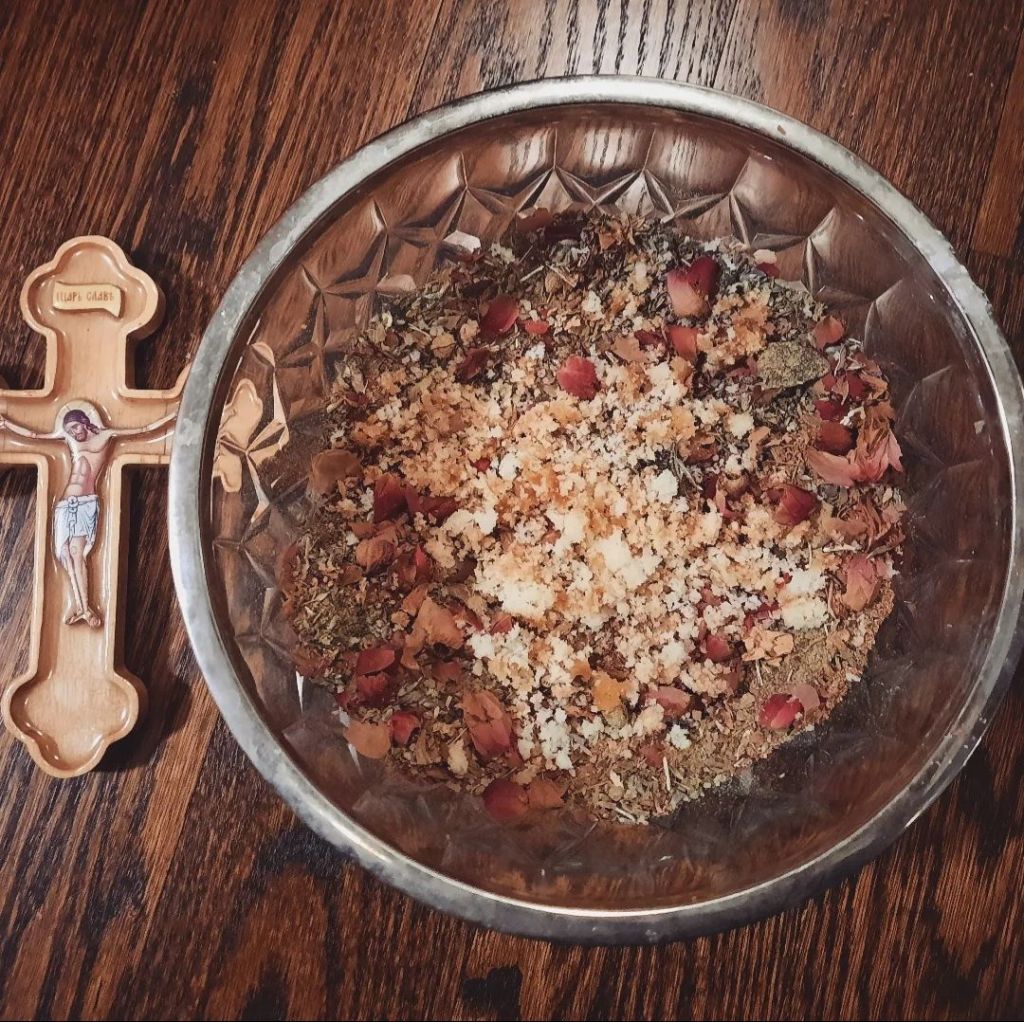
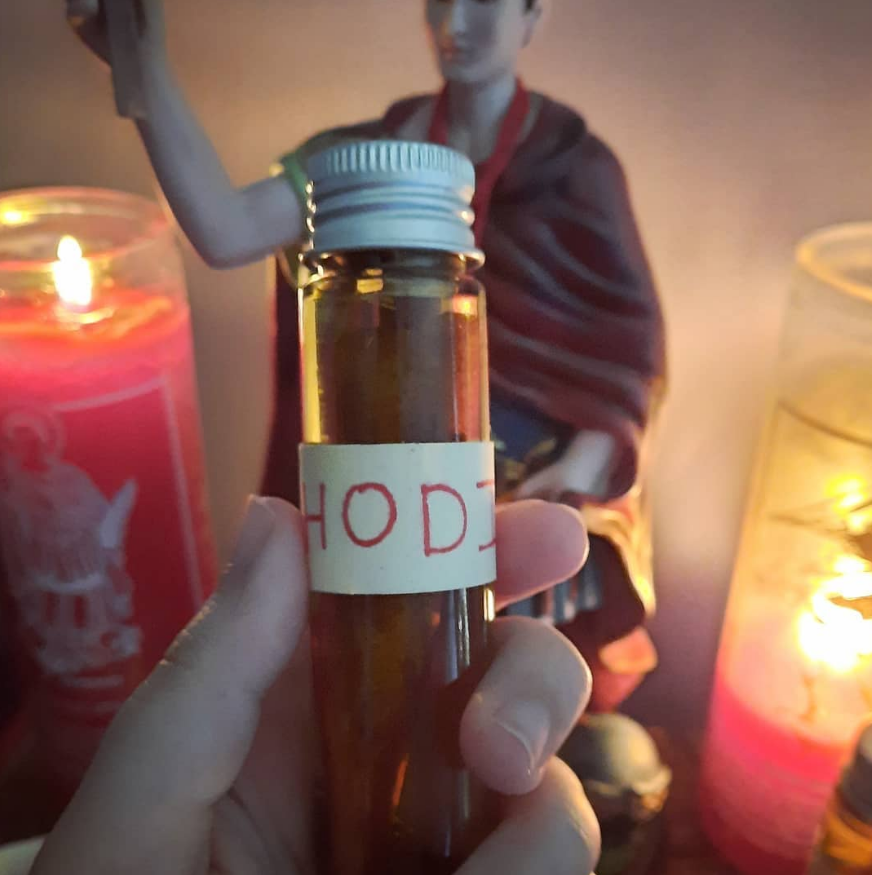

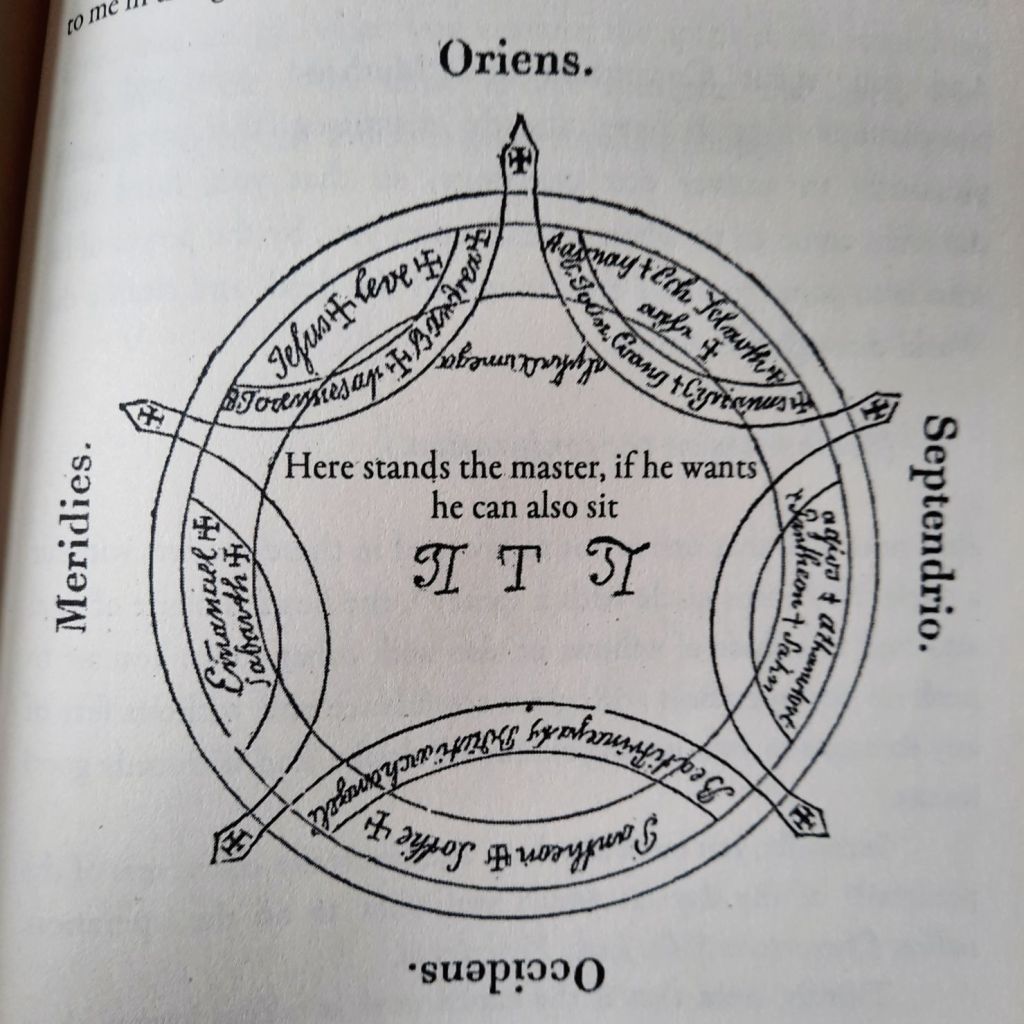
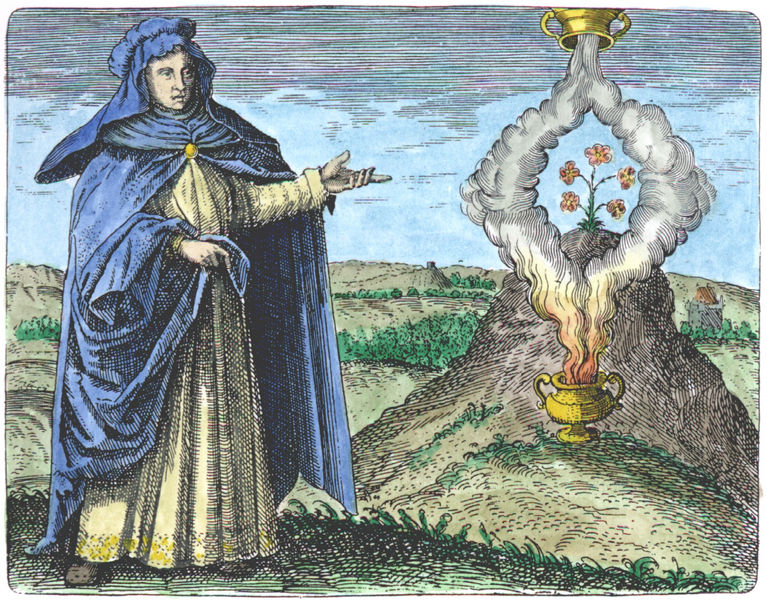

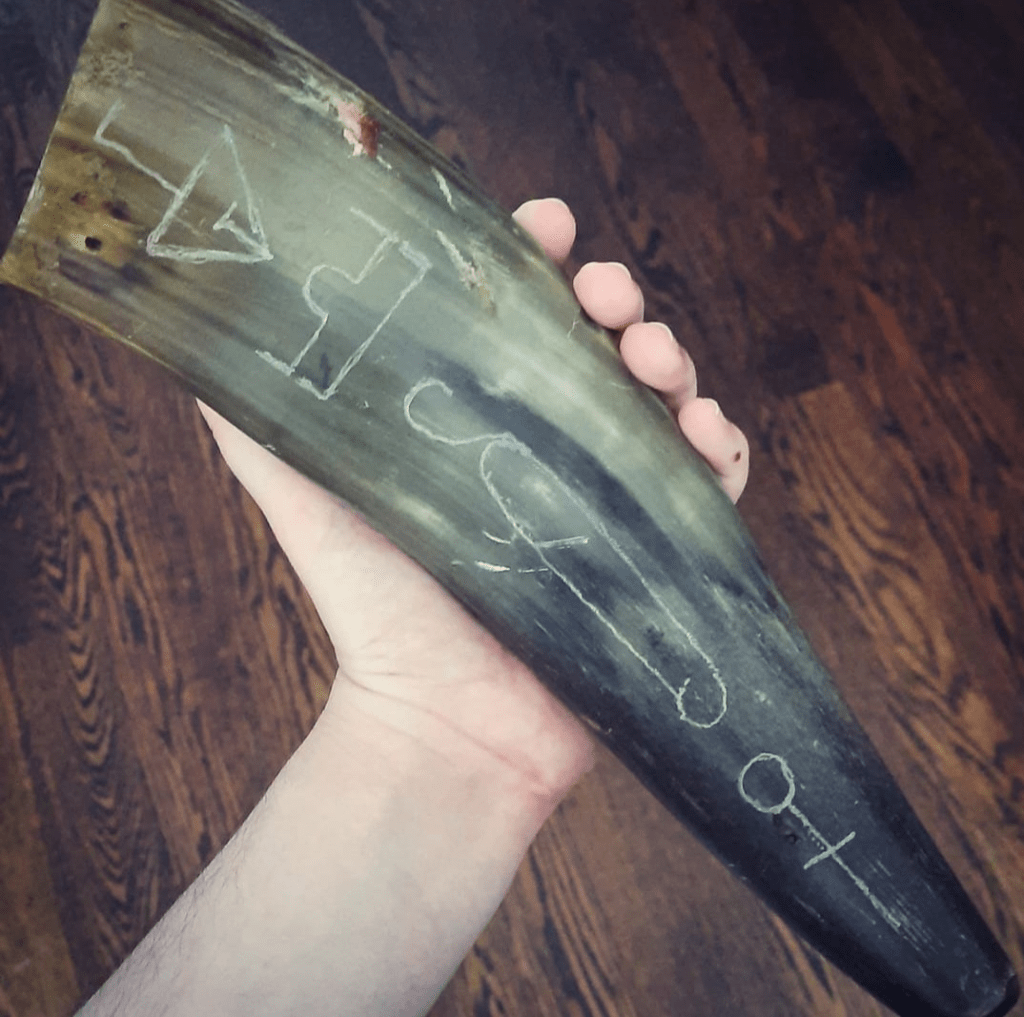

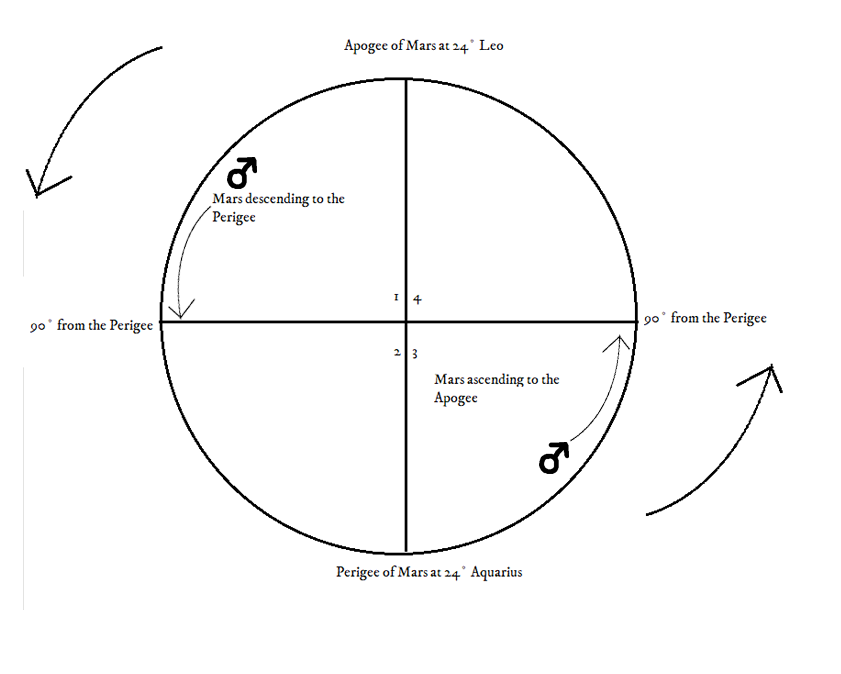
 With Cunning & Command