In continuing my experiments with Lion, I’ve been asked about one particular item more than any other – the belt. The lion skin belt itself is one of the most impressive, and thereby most elusive, instruments of art from the Lemegeton’s Goetia, which calls for the magus to prepare “The other materials [are] a scepter or sword; a miter or cap, a long white Robe of Linen, with shoes and other Clothes for the purpose also a girdle of Lyons skin 3 Inches broad, with all the names about it as is about the uttermost round Circle” (Peterson, 2025). Similar variations of the belt are found in other proto-Lemegetons such as Sloane 3824, and in Scot’s Experiment of Bealphares. Skinner, in his Techniques of Solomonic Magic, suggests that in each case, wearing lion is both to convey authority to the magician and to provoke fear and obedience in the spirits (for if the magician can have dominance and triumph over a lion, they can have the same dominance and triumph over a spirit). Due to the lack of abundant lion skin for what are hopefully obvious ethical and environmental reasons, many solomonic magicians substitute, or more commonly entirely omit, this garmet. This implement aims to bring the magician closer to the letter of the text, with an eye toward tested practical efficacy.
Enhancing the inherent virtues of the lion within the circle is the The 5th pentacle of Mars, which “…is terrible unto the demons, and at its sight and aspect they will obey thee, for they cannot resist its presence“, with its verse being Psalm 91, verse 13: Thou shalt tread upon the lion and adder: the young lion and the dragon shalt thou trample under feet. With lion, serpent, and spirit alike subjugated in the same manner as suggested by Skinner. In practice, both in my own experiments and in those of other Goetic magicians who I’ve compared notes with over the years, this pentacle serves as the ideal substitute for the belt in whole. Its hold on infernal spirits is jarring in its efficacy, as the grimoire describes, especially those lower in the infernal hierarchies. The use of lion is both prescribed, and for the aforementioned reasons, serves as an added layer of correspondence and sympathy in the performance of the art of Goetia.
I consecrated these pentacles in the usual manner described by the Greater Key, working only within the days and hours of Mars with blessed ink and consecrated tools. I performed additional consecrations and layered enchantments for personal power, subjugation of spirits, and subversion of entrenched powers in subsequent days and times, and finally sealing the enchantment before additional Angels and planetary spirits of Mars atop a tablet inscribed with the first pentacle of Mars.
The pentacles themselves are warm to the touch and have a tangible “buzzy” feeling, radiating their virtue if left exposed. Through this quality, I noticed a decrease in phenomena in spaces where this pentacle was left, in addition to prompting an exodus of astral larvae and other ambient parasitic spirits. In testing these pentacles, to say they were strongly repulsive to the infernal hordes conjured is an understatement – I have not encountered a tool so effective at demanding obedience and stripping infernal spirits of their ministers and attendants as when this was revealed within the circle.
5 pentacles are available as of 30 December 2025 in honor of Mars, and they will not be restocked once sold due to the rarity of the material. We wish you all a happy new year!
At long last, here is an offering two and a half years in the making, born of discipline, love, veneration, and deep, sorcerous hunger. In the holy names of Saints Cyprian and Justina of Antioch, the magician and exorcist, warlock and virgin, theurge and mystic, the nail of command and the palm of cunning—here are a pair of tools for the discerning karcist following in the legacy of these mightiest of exemplars.
It is no secret that these blessed martyrs are some of my most intimate and long lasting patrons, with much of my personal and professional life being dedicated to the exploration and study of their mysteries. As I am presently wrapping up a crucial project I have undertaken in their honour, it felt right to finally put out into the world a pair of magical fetishes created in reflection and fulfillment of this very journey, from the very pilgrimage Key and I undertook which resulted in us being forever changed on Aphrodite’s shores, to the thousands upon thousands of prayers collected upon each gathering of knowledge and communion. Whether you’re a devoted follower of Sts. Cyprian and Justina looking to establish a deeper relationship with them, or a karcist looking to harness Cyprian’s authority over magic and Justina’s capacity to unmake its very fabric, this pairing is born of their mutual inseparability in power and wisdom. Drawing on my training and initiation into several forms of Balkan folk Orthodox cunning crafts and oral charming traditions, as well as personal study under Orthodox folk practitioners who venerate Sts. Cyprian and Justina, both the prayer rope and the horn charm were crafted with the aim of sharing some of the potent magics that went into all the adventure and training these saints have opened the roads to across my travels.
The Virgin’s Tears Prayer Rope
The prayer rope adorning a charm and consecrated chonta wood staff.
While Cyprian’s appeal among magicians may allow his fame to at times overshadow his counterpart, it is Justina’s power that ultimately vanquished him, her exorcisms that sent back his spirits in the Confessio Cypriani, and by her grace that he came to find his eventual sanctuary within the crimson gash of martyrdom and the gleaming crown of sainthood. The holy pair are ever inseparable within Orthodox iconography, always depicted together side by side in their proselytization; their charms, spells, oil recipes, and prayers tying their fates to each other, his salvation into her dexterous hands, and her mysteries within his sinistral embrace.
This Orthodox style prayer rope was crafted in the aim of venerating the pair through the access point of St. Justina’s all-conquering prayers. An overtly Christian tool, it is designed with the Orthodox prayer rope in mind, albeit with the spacers featuring in such a way that it could be easily adopted to the use of the Catholic rosary. The main beads are howlites, woven between knots of purple (the bishop’s colour), each anointed with holy oil gathered from The Holy Monastery of Saints Cyprian and Justina in Fili, Greece. Large, authentic freshwater pearls—memories of Justina’s purity, vanquishing tears, and a marker of certain Balkan folk Orthodox mysteries relating to her magic—form the spacers, washed in holy water gathered from the font in the Church of Saints Cyprian and Justina in Meniko, Cyprus. Both churches were visited during their Orthodox feast days (on the different old and revised Julian calendars, allowing for them to be attended in the same month), and as such the materia was gathered during their very masses. Each pearl is also nestled between amethysts fed a black rooster on the Catholic feast, empowering them with the sacrifice of martyrdom and a calling out to Cyprian’s famed sorcery. The rope connects through a bone skull, itself anointed in an oil of sorcerous insight, the recipe given to me by a Croatian folk practitioner who works primarily with the two saints, and terminates in a small icon also purchased in Greece.
Woven together under the auspices of the virgin, this prayer rope is consecrated for the binding and elevation of spirits. Consecrated primarily through St. Justina’s purity and power, with flashes of St. Cyprian’s cunning woven throughout in the reddened amethysts, this tool channels the saints in their ability to tame, command, and civilize spirits, as well as in Justina’s capacity to break all enchantments. It is suitable for any and all prayers, including liturgies to the holy pair (as well as any other intercessory spirit, Christian or otherwise), the counting of mantras, and the building of power. It may be draped over candles, activated spell remnants, and the vessels of spirits to impose your petitions, increase the potency of workings, or to break a particular curse, crossed condition, or evil eye over an object belonging to or picture of a victim.
These prayer ropes are especially adept at removing the magic other sorcerers have cast. Simply uttering the Jesus Prayer over each bead, placing it over a glass of water and a white candle anointed with holy oil, and then consuming the water once the candle is burnt is enough to cleanse off most enchantments. If you feel the persistent snag of an evil eye or jealous gaze, or would like additional protection when venturing into the public, you may wrap the prayer rope around your left hand (the traditional way of carrying them when not being used) or wear it over your head as a necklace. When dabbling with infernal spirits, the restless dead, and those beings for whom vampirism is a primary nature, call on St. Justina’s aid and place the rope over your head to bestow her pearlescent caul of protection over you. The clever karcist will find many ways to drape this tool over goetic vessels, the sigils of disagreeable spirits, and dirt and materia collected from places of great violence in order to make their spirits hospitable to their commands.
There are nine available for purchase, either individually or as part of the bundle below.
All prayer ropes have sold out!
The Sorcerer’s Goat Horn Fetish
Twelve horns for the twelve disciples of Christ and the twelve students of the Black School, the thirteenth laid before the feet of St. Cyprian.
Just as the ropes were consecrated primarily through St. Justina, with flashes and empowerments laid by her companion, here their roles exchange in the creation of twelve horn fetishes. Each goat horn is filled with a matrix that has been worked on for three consecutive years of veneration, with the middle year being when the masses were attended in their monasteries in the Mediterranean. While the full list cannot be revealed, a small sample of the materia included are: dirt from three churches dedicated to Cyprian and Justina from three different countries, dirt from nine churches visited over the nine days of the Cyprians (the novena between Cyprian of Carthage and Cyprian of Antioch’s Catholic feasts), dirt from nine cemetery gates, dirt from nine priests, dirt from nine nuns, dirt from nine bishops, dirt from the grave of a dead sorcerer who worked with St. Cyprian in life, black rooster, black cat, black toad, serpent and goat materia, tears collected from their enshrined icons within an Orthodox church dedicated to them, horseshoe nails dipped in oils dedicated to Cyprian’s sorcery, an entire burnt Livro de São Cipriano, the same amethysts and pearls featured on the prayer rope, and much more.
Each portion was prayed over, offered to, and judiciously enchanted over countless nights, receiving a final consecration on Orthodox Epiphany of this year. While the base prayers and manners of conjuration were carried out in a folk Orthodox manner, these horns draw on a wide breath of Cyprianic study across traditions, including the Spanish and Portuguese Ciprianillos, Norwegian prayers from the Svartkonstböcker, and the saint’s presence in my lineage of Quimbanda. With each step requiring multiple passes in divination to be approved, these charms are some of the more complex that I’ve worked on, and it is a true pride and joy to share them. The horn shape and casing of black beeswax, pearl, and nazar beads were taken in inspiration from patuá technology, and while these charms are not themselves patuá strictly, they invoke my training in their creation as a part of my dedication to expressing my care for these saints in all the traditions that I know them in. Just as the amethysts flag Cyprian in the prayer ropes, the Nazars and pearls flag Justina here, always calling one with the other in each incarnation.
These fetishes are exceptionally versatile. Ultimately, they are consecrated for the purpose of opening roads into spiritual and sorcerous initiation—to bring their owners closer to new opportunities of study, meeting with potential mentors across traditions, the opening of roads to hidden opportunities for magical training, and the ability to travel widely in pursuit of wisdom. Inside each horn is a physical testimony to the studies I was able to undertake through the blessing and permission of many mentors across countries and cultural settings. Drawing on the legend of St. Cyprian as the chief exemplar of a Mediterranean sorcerer, who had sampled the offerings of countless mystery schools and lineages, these horns are made in dedication to Cyprian the eternal student of theurgy and thaumaturgy. On their own, even without direct use, they work to expand your network of reliable and competent contacts for the gathering of knowledge, resources, rare materia, affordable travel, and channels of communication. Simply speak your intentions into the open face where the Nazar lies and place it down by a shot of liquor (whiskey, gin, and brandy preferred) and a candle (white, red, or purple preferred if not beeswax) once a month to nourish its passive road opening, or increase it manyfold by making this offering daily and praying.
Additionally, the charms may be placed by your shrine to the saints to empower their presence, held to your mouth like a speaker to command spirits—or relay messages to the minds and dreams of others while enchanting them in ceremony—used as a wand when held point forward, and placed over other workings to empower them ever further under the auspices of St. Cyprian. While their passive benefit already is one which pierces the threads of fate to continually gather initiatory experiences, knowledge, and opportunities to you, the manner in which they may be actively engaged with in sorcery are fairly limitless. The dirt of the sorcerer who once worked with St. Cyprian within the horn acts as the “master” of all the nuns, priests, and bishops within, creating a choir that prays with and for your magical success in all your tasks. Speak into its mouth freely and allow the tears of Cyprian and Justina to shield, bolster, and purify your commands, straightening your wording and hesitation and projecting forth the ultimate authority in your workings. Even if you may swallow your tongue or stutter an utterance, the holy and sorcerous dead within will join you in their ceaseless prayer, maximizing your efforts and bolstering each petition to further compound their manifestation into reality. You do not need to be a devotee of Sts. Cyprian and Justina to work with these horns; they will lend their power to any who possess them—as well as the boldness to carve out a more potent, adventurous, and magically vibrant life.
There are nine available for purchase, each individually or as a part of the bundle below.
The prayer rope and horn together before the saints.
All goat-horns are now sold. Thank you so much for your support!
In the name of the holy martyrs Cyprian and Justina of Antioch, swift helpers of all who approach them, guide us and protect us against all enemies visible and invisible, grant us the power to resist our temptations, and in the hour of our end be our aid and lead us to victory so that we may be honoured and celebrated amongst the saints, unto the ages of ages. Amen.
Over a year ago, Key wrote an excellent reflection on his experiences performing PGM XI.a 1–40: a conjuration of a familiar spirit that serves the household, captioned as “Apollonius of Tyana’s Old Serving Woman” in the Betz PGM collection. The three of us, along with and a few friends interested in the ritual, pitched in to procure a donkey’s skull and the blood of a black dog—the necessary materia for the consecration of the phylactery that serves to conjure the goddess Nephthys, so that she may grant the titular paredros spirit of the rite. Shortly after obtaining his own familiar, as well as additional ones for friends who happened to be visiting him at the time, Key shipped the skull along to Salt and I’s home, ready for the next installment for “The Sisterhood of the Travelling Donkey”. Our plan was to continue sending the skull around, each household obtaining their tooth (the vessel for the paredros), until it eventually made its way back to us to be permanently enshrined by the hearth at our combined home.
Since the skull’s arrival at our doorstep, Salt and I came to increasingly notice its surging awareness. While it is the teeth obtained from the old woman and the donkey that are truly the vessels and proofs of pact, the phylactery of the skull had clearly come to be endowed with its own numinous presence and alignment throughout its repeated use. Even without the conjuration being actively performed—and in the case of its use, even after the dismissal of the goddess—it was clear that some portion of Nephthys’ power remained within the skull, and that this was a holy object. When not in use, we kept it veiled in linen, treating it with the utmost respect as befitted an image of the mighty queen and her consort, the mighty lord Set. Salt and I specifically have, since before we even met and became a couple, long held fast a religious devotion to various Netjeru (Ancient Egyptian divinities), and so the phylactery had an additional layer of significance for us in our private observances.
The skull atop its linen veil by the hearth.
Over the year, we’ve hosted many friends who have visited for various lengths of time to hang out, cook incredible meals, and get up to plenty of sorcerous adventures. In most cases, we actually got up to so many different projects that I had to draft an entire Google doc itinerary of planetary hours, elections, and roadmaps for where we’d go to gather what materia and what we had to enchant for at which time. In each moment, we intentionally tried to carve out a time to allow them to have their own midnight jaunt with the phylactery, especially as these were the very same folks who helped pitch in for its obtainment from the beginning. Yet an omen always arose for why it was not yet appropriate, even if temporally it would have been convenient for us all (shipping a donkey skull around is not fun!). In one case, we were about 20 minutes to the midnight hour, all dressed up with the wrapped skull in an IKEA tote, ritual printed off and candles for illumination at the ready, when I suddenly felt a distinct and knowing pang that led me to consult one of my closest spirits with their divinatory oracle about the matter, only to be told to call the rite off. The messages varied in each instance. Sometimes it was that our comportment was not sufficiently pure, in that even if we had all showered and donned clean clothes, something about our moods, excitement, earlier festivities of partying and revelry, or even the stench of the witchcraft we had been engaging in lingered still, rendering conjuring the goddess inappropriate. In other cases, the reasoning was even more nebulous, yet still felt by all. There was never any disappointment with regards to the timing—all present agreed something was “off” and that the skull phylactery would not consent to us proceeding with the ritual.
Naturally, I decided it would be better to ship it along immediately to keep the chain going, yet even this was interrupted. I could not shake that I should not yet part with the skull, and that there was still something left to do, or at the very least that it required some fulfillment still before being sent away on its long journey around and then back to us. Divination continued to advise for patience, as well as the completion of oaths already undertaken. I meditated for some time on what this may be, and continued to feel a nagging impulse that something about this entire scheme had to do with Salt in particular. Yet, the tooth we procured is to be shared between us, for our good lady paredros serves our combined household in which we live. We knew from the beginning that he would not be soliciting another, so what exactly was missing?
The answer came to us in vision in a truly illuminating and instructive fashion. Some time ago, Salt decided that he should procure a familiar from this ritual for his mother back in England and send her the tooth to assist her. By rank, she had to be next in line before any other. In other words, while sometimes the “vibe” was genuinely too off to proceed with the purity requirements of the ritual, the reason why we kept feeling as if we could not ship the skull yet to its next destination regardless was this essential matter in household authority. Before the goddess’ phylactery could impart its next boon, its blessing must first be addressed to the very person who kept Salt’s house throughout his childhood.
With this complete, the skull is now free to travel to its next keeper, passing all the necessary checks in omens and auguries. In addition to sharing our own experiences with the ritual (and again affirm its efficacy and usefulness to those discerning karcists interested in attempting it themselves), we wanted to give an example report of how the nature of the rite itself is imprinted in the very ethics of how it is conducted. If an agreement has been made to share a skull between sorcerers, and one of its intended beneficiaries is one of their mothers, then by rank she must inherently go immediately. Since the skull is ultimately going to remain with us once it has completed its circuit, Salt and I were planning on carrying out this additional rite then and giving it to her in person when we next visited, but the phylactery’s numinous awareness was adamant that the essential order of the proceedings must honour her first. As the paredros granted participates in the domestic mysteries, it is only right to address first whomever has played an essential role in one’s own life in such a manner, if they themselves are one of the intended recipients of the rite, regardless of the temporal proceedings of our visitations.
Without further ado, below you’ll find the accounts of what our individual experiences of performing the rite are—myself and Salt together for our own assistant spirit, and Salt’s when he conducted this another time.
When the night came for Salt and I to accomplish this undertaking, we first began by ensuring we were clean, freshly showered, and wearing new clothes. I printed off a copy of the ritual as it appears in Betz from the composite screenshot in Key’s post and prepared some candles and a candle holder so that we would have the light necessary to read it in the dark. With the skull wrapped tight in hand, we made our way to the middle of a three way crossroads, unveiled the donkey at the center of the fork, and lit the candle. I had my left foot over the skull as instructed, while Salt held onto me with the same glyphs beneath him.
Key’s experience with the ritual matched the level of intense manifestations and physical omens I witnessed in my own working of PGM IV. 3086–3124: The Oracle of Kronos. While none of us are strangers to those kinds of manifestations across our individual and shared traditions, they never cease to fill us with wonder and awe when they do occur. From the beginning of the first recitation of the formula, Salt and I immediately saw the otherwise still night air whip up into a frenzy of howling winds. The more we chanted, the more it screeched, shaking the trees and forcing us to continually shield the candle flame with our bodies so that we could read from the text. We saw the goddess appear top her donkey midway through the second repetition, swiftly appearing in all her brilliance, beauty, and divine splendor. Salt and I were stunned into silence by her theophany, bowing our heads swiftly at the sight of the beautiful young maiden sat atop her steed, her skin a vibrant gold and her hair extending into the night sky in streaks of lapis, jet, and labradorite.
An image of the rite as it appears in the Betz translation, pages 150–1.
The dialogue proceeded roughly as the text describes. We stuck to the script, replying as the rite advises. When the goddess dismounted her steed (which appeared to us black with glowing red eyes, evocative of her husband Set), the light that illuminated her from within shifted, her skin sloughing to become that of an old woman, spots forming along her wrinkles, hair turning course and draining of colour. She only took this form momentarily before quickly receding into the shadows, within a blink taking on her earlier form. Scholar Eleni Pachoumi, in her article “Divine Epiphanies of Paredroi in the Greek Magical Papyri“, notes a similarity between the drama of this ritual and a scene from the Gnostic Apocryphon of John, from the Nag Hammadi library. John witnesses an epiphany in which Jesus first appears to him as a splendid youth, then as an old man, then as a servant. In this ritual, Nephthys first appears as a beautiful maiden, then takes the form of a crone herself, before eventually differentiating, emanating the old woman as a familiar spirit to be imparted upon the magician. We implored her to not leave, and that we would keep her until she grants us the old woman, at which point for the first time Salt and I saw the both of them, with the latter emerging from behind the steed of the former, pacing out from behind its tail.
At this point I felt a shift within the skull beneath my feet. While Key found a tooth already manifest outside the cloth as he was carrying the skull to the site of the ritual—somehow emerging from the tightly-bundled phylactery with a supernaturally loud clang on the pavement—we experienced a tooth visibly begin to wiggle and clatter about with the winds. As we gently moved to touch it, the howling air screeched even further, going from whipping from each direction to swirling around us, creating a visible circle of air that continued to lift higher, sending my hair up into the sky while the tunnel flexed towards the heavens. Throughout our dialogue, Salt and I continued to hear the physically audible barking of dogs and the braying of a donkey, as well as a persistent sound of bells ringing in perfect harmony. There was a moment when I thought there must have been several people with incredibly loud and animated dogs walking around at midnight in the middle of nowhere, but it was immediately obvious that there was no one around but us.
Salt knelt down to examine the skull under my foot, and carefully withdrew the wiggling tooth, which emerged easily into his hand. The rite says that the goddess will take from the old woman one of her molar teeth and a tooth from her steed and give both to you, after which it will become impossible for the spirit woman to ever leave you unless you burn the teeth. What we saw was the goddess retrieve these two teeth as described, present them towards towards us, and then merge them from physical apparitions into the body of the donkey’s tooth that had loosened and fell from the skull. Once we were absolutely certain that the pact had been signed, we scryed the tooth together, confirmed the presence of the old woman, and gave the dismissal. The goddess did not waste any time, mounting her donkey immediately and galloping off into the mists beyond the horizon. As soon as this was done, the cacophony of sounds—braying, barking, ringing, howling and all—ceased entirely, returning us to the silent and still expanse of the crossroad.
The next phase was carried out once we had determined the source of the delay. I was not present for this round, rather it was Salt alone who went to the crossroads. From conjuration to dismissal, he completed the ritual in record time, with all the same physical manifestations returning as if there had been no temporal distance at all. While in our first attempt, the tooth that wiggled forth was a molar, here Salt noted that all the teeth were completely fixed, rooted even deeper within the skull as if none of them had ever come loose, save for one incisor in the front that popped out immediately. The goddess made an additional instruction of him, as this was petitioned by him on behalf of a relative as opposed to purely for his own benefit—and especially as he had already solicited a familiar from her collectively as part of our collective domestic realm as a couple. With this agreed upon and sworn, Salt was able to complete the ritual swiftly and return to our home with his prize in hand, ready to be given over to his family.
Now with the skull freed up to go on its merry way to the next sorcerer, the three of us are even more excited to see what results will come of their own explorations. Our pool of experiences has widened to include several attempts now, each showing remarkable consistencies between manifestations, immediate proofs of power, the efficacy of the familiar spirits granted, and the entirely physical and immediately verifiable nature of the ritual’s conjuration. Not only can we vouch for the power of the ritual, we can confidently recommend its reliability through multiple tests.
Inspired by our recent bespoke talismanic work, and much-teased on our podcast (that more such charms are indeed coming!) I’m proud to offer a new ally to our kind readers and listeners: protection chaplets diligently crafted under lamplight reflected by the watchful wolf-eyes of St. Christopher.
The talismans receiving blessings following their assembly.
As much-beloved protector and guide for all three of us at With Cunning & Command, St. Christopher is the immensely popular cynocephalic patron of travel by land and sea, athletics, bachelors, and surfing. A deeper analysis of the figure of the dog-headed warrior reveals a deeply-rooted identification with Hermanubis and resultant patronages of the dead, exorcism, treasure hunting, storms, gardening, conditions such as epilepsy and the plague, and of course the mysteries of wolves and dogs (all deserving of posts in their own right).
His most exoteric magical function is, however, situated in his protection of travelers, especially those on long journeys. Images of St. Christopher carrying the Christ-child are said to have excellent protective properties toward this purpose, so great in potency that simply viewing an image of the saint is said to be equivalent in spiritual benefits to receiving the Eucharist, prevent illness (especially plagues), and to avert any sort of sudden death. This lead to a massive proliferation of materials related to his cult, especially throughout Europe and the Americas—in a survey of images conducted for the British Archeological Association in 1904, a Mrs. Collier reports that his images were only outnumbered in English churches by those of the Virgin Mary. As a result, St. Christopher metals serve as the protection talismans par excellence in the popular imagination and find instantiations in folk magical traditions the world over. For these talismans, I decided to fuse the two most common protective modes for drivers and travelers that incorporate these properties: the charm bag and the rosary.
As recorded in Cat Yronwode’s book Hoodoo Herb and Root Magic, “A red flannel mojo containing Mugwort, Comfrey root, and a Saint Christopher medal is said to provide safety and protection to those who visit foreign places or venture away from home, and to make journeys more pleasant by eliminating interference in one’s travel plans.” The full composition of these charms will by necessity remain secret, but the core around which they are built is composed of the same mugwort and comfrey, each empowered and focused in their tasks by additional materia. Rosaries also serve as powerful and near-ubiquitous protective talismans throughout the Catholic world, especially seen hanging from the rearview mirrors of automobiles. This tradition has spawned various forms of rosaries and chaplets specifically made for this purpose, a set of which I repurposed for the construction of these talismans. The prayer that adorns the reverse of the image of St. Christopher reads: “São Cristóvão e São Miguel, protegei este motorista aqui na terra, para que ele não chegue adiantado no Céu!”, meaning: “Saint Christopher and Saint Michael, protect this motorist here on Earth, so that he doesn’t arrive early in Heaven!”
While a little more straightforward in its construction in comparison to other talismans I’ve created, these particular chaplets differentiate themselves through effort: they received extensive daily blessings and lavish offerings on my shrine to St. Christopher over a period of six weeks, culminating in various rosaries being said on each individual set of beads, and the charm bundles being fumigated through a sequence of astrologically elected incenses to further construct the enchantment. This particular diligence reflects the number and nature of the dangers inherent to the act of driving, each of which requires the utmost care in its aversion.
All St. Christopher’s Protection Chaplets are sold out. Thank you for your patronage!
Greetings, all! Ever since we released our podcast and its Patreon, a staple offering I’ve been making available to our Patrons has been the monthly Astrological Almanac & Ephemeris. It’s been a true pleasure seeing everyone’s responses to it, and how creative many of our Patrons have been with their applications of the Almanac to their own practices.
Now that it’s September, I wanted to release last month’s issue to the blog, so that our beloved readers and listeners alike can get a feel for what this project actually is and entails. We’ve received many e-mails inquiring about this offering, so without further ado, here’s the August 2023 issue as it appeared on our Patreon:
This monthly e-zine is meant to accommodate those who have interest in astrology, as well as practitioners of folk magic, traditional Western and Galenic medicine, gardeners, farmers, and anyone else with a mind for the stars and the patterns of the sky on their craft. Each issue includes a number of different subjects, spanning electional astrology, articles on particular trees and herbs, monthly prognostications for particular horoscopic signs, astro-meteorology (or weather) prediction, as well as a calendar featuring daily Psalms and Saints for the particular days of the month to help you in consolidating your ritual calendars. In addition to all this, we also include an Ephemeris, giving the positions of the planets for each day of the month. Finally, we have the Voice of the Spirits, a monthly report presenting useful advice for those amongst our readers taken directly from a spirit-informed divinatory oracle on behalf of our Patrons.
Whether you want to look at the best day for a ritual purification, exorcism, what day would be best to use herbs belonging to Venus, or when the best time to administer a herbal treatment is, our monthly almanac aims to provide useful and condensed, immediately actionable advice on approaching all these topics and more. If you’d like to subscribe for access to the almanac as well as numerous other perks related to our podcast, myself and my co-authors and hosts would be honoured to have you at our Patreon. Our one (and only!) tier grants you access to our monthly magic Q&As, the ability to suggest episode topics, first dibs on new offerings at the website, and our show notes.
Thank you all so much for your continued support of our podcast, and stay tuned for new offerings and charms we’ve been hard at work on!
Over the past nine days, I recently had the immense honor to visit some very magical friends, namely Sfinga (at whose home I stayed for a much-needed reunion—we had not seen each other in person since my initiation into Quimbanda last October, where she was present to facilitate the rituals, having just seated her own Pomba Gira as well), and the talented Mahigan of Kitchen Toad. This trip was amazing—alongside traveling, dining, drinking, beautiful conversations, and other revelry amongst friends, we had the opportunity to dance with and walk among our spirits and the beautiful menagerie of wights in the otherworldly ecosystem of the city.
Among all the magical shenanigans we got up to, from creating powders and talismans (posts forthcoming!) to conjuring spirits and performing firmeza at her tronco, Sfinga and I decided we wanted to perform some form of larger, grimoiric, conjuration. After looking through her extensive library, my spirits brought my attention to one of the books on her shelf: Nicolás Álvarez’s The Key to Necromancy: Volume II from Enodia Press. Sfinga and I immediately began to scan through the text and settled on a ritual that can only be performed under the light of a full moon on Friday—which happened to be the very next day.
The ritual is a straightforward, four-page long jaunt that promises “To Bring A Good Spirit Into A Glass”, requiring only a circle, a glass of water in which the spirit can manifest, some incense, and a conjuration. The grimoire states that while the ritual must be performed on a Friday full moon, the planetary hour in which it takes place can be flexible. Instead, the angels summoned (as well as the rite itself) will take on the character of the hour, and if the conjuration lasts past a full hour and into a new one, it will take on a hybrid nature between the two planets. In order to determine which planetary hour we should summon the spirits in, I performed a brief prayer and divined via geomancy, taking the planetary association of the judge as my answer, being Mercury.
We drew out the circle in chalk on the floor, and prepared frankincense and myrrh, consecrated black-handled knives for the two of us, a leatherbound journal to record the seals and information we receive, and a glass of water in which the spirit may appear at the easternmost point of the circle. In the grimoire, it is specified that the sun should be able to shine into the glass of water, and since we performed the rite indoors, we set a candle consecrated on a Regulus election behind the glass, into which we submerged the fourth pentacle of the Sun (engraved and consecrated by Sfinga and our mutual close friend, for the perception of spirits). We donned our Solomonic rings and pentacles, traced out the circle with the knives, fumigated it with incense, and finally, stepped inside its borders to begin the conjuration.
The grimoire states that the spirits will “certainly appear to you” after three repetitions of the conjuration at most. The entire command is surprisingly short, so this took us by some surprise, though we posited that the power was likely in the timing of the Friday full moon on which date these spirits are sworn to appear, much like with the Tuba Veneris. As for the spirits themselves, the intention of the rite is to conjure the angels Coronthon, Mutheon, and all their companions, so that they visibly appear in the glass and answer every question truthfully. Álvarez suggests in the footnotes that Coronthon is the same as Coronzon, the spirit present in the 1665 edition of Reginald Scot’s Discoverie of Witchcraft, in the spell “How to conjure the Spirit Balkin the Master of Luridan“. In this rite, Coronzon is referred to as a mighty prince, who guards the operator from harm, and whose name is given twice on the bear-skin girdle. Our goal was to learn as much about these spirits from their own words as possible, to determine their nature, offices, relations to each other, powers, secret seals, and verify for ourselves their power and accuracy.
We felt the pressure in the atmosphere build during the first two repetitions, though there was no immediate manifestation. However, during the third repetition, the winds shifted outside and several knocks were heard on the wall, accompanied by trembling in the earth (the floor quite literally shook physically in the house, like there was a minor earthquake). We were especially intrigued by this, given that we were not performing the rite outside, but rather indoors, with the sun streaming through the window into the glass magnifying the fourth pentacle of the Sun.
After the third repetition and a brief delay, a white pillar of light appeared in the glass, which appeared physically like a door to the heavens opening, out of which stepped a mighty figure. He was quickly accompanied by a companion spirit, and the two were in turn joined by a swarm of other exquisite beings. The first two spirits identified themselves under oath as Coronthon and Mutheon. While we will keep the record of their appearance private, it is important to note that both, while clearly non-human, took on more explicitly human forms than how Sfinga and I are both typically used to perceiving angels. The conjuration does instruct the spirits to appear in their “nicest form and shape”, and we later commented to each other that this was likely why they were so pleasing and ethereal to behold.
Our interrogation of the spirits proceeded, with questions of office, abilities, history, and nature answered rapidly and pleasantly, all while a retinue of fiery spirits and angels continued to pour forth from the heavenly door to surround Coronthon and Mutheon. This back-and-forth continued for close to an hour, with Sfinga furiously recording everything that was heard in the leather journal. Their responses were heard clearly, and both of us were able to quickly and effortlessly communicate about them back and forth without any delay or pause. The spirits were surprisingly pleasant to speak with, eloquent yet direct in their responses, while being polite and forthcoming when questioned. Both of us were able to simultaneously receive identical messages, visions, omens, etc. throughout, at one point even becoming aware of the other’s thoughts telepathically, communicating wordlessly our reactions and thoughts. Neither of us had ever experienced such a melding before—generally, when performing such rituals with another sorcerer, the rituals would typically take on the character of one person becoming the conjurer (giving the questions) and the other the seer (being responsible for receiving the answers), even if these roles were not determined prior to the rite. Yet in this case, the manner in which the angels communicated was so clear to us, that we would simultaneously hear the same responses down to the syntax used, and even talk over each other at the same time to communicate the very same impression and vision. When our thoughts began to merge, it felt as if we were instinctively communicating with each other as spirits, without the delays of flesh.
As the hour Mercury came to an end—at which point the grimoire specifies that the character of the spirits would hybridize with next hour, being Lunar—a bead of wax atop the candle slid down the side, forming a waterfall of fire which ultimately carried the flame off of the wick into the vessel. The flame quite literally glided down the side of the candle, plunged into the base of the copper vessel in which it was being burnt, and extinguished itself in the pool of wax below. Then, the wick re-ignited atop the candle, and continuously expanded to become a large pillar of fire enveloping the crown, becoming two distinct flames, then four, then back to one in response to specific lines of inquiry (which again were answered swiftly and pleasantly). The retinue of spirits surrounding the angels changed as well, taking on a more ephemeral and wisp-like character.
At one point in the evocation, we began to remark to each other that we could see sparks flying forth from the mouths of the spirits as they spoke, at which the candle began to sputter and pop violently, sending small flames that physically danced around the circle, sprayed into the air, and at one point jumped into the circle, where they mysteriously persisted on the floor until they were extinguished with the blade of one of the black-handled knives.
After Sfinga petitioned the spirits to be granted a particular boon (in line with what the spirits themselves confessed to their offices and powers being), a large ball of wax climbed and aggregated atop the candle, ignited, then fell into the base below, taking with it yet another flame that continued to burn until the end of the ritual. This ball appeared as a meteor falling from the sky, piercing the atmosphere, and continuing to burn once in the Earth. The candle collapsed immediately after this, yet, most intriguingly, the wick itself physically rose from the pile to stand upright without wax, coated itself entirely in flame, and continued to burn. It looked exactly like a figure rising from a grave, as instead of extinguishing itself in the pool of melted wax, it simply rose until it was perfectly erect vertically. Witnessing the candle’s flame be manipulated so freely and dramatically, including extinguishing itself only to rise and re-ignite in direct response to questions (and in physical manifestation to the visions given) was especially beautiful.
Interestingly, the grimoire states that that one “must also have and know the characters of the planets on the day on which you want to do the operation”. We took note of this prior to the conjuration itself, and later found precisely why this clause was included. The angels frequently produced these seals in the glass, as well as to our spiritual perception, in response to questions (as in “delay until such and such planetary hour”, “do that ritual on such and such day”, etc.). For example, after Sfinga finished her petition and was granted the request, I wanted to obtain the exact same result, but was told to wait until a different planetary hour, whose character would imprint upon this boon and manifest it in a way that would be most conducive to me. Sfinga immediately perceived the same instruction, having a simultaneous vision that I both a) wanted to do the same petition as her (I had not articulated this verbally in the circle) and b) was told to summon Coronthon and Mutheon later during the exact same planetary hour I received instructions for.
We received secret seals for the two of them, and were given several operations to carry out in accordance with the lore they revealed on their nature, what kinds of angels they are, what their offices are, and what they are capable of granting, so that we can call them up without the ritual and circle framework in the future and continue to work with them in our own capacities. Further work with them, through these seals and signs, can now take place for the both of us without having to wait for the next Friday full moon. Suffice to say, this was an incredible experiment and one we can both whole-heartedly recommend as a fairly simple yet marvelously potent rite for anyone to carry out, provided the timing is right.
Since I initially wrote about my journey crafting the tools necessary to work the Tuba Veneris as my chosen ritual magic grimoire in 2019, I have regularly received e-mails, communication, and all manner of questions concerning what exactly happened since I completed my toolkit. Even in Discord servers and other chat groups that I’ve joined, as soon as I’ve noted my blog, the first question I receive privately tends to be about my experiences with this rarely-worked little grimoire, what my results so far have been, and what the nature of the spirits are, their offices, powers, manifestations, and deeds. It has been two years since that fateful Friday new moon when I consecrated all of my tools—including the second Horn I had mentioned procuring—and I have not publicly noted outside of my private circles of friends what exactly has transpired with the book since. An update is certainly well overdue.
Since the August of 2019, when I performed the consecration and burial of the tools by a riverbank once more, I have been working with the implements and conjuring the six spirits fairly regularly. I had mentioned in an earlier post that one of my goals was to test whether using either Horn made a difference. To reiterate: the first Horn was consecrated on a separate Friday new moon with my Seal and Book, and the second was carved, consecrated, and re-buried with all the original tools once more on the next Friday new moon the same year, in August. The only difference between them, besides the date of consecration, was that I knew that the first Horn had been severed during a Friday afternoon, but the person who had sold it to me could not recall precisely what time.
The second, however, was intentionally cut precisely during the necessary time according to the grimoire, and I wanted to check whether there was any difference between the two in terms of potency during the conjurations. It turns out that there was ultimately none, or at the very least none that I could detect. The spirits, when summoned, appeared readily regardless of which one I spoke the call through, and their manifestations were equally as potent. I concluded that the consecrations on both were sufficiently carried out, and have decided to save the first as a shrine piece on an area I have dedicated specifically to Venus and Anael as a result of all the work I have carried out with this text, and her continued patronage of the art. I use exclusively the second, not just because of its origin, but rather because its size is more pleasant to wield and the engravings I had made appear far more striking, bold, and pleasing to my eye. Below are the images of this Horn prior to consecration, shared with the permission of my spirits:
I’m really so thrilled with how it came out, and that I managed to fit all the seals of the six spirits on the one side without having to squish any of them, naturally growing in size as the horn itself expands in width. I tried to make haste with the engravings during that hour in order to have enough time to both consecrate the tools through the smoke, and run outside to the nearby forest by where I live to bury them at river that passes through it. I was working on a giant table where I had printed out Jeffrey S. Kupperman’s recreations of the seals (from Teresa Burns and Nancy Turner’s translation of the Tuba Veneris) in order to better copy them, already dressed in my outdoor clothes for the trek. I really did not want to have to wait for the Venus hour well past midnight for convenience’s sake (even witches and Quimbandeiras must sleep, allegedly), so I wanted to make sure I could do everything in the same planetary hour—a task thankfully made possible by my home’s convenient location by that forest and river.
There is actually an amusing story to go along with the second Horn’s consecration. That August afternoon, as I was sitting with my spirits in eager anticipation of the nighttime Venus hour, one of my familiars reminded me to once more read over the grimoire’s text. It suddenly dawned on me that the engraving tool one uses to for the Seal and Horn must be “a new and pure iron or steel instrument”, and my engraving pen was certainly not new or pure—I had used it for the first time on the prior round, and since then it has seen much use creating Salt’s astrologically elected talismans, Solomonic pentacles, and all manner of such instruments. As soon as I realized this, I sprinted out the door and grabbed the bus to the nearest hardware store to purchase a new one with only a few hours to go, and returned home victorious with a sufficiently virgin tool. This was certainly a humourous lesson for me in always double-checking my inventory before such important dates!
Needless to say, rolling out my beloved Circle, unwrapping my Book, Seal, and Horn from their linen coverings, lighting a healthy green taper and preparing a copper dish in which to scald the wax seal of the spirit (should it be disobedient) has become a fairly regular Friday evening activity over the past two years. I set out initially to work this text out of a curiosity, and later sincere magical intrigue, as I detailed in my first post [here]. It’s a fascinating text with many strange, almost pagan elements to its setup, with a ritual structure that is not only simple but uniquely short. The tools were attractive to me, and my spirits had given me the go-ahead to attempt it. Now, I can happily confirm that the entire process was deeply worth the effort. While an unpopular text in early modern magic and grimoire tradition circles, I hope that my reflection as someone who has worked the book to the letter, having crafted each tool precisely to its specifications, may encourage others to attempt the same work.
This text has become my primary grimoire of choice in its efficacy, power, and speed—when I have need of the assistance of its six spirits, or simply desire to work with them again instead of one of my allies in Balkan traditional witchcraft, Quimbanda, or any other system and initiation I keep more closely to my chest, I will await the Friday evening Venus hour of that week and call them forth with the Horn. In the past two years, I have never needed to recite the conjuration more than three times for the spirit to visibly appear—a record that has certainly shocked me, given that the calls are so short, consisting almost entirely of a few lines of barbarous words, bookended by the chosen spirit’s name. The manifestations of the six have varied with intensity, though their presence has always been entirely unmistakable. They have often paced the Circle’s edge, disturbing physically the objects in the room, causing apparitions and poltergeist phenomena in my ritual space, bringing with them changes of weather outside, shadows, streaks, haze, mist, pressures and alarming sensations in the body, deep trances and visions of their forms, and visible, physical manifestations of their beings in the air.
To this day, the six seals I made out of green wax and soot two years ago have remained undisturbed. Friends who have visited me and seen the space where I keep them have remarked that not a single one is blemished—this is because I have never had need to make use of the disciplinary procedure by which the spirits are reprimanded for being uncooperative, in which you heat the copper Seal around your neck in the candle flame and place it over the wax to melt and torment the being. Not a single conjuration have I experienced the spirits rebelling. I have consistently approached them politely, emphasizing amicable cooperation between the two of us in the name of Archangel Anael and the Holy Trinity, and have implored them to swear to speak the truth clearly and without any ambiguity by those same names, and have not been found wanting. Even the most sinister of the six, who speak in sly, envenomed tongues and slither about the perimeter of Circle, words dripping with lurid cunning, have kept to their oath, honoured my efforts as one who has carried out the work, and done good on their tasks I have set them out to accomplish. I suspect that one of the reasons I have never needed to take a more aggressive approach is because I speak every command, negotiation, and even mundane comment to them in our communications directly through the Horn. Another likely one is also that my guardian spirits and familiars are always ever-present with me, so even in the Circle itself I am never fully facing the daemons alone.
Ultimately, the results I have achieved with the grimoire have been superb. They have brought treasures, financial upheavals for family, assisted in business as well as domination, ruined enemies with curses, given accurate information as spies upon chosen targets and institutions, manipulated bureaucracies in the favour of friends, and assisted with all Venusian matters. They have revealed instructions for amulets, tools, and talismans (often favouring copper as the main medium—an old copper blade I’ve used for years as a witching knife has also come to serve a dual function now with the Tuba Veneris), assisted with other folk magic I have brought into the circle with them (including rootwork!) and further assisted with education, language acquisition, given details on the spirits of other grimoires and their uses, provided verified shortcuts to other such texts, and provided knowledge of “hidden” and “occult” virtues of various kinds.
While the grimoire itself does not differentiate between the offices and powers of the six spirits, only stating generally what the abilities of the work itself are for the magician, I have since filled my Book’s pages with notes in the same dove quill and ink on their individual characters, forms, special talents, preferred manifestations, and so on after much experimentation. I have also kept a log of their myriad successes within the pages as proof of their cooperation and further incentive to build on this working relationship between us. Many other familiars from across systems, as well as deceased magicians I have conjured for assistance and further education in better sorcery, have since lent their advice and nurtured my progress with the Tuba Veneris in how to better work with these six. It has certainly been nothing short of exhilarating, and I have been encouraging friends to give the grimoire a try when they are willing and able to dedicate the time to it, and naturally if their own spirits advise it. Perhaps by the following year, by the time the next Friday new moon rolls around, we will have some other testimonials and guest posts on here concerning the same!
Regarding the six spirits, I will be keeping the information I have learned about them to myself, sharing only with those who are also actively working the grimoire and can prove that they have made tools. They have on many occasions expressed to me that this entire work was one given to the text’s author by Anael, as a shortcut in and of itself into her arcana. Much as one might conjure one of the 72 demons of the Goetia, or from any other such spirit list, and once having successfully manifested them, implore the demon to reveal a secret name, seal, hand gesture, timing, or other such instruction to swiftly (and without all the lengthy conjurations and procedures!) manifest their powers again for the magician on account of their cemented pact, it appears that the procedure detailed in the Libellus Veneri Nigro Sacer is, at least according to the spirits as they’ve spoken to me, one such example of a “revealed” method of efficiently accessing the servants of Anael as the Black Venus. What exactly the “Black Venus” is apart from the planet at night is also a mystery I have explored, not only through this book but also in my own witchcraft. Needless to say, the six have often stressed that this very “little key” as they have called is not one that has been often worked, and that they have historically been rarely called by only a handful of sorcerers compared to other grimoiric spirits they are aware of, and whose hierarchies they have intimate knowledge of. As such, I think it is fitting to keep the book’s treasures among those who are actively engaged with it and can be counted as friends in magic.
As it is now among my main systems that I regularly go to, I am in the process of furnishing a shrine space dedicated to Anael and Venus, complete with the pentacles of Venus from the Key of Solomon, copper pots that house their seals among other materia and charms, various talismans and amulets I’ve made with the spirits’ instructions, my Book and tools, and other such items. I plan on painting a good kamea as well as a kind of “table of practice” for some of them to sit on as well, just because I think it would be fun, frankly. Much as with any grimoiric practice, once one makes the initial compacts with the spirits, the work will take on a new life of its own, merging with the organic elements of magic already present within the sorcerer’s life, receiving input and commentary from their spirits and allies, taking shape in their lives and in the heart of the needs to which they conjure the spirits forth to address.
What started out as a fun little side project has become a staple of my craft. It would be lovely to discuss the more intimate details of the work with those who come to attempt the grimoire in the future, and I sincerely hope that my testimony that this is indeed a worthwhile system to pursue may inspire others to do so as well, and to further shed light on this rarely-discussed text. The most difficult element is the Horn itself, given the manner in which it must be procured (severed from a live bull during the Friday Venus hour). My recommendation is to perform a road opening with one’s spirits to bring about the Horn more easily, whether by divining among a selection of horns for purchase which one was cut at the right time, or by meeting the right person who is preparing to dehorn a steer on their farm and paying them for the extra trouble of waiting for such an hour to do so.
All other elements are remarkably easy to procure and craft, and the conjuration itself is incredibly short and efficacious. Even the Seal is easy to make; one need only to buy a fresh pair of tin snips to cut the hexagonal shape from a copper stamping blank and affix a jump ring and chain for easier wearing during the appropriate times. I was especially careful to ensure that every step was carried out during the appropriate Venus hours, just to be absolutely certain, but I would encourage those interested in the text to always consult their own spirits for the process. After all, I went through an additional step with the Horn, washing it not only in the required “Vitriol dissolved in vinegar”, but also a bath made up of seven Venusian herbs, each prayed over in the Venus hour, in order to further empower the bull’s spirit and align it with the purpose of the work.
If anyone decides to embark on the journey and would like advice or feedback, I am an e-mail or DM away. Happy conjuring!
It’s been a very busy year and a half for both myself and Salt. The complexities of the pandemic aside, we’ve both been hard at work with not only our day jobs but also our efforts in the myriad traditions of sorcery and witchcraft that we both individually and collectively celebrate our pacts in. We continue to honour and give gratitude to all the incredible spirits that support and empower our efforts, as well as our incredible friends and mentors in magic and life. Not only have the skies cleared significantly, but so many of the seeds we have both planted have really grown and bore fruit, allowing us the time to update this blog more regularly and soon, offer even more services through it. We are elated to keep sharing with you all! Expect more on traditional astrology and the grimoires soon from the ever-erudite Salt, and more on folk magic, saints, and Balkan witchcraft from yours truly. For now, please enjoy this guest post from one of our best friends and brothers, the incredibly talented witch B. Key. ~ Sfinga
———
Two years ago, my brother Salt wrote a review of the Enodia Press’ Doctor Johannes Faust’s Mightiest Sea Spirit by Nicolás Álvarez. His glowing review is compelling, and one should give it a brief read to see what first drew my interest to various “Faustian” grimoires.
My own knowledge of the German language and fondness for the spirits of treasure—those that guard, bestow, or otherwise patron the hunt of—naturally lead me to undertake the operation presented in Darmstadt MS 831, or the “Conjuration and Call of the Sea Spirit Quirumudai”.
A note from Alvarez in the manuscript’s introduction further piqued my interest—the only known mention of the spirit Quirumudai, apart from this text, is a brief comment on a paper-strip in possession of the Herzogin Anna Amalia Bibliothek. Upon reading his transcription, I was left wondering—What is this spirit? Why are we finding his name alongside the Archangels Anael and Uriel? What is the nature of this spirit that it can co-mingle in this way?
To address all of these questions, I decided to proceed with the operation at earliest convenience and ask the enigmatic Quirumandani myself, as is befitting of any sorcerer. The operation itself is neither particularly difficult nor particularly lengthy, spanning only four pages of text and requiring, it seems, no tools beyond the circles and sigils provided.
Before proceeding, I would like to highlight two points at which I disagree with Alvarez’s translation of the original text of Darmstadt MS 831, presented in the first edition of Mightiest Sea Spirit (Enodia Press). I am normally hesitant to do this, as the translation is mostly faithful to the text, and Alvarez is performing a great service in transcribing these texts in the first place—however, these two errors genuinely affect the successful completion of the ritual prescribed. I would like to add that I have not seen subsequent editions of Mightiest Sea Spirit (as mine is a first), so I hope that this post can call attention to these errors in the event they are not corrected in subsequent editions.
Alvarez’s translation reads as follows:
During the waning moon, one should begin to perform the operation, but in the following manner: You must undertake this operation on Wednesday, Thursday, and Friday, close to water, then you shall proceed the citation on Saturday morning at 3 o’clock in the following manner.
Doctor Johannes Faust’s Mightiest Sea-Spirit (Enodia Press), p. 80
I find that this portion has two problematic adaptations that deviate from the text of Darmstadt MS 831: First, the German text specifies a “zunehmende Mond“, meaning waxing moon, not waning. Second, the source text specifies not that one must be in physical proximity to water those three days, but “…bei Wasser und Brodfasten…“, or, must fast by water and bread.
Because of these adjustments, I waited until the next new moon, and began my fast on bread and water alone for three days (not a particularly difficult feat, living and working near a bakery), reserving myself to study the text, consult my spirits, and fortify myself spiritually.
I set out to perform the ritual in the final nocturnal hour of Mars (I believe this to be the intended meaning of “on Saturday morning at 3 o’clock ” in the text) on Saturday, arrived at a tucked away ritual site along the bank of the Mississippi river, cleared away some debris, and drew the circle on the ground with the prescribed prayers.
I armed myself with a handful of Solomonic pentacles (namely, the 5th of Mars and the 4th of the Sun) and the black handled knife from the same tradition (a beautiful and treasured gift from Sfinga, having received her blessing under the light of a potent +11 Mars election discovered by Salt), then set foot into the circle with the prescribed prayers for this as well. I offered additional prayers for success to the Four Evangelists inscribed within, and to St. Christopher to preserve me from the dangers of the sea.
I placed the character under my left foot as dictated and began the conjuration. With each recitation of the conjuration, I felt a heavy, humid stillness press harder onto the edge of the circle, bearing down upon it with the force of the nearby rapids. Once this tension was built, I received a psychic impression to switch to the next oration: “The Call on Quirimundany”.
After a single recitation of this, the spirit appeared, pulling himself out of the water onto the bank. He appeared at first as a hazy, blue, semi-transparent mote of fog that distorted the color of the water behind it to a dark, bloody red. This mote of smoke shifted into the form of a man who had drowned, swollen and pallid in complexion, each of his four limbs broken and shattered to stand at unnatural angles from his body.
He pulled himself toward the edge of the circle a handful of times; each time he was rebuffed by the aforementioned instruments, being ultimately constrained into the “character” that is laid upon the ground before the circle. Because of this, I suspect this “character” to act analogously to the triangle of the Ars Goetia or the Crystal of Barrett’s The Magus, being an instrument in which spirits are constrained to manifest. This character began to glow blue with the same haze that the spirit first brought once he stood upon it.
I welcomed the spirit in the prescribed way, at which point he began to speak quickly and eloquently, like a mad professor who, in his age, only thinks aloud. Interestingly, the spirit spoke primarily in English, which surprised me, as the text states that the spirit will speak German (a language I am conversant in as well) in this hour.
I had written out a proposed pact on parchment before the evocation, so I now produced this, read it aloud, and held it to the edge of the circle for the spirit to either add additional clauses or sign. In response to components of this pact taken directly from from Darmstadt MS 831, among some other, more private clauses, he responded with something that continues to fascinate me at the time of writing, which is: “I have agreed to these terms before, I shall agree to them once more with the following addenda“, at which point we began negotiations.
At my request, he expounded upon how and when his results will manifest, and the nature of the seal to be engraved on the shell as described in the text. I believe that this shell would have been physically granted were I to have performed the operation at a more proper “sea” in which they are already found, however I was told to purchase a shell from a particular shop, and engrave the seal into it myself the following day. I returned the document to the edge of the circle, at which time the spirit embossed physically his seal upon the parchment, which I later traced in ink for my own reference.
The final terms seemed amicable to both the Sea Spirit and myself, as well as to the spirit allies in attendance, however, the cautionary tales of the good doctor Faust himself are not lost on me, so I remain ever vigilant.
At this point in our interaction, one such ally spirit informed me that the hour of Mars was coming to a close, and it was time to dismiss Quirumudai, so I repeated the prayer for that purpose three times, along with a litany of psalms for purification and spiritual fortification. I left the circle, inspected the area for any debris or other tokens left behind, and left without looking back.
The following day, I went forth to the shop referenced and purchased a shell that matched the image the spirit provided. I etched into the shell his revealed seal, and wrapped this tool in a cloth for safekeeping.
When the time dictated by our pact came, I produced the shell, set it upon a table, and spoke the phrase “Quirimundani Alam!” alongside another call he described for this purpose. This caused the shell to rattle back and forth physically, and a grey, astral mist to fly forth to form the spirit in the chair across from me. I had an impression that the bones in his limbs were still shattered, but set back into position, covered in the grey robes of thick morning fog that obscure the waters of the sea. We had a brief discussion, during which I delegated a handful of tasks to him, and asked for him to teach me a working or cantrip that can be performed with him. He spoke to me of a procedure reminiscent of a spell to produce rain in Joseph Peterson’s Secrets of Solomon for the same purpose, which I shall test at the next possible opportunity. Satisfied, I dismissed the spirit to set about his work.
In the final hours of the specified time frame for the first treasure-obtaining task, as I began to wonder if the spirit had been unable to fulfil his goal, I received a peculiar message from an acquaintance, offering freely to me that which I had specifically requested the sea spirit bring forth.
One of the recent demons I’ve been working more with is the Marquis Forneus. When he first manifested for me, he appeared in the form of a giant sea serpent, thrashing in the waves as lightning flashed and thunder broke the sky, breaking a thousand ships and devouring their cargo in a display of his power. When I bid him to take the form of a man, he appeared with wild, long hair and with blackened skin. In his serpent form, he seems to move about through underground lakes, slithering with and rattling with miasma. In all my experiences with him he has appeared quite obstinate and rebellious, and so it may perhaps be beneficial to approach him with the Second Pentacle of the Sun, which is known to suppress the pride of certain spirits. Other options for compelling him include the citation of his superior King, which was told to me to be Amaymon of the South.
His opinion of men is not one that is kind, in fact it seems that he loathes to serve the magician. Interestingly, this is actually a fact noted by the author of the Meergeist, in which he complains to Lucifer about relinquishing the infernal treasure obtained by the smashing of ships upon the waves. Upon appearing to me, he claimed proudly that it was the ribs of a Sea Serpent which Moses had used to cleave the sea in two. Although he appeared and with haste, Forneus did not swear the oath of my Book of Spirits easily—he only relented after a long and exhausting binding. Like Phaethon of Greek myth, with whom he is associated with in the Meergeist, he is a particularly proud and defiant spirit, yet it is not just raw power and pride which is his strength, for this spirit is also cunning—as serpents of all stripes are prone to be cunning and slippery like the eel, seeking to evade the traps of the magician and karcist.
When I conjured him he appeared within the crystal shewstone, showing me his webbed visage amidst a dreadful backdrop. Yet at the same time, it is easy once you have seen him to understand how he can obtain for the magician friendships and graces. He causes admiration in the hearts of the weak, and in strong men he instills a sense of kinship—working through shared prides and boasts which create bonds. Yet one must be cautious, for deceit is not unfamiliar to him. In my own conjuration, he asked me to grave his character and seal on my scourging rod (which I keep as a defensive measure against unruly demons). This was not intended to be a generous action, even though that is how he framed it. Instead, he wanted to make it so that he could never suffer its subjugation. No doubt, the power he promised would be gained by engraving his seal upon the rod would actually be a power that is lost, as sovereignty over the whip would be given to the demon instead. The shackles would be turned upon the master. Having rebuffed this offer, I then demanded from him a number of things which he agreed to, which is how our first encounter finished.
The next time I conjured him, I asked Forneus what could be done with the rib bone of a human man. This was because Sfinga had just gifted me such a rib bone a while back, and I was eager to use it. The demon appeared in the scrying implement promptly, and he gave the following short experiment which I shall share here. The ritual is brief, for it requires that the magician has already bound the spirit and caused him to swear an oath.
—
The
Rib Bone of Forneus
Call the demon according to the method he has been sworn to appear by when he signed your book. Then, you should take a human rib bone engraved with the seal and name of Forneus down to the river at mid-day, during a clear and rainless afternoon. Wash it in the river, saying:
I wash this bone of the human spirit who dwelt within it, so that he goeth unto Forneus as a sacrifice to the insatiable sea beast, whose kind’s ribs parted the sea at the command of Moses. O Forneus, I conjure you by the oath thou hath made and by all the authority which is given to me by Christ who conquers the spirits of hell. So devour thou the spirit of this rib bone as he is released from his cage upon the condition that you put yourself within it in his place, so that it might be thine own rib bone now which is in my grasp and power; the rib bone of the gurt sea monster, and thus empowered to tear apart the sea and the sky as Moses did and as you have done for your own pleasure and malice, you dreadful breaker of ships. So enter into this bone, by means of these waters; for my coercion is upon you, by Gabriel, by Raphael, and by the Father, Son, and Holy Ghost. Amen.
And the demon shall enter into the bone through the river and he shall reside partly inside of it. So when you wish to use it, you should draw his seal in the earth with it (it need not be heavily indented) and say to him:
I command you to appear, Forneus, for I conjure you by the side of Christ, wounded by the spear of Longinus; may that same spear of Longinus pierce you until you appear before me with all haste and speed, so I command you to do [such and such] by the rib bone of yours I hold in my grasp.
And it shall be done.
You may do this upon some ground and command him to make it rain a great storm over the location and it will do so until his character is washed away. You may also draw his character upon the place where you wish to have men and women honour you and love you as a friend. Not only this, but you can even do it upon the graves of the dead so that they be moved to obey—the graves of sailors in particular can be compelled to move by this method. Alternatively, one can feed the devil within the rib bone with the ghosts dwelling beneath the ground. And when you have drawn the sigillium, his influence will be exerted over the place it has been drawn for a time and it will be under his power.
***
A second ritual I received recently is one I will probably never use, but is fascinating nonetheless to record. It is an experiment to destroy a particular ship and its crew, and similar to the previous ritual, it does require the magician already have bound Forneus and constrained him to swearing the oath. The experiment follows here.
—
The Experiment of Forneus to Break Ships Apart
Get a large snake or eel, and kill it, saying:
O thou serpent; by the serpent hung up in the wilderness I sacrifice thee unto the devil Forneus of the sea, just as surely as I sacrifice the ship [so and so]. O Forneus put yourself in this serpent, I command thee by he who is the Alpha and the Omega and by the never ending wrath of God which tamed the dreadful Leviathan thy father. So submit!
Put a single silver coin in the serpent’s mouth. Then you should take it to a tree, ideally one beside a beach, and you should write the name and information of the ship such as its location upon a branch of the tree with the snakes blood as ink. Then, you should wrap the serpent around the branch of the tree as if tying a knot with its body, saying:
I put the body of Forneus about the ship [such and such]. Forneus is upon the crew of that ship which is fated to die. Yea, the ship shall break upon the waves and a shall serpent be coiled about it, bringing it & its crew thus to ruin and drowning. Belzebuth shall feast on them, and they shall rest in the mouth of Leviathan.
You shall then pull on the snake from head and tail, so that the branch snaps under the leverage and pressure of the snake tightening. Thus it is wise to choose a thin or weak branch—as if the branch which is the significator of the ship in this work is weak, then so too shall the ship be weak.
Jinn Sorcery, a volume by Rain Al-Alim published by Scarlet Imprint, is a fascinating text, offering insights into the practice of Arabic ritual magic as it pertains jinn spirits. Don’t let its size fool you; even though it is a short book under 100 pages, virtually all of its contents are dedicated to experiments and practical material, from the conjuration and dream incubation to exorcism and scrying.
The binding of the standard edition is quite pretty; a regal gold certainly suits the aesthetics of the text. One major problem, however, is that the black hexagram on the front of my copy has slowly begun to flake away into gold. If you tend to be a little rougher with your books, I would advise you to be a bit more careful with this one, just to better preserve the quality of the cover.
Al-Alim opens the text by providing some insights into the traditions of Arabic jinn magic, charting various cultural attitudes towards the jinn, notions of their tribal belongings, their abilities and manifestations, typologies, methods of conjuration, and more. The entire preface is absolutely fascinating, both on its own as an introduction to a vital practice, as well as in its similarities and differences to the Western grimoires and traditions of ritual magic I am more familiar with. Al-Alim’s exploration of the various ways in which jinn are conceived was especially intriguing, especially in his consideration of hierarchy. The ways in which spirits organize themselves, whom they are loyal and subject to, and in whose name each can be called to answer by has always been something I’ve been deeply interested, especially as I continue to conjure and make pacts with various spirits myself.
Jinn are ranked by their magical strength and standing within their own society, with greater jinn being highly intelligent and extremely dangerous while lesser ones are more akin to mischief-makers. The social organization of the jinn community resembles that of a royal court, in which most of the jinn are offspring of the seven jinn kings, categorized as archdemons and leaders of the infernal hosts. These rulers are traditionally associated with the seven planets, with a colour and a day of the week attributed to each of them. They have many subjects and advisers drawn from the tribes under their rulership. The old Arabic grimoires refer to them as the seven terrestrial kings (mulūk al-arḍīya). They are governed in turn by the seven angels of the days.
Rain Al-Alim, Jinn Sorcery, xiv.
The first proper chapter covers dream incubation rituals, designed to facilitate contact between the magician and the spirits while asleep (the Invocation of Neli immediately comes to mind, along with the various experiments in the PGM). The various approaches used typically involve creating and burning a specific incense blend, reciting conjurations, numerous reputations of Voces Magicae, and other accompanying actions such as inscribing symbols and words on one’s hand and sleeping on paper talismans.
The next section covers the Al-Mandal (which is itself related to the Almadel) and scrying methods. Many of the techniques present can be found in the Solomonic tradition, such as the employment of mirrors, fingernails, and oil for scrying, the presence of an assistant child seer, and of course fasting to maintain purity. Writing seals on the palm of one’s own (or the child’s) hand is particularly intriguing; indeed it seems that scrying oil in the palm of the hand is the most common method described. One part which stuck out to me was the use of the “Verse of Revelation”, which is a brief paragraph of text attached to the seer’s forehead to aid him in obtaining spiritual vision.
After this we come upon the evocations of jinn spirits, and it is here that in my opinion the book truly shines. We see a vast variety of different experiments, intended to conjure a multitude of different jinn to visible appearance. These are elaborate procedures filled with prayer, retreat from society, purification, and eventually the creation of pacts. What was especially interesting to me were the numerous examples of rituals intended to conjure for the magician a wife from among the jinn tribes. These spirit marriages are accompanied with strict taboos, such as never being allowed to sleep with mortal women again, though they promise great rewards and powers in return. The jinn wives rituals actually make up a sizable part of this section, which is fascinating as it is not an aspect of Arabic magic I had really seen before this. Granted, had I not met Sfinga I likely would have never known how prominent spirit marriages involving zmaj dragons are in the Balkans, especially given the language and resource barrier.
The majority of the rituals are intended to summon specific jinn, most of which are multi-day affairs involving an ascetic retreat and the reciting of conjurations numerous times throughout the day during times of prayer. Some, like the invocation of the Seven Mayamin, can achieve a variety of different outcomes, whilst others are intended towards simply creating pacts with individual spirits and/or their courts. Many rituals involve conjurations of the seven terrestrial jinn kings, who share many commonalities with the planetary kings of the aerial spirits in the Sworn Book of Honorius and the Heptameron. These spirits evidently have not received their due attention in the West despite their influence on grimoire demonology (i.e. Maymun Abu-Nakh). One of the noteworthy elements of the rituals is the shorter length of the conjurations themselves. Rather than multiple page long recitations as we see in say, the Folger Manuscript, what we have instead are briefer conjurations intended to be repeated countless times. The conjurations are still authoritative, but tend to be somewhat less aggressive than Solomonic and Faustian techniques. This is not true of every conjuration, however; some such as the conjuration of the Jinn King of Tuesday include the typical threats of fire.
The next chapter was admittedly the one I was most excited for, as it deals with the methods of conjuring the personal Qarīn, which is the jinn companion that every person has by their side. The section itself is sparse, including only two rituals which follow a fairly standard formula. The first involves sitting in “a dark place” and reciting two names 100 times, after which you recite a brief conjuration 21 times at which point you will hear the qarīn’s voice—albeit without “seeing his figure”. The second method involves burning incense and a lotus while reciting the same two names 313 times, another conjuration 7 times, and an even shorter one 50 times. Finally, the spirit will answer you. Presumably, once the spirit is conjured one can establish further methods of ingress and communion.
The book closes with the “Seven Jinn Evictions” which are methods of exorcism. This is another short chapter; though crucial; exorcisms and proper spiritual defences are vital for any magician to have in the presence of aerial, infernal, and other such related spirits.
In conclusion, Jinn Sorcery is an excellent and intriguing book. The text reads like a miscellany of jinn magic, similar to a handful early modern grimoires like the Book of Oberon and The Cunning Man’s Grimoire in which various experiments are listed. Al-Alim’s translations and introductory commentary provide a deeply valuable window into Arabic jinn magic, and I’m very glad to see such an excellent text becoming available.
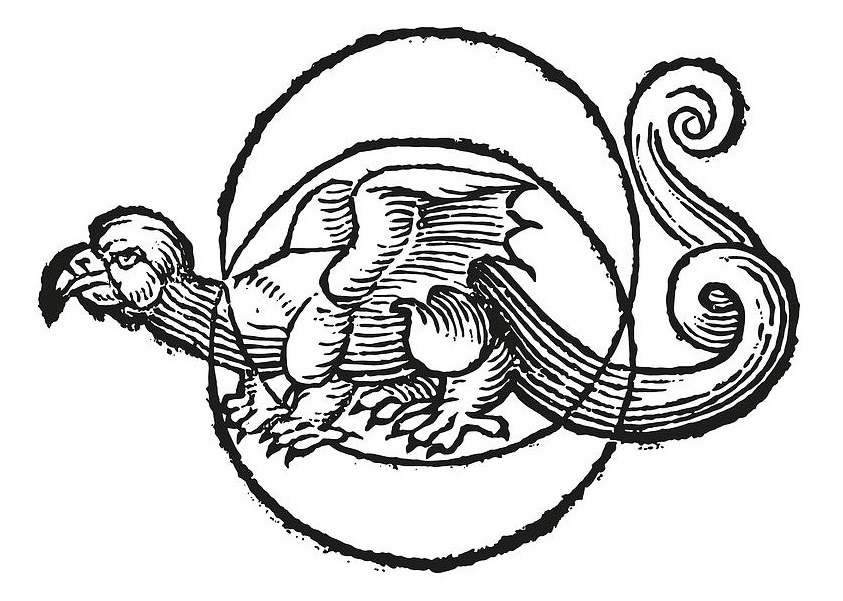
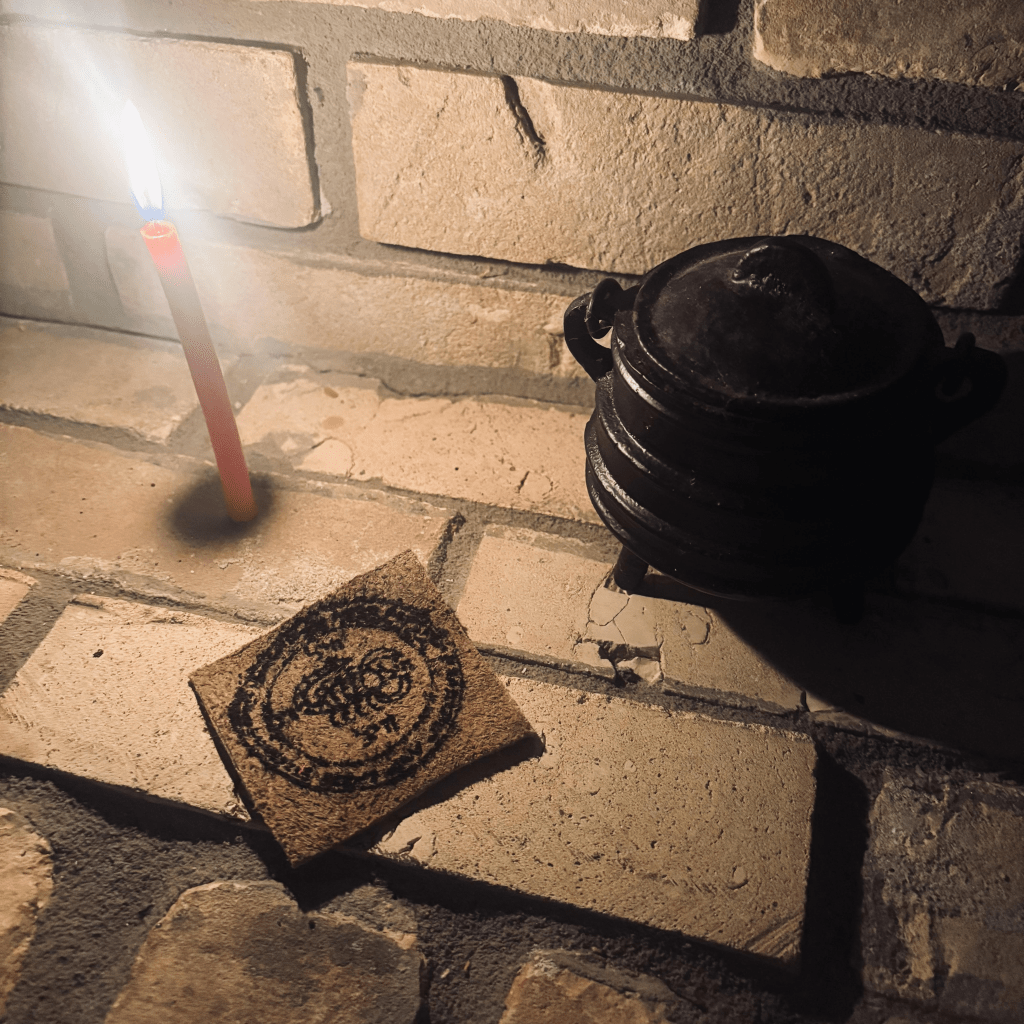

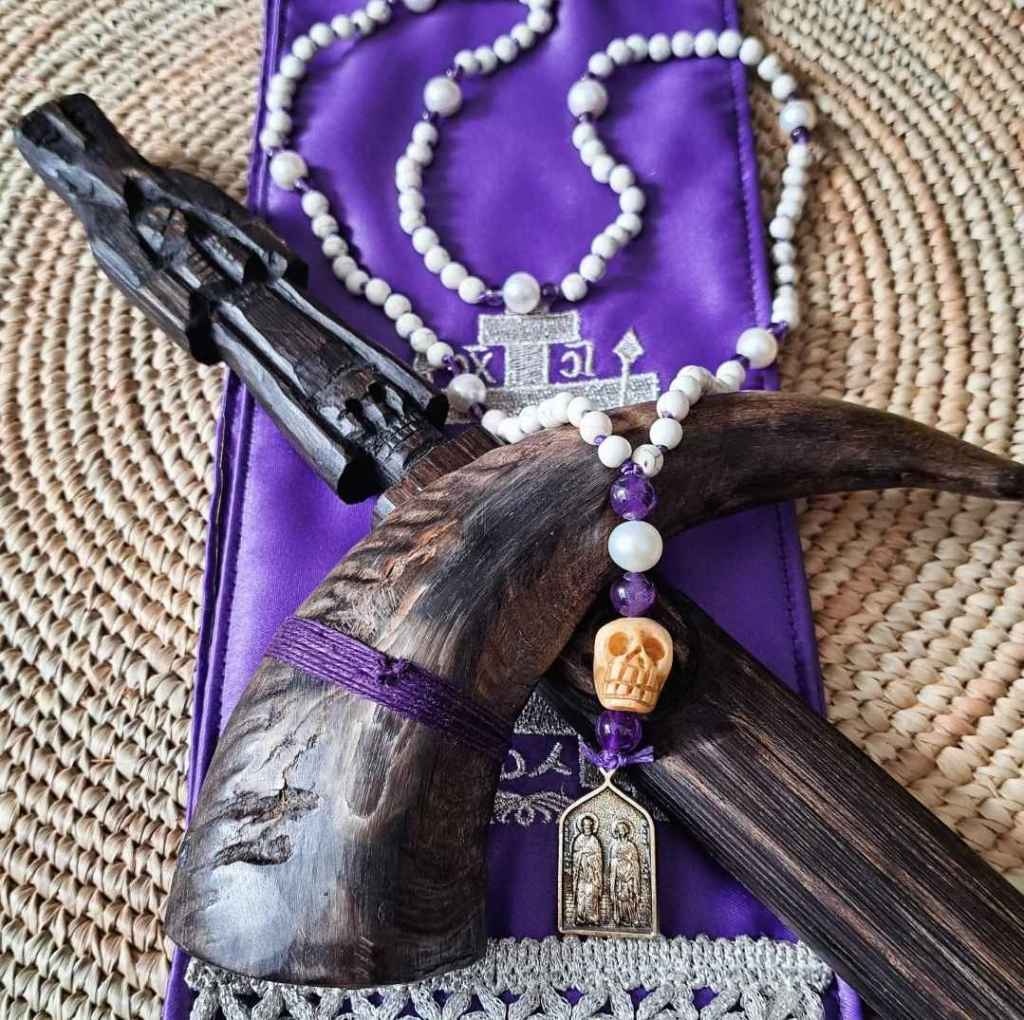


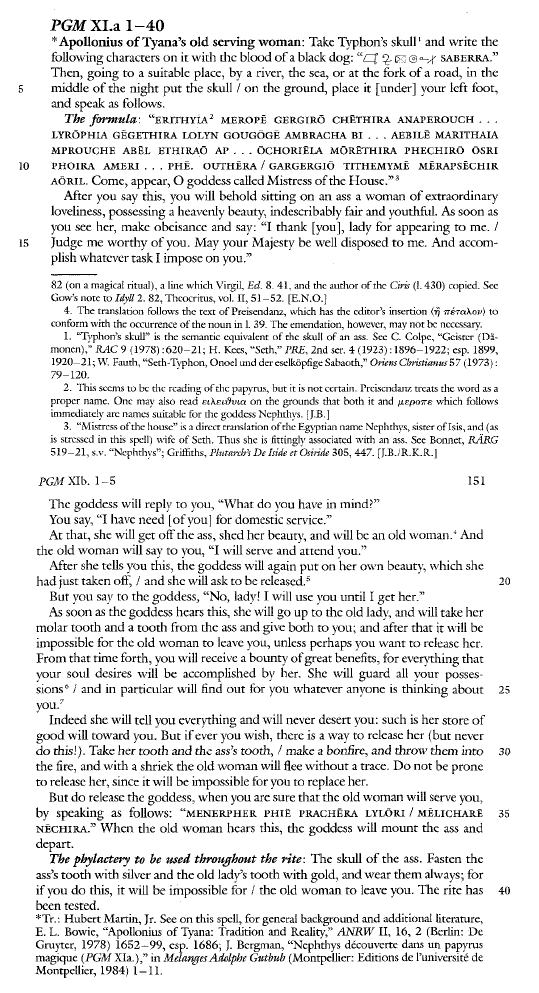
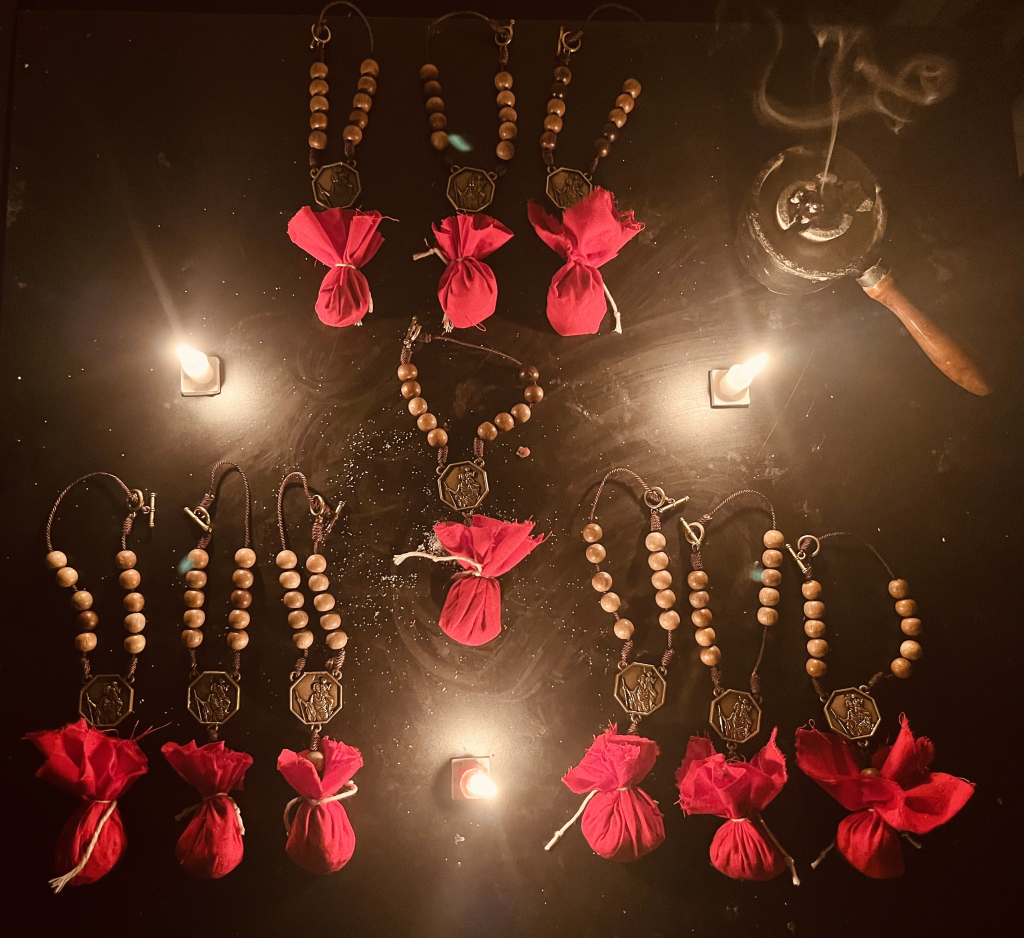
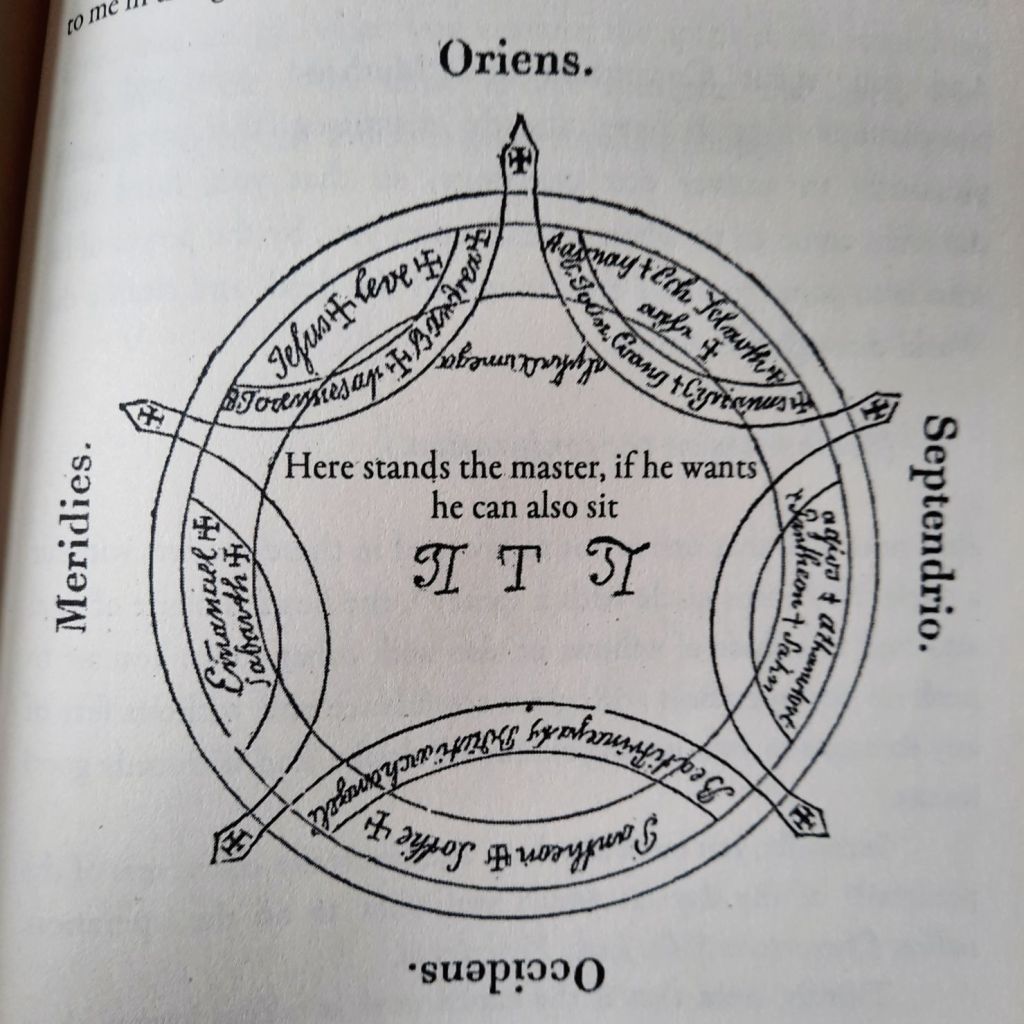

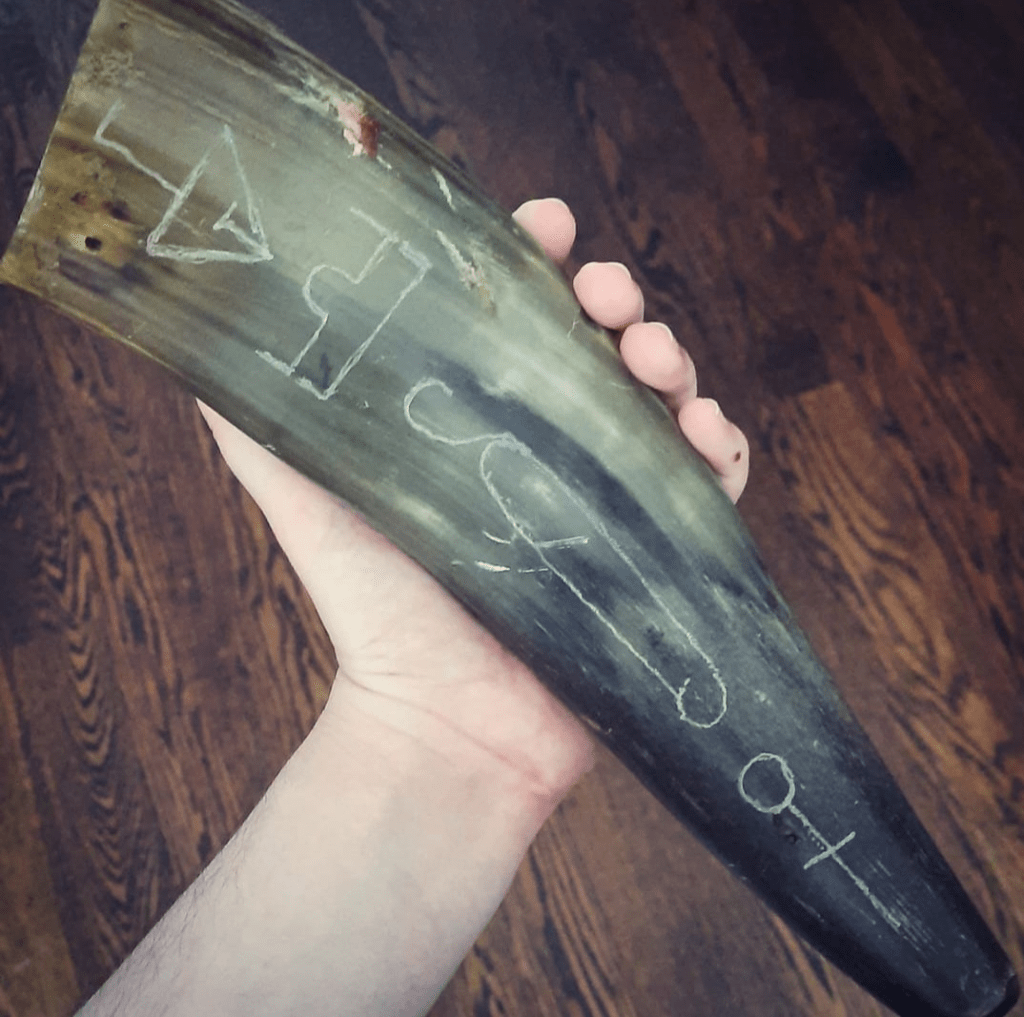
 With Cunning & Command