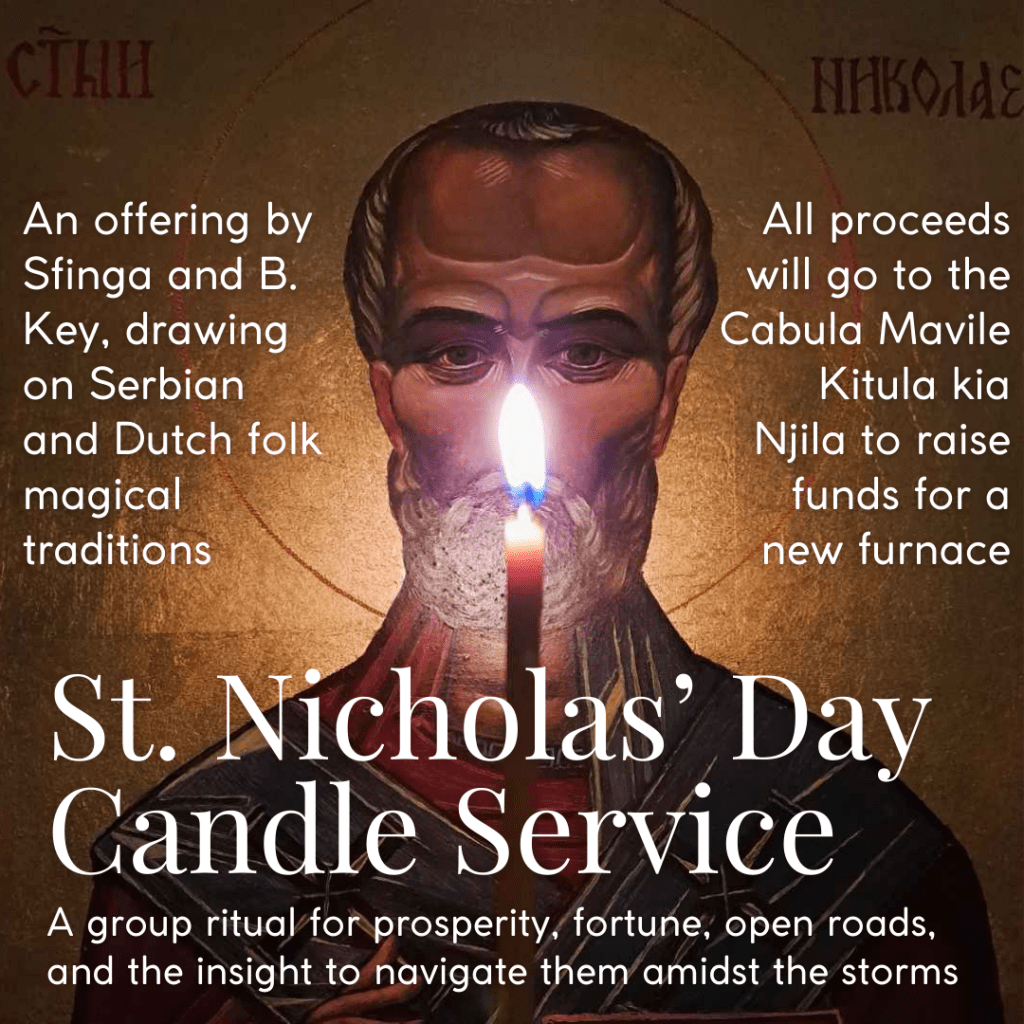
Once again, Key and I are so incredibly grateful for your generous support of our Nikoljdan community ritual. We were once again able to raise $2000 for our Cabula through the combined efforts of our Esteemed Initiate tier on Patreon and those who contributed directly through the blog. Thank you all so very much!
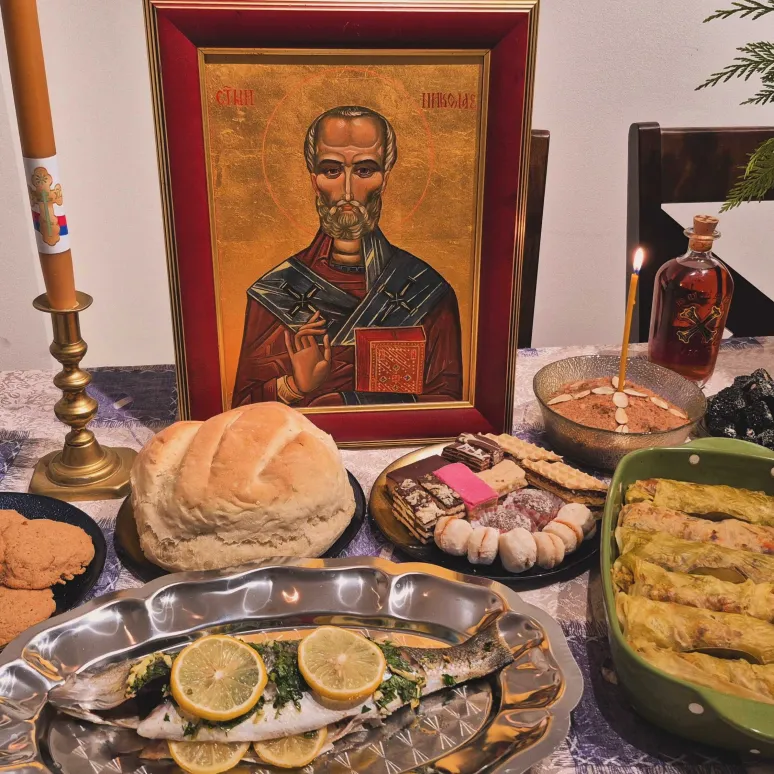
Here’s a brief recap of the workings as we completed them. Key and I began by throwing a small slava for Sveti Nikola in my home, inviting friends and family to visit and participate. From the early morning, we were up and baking bread, cooking sarma, preparing the fish, and baking Dutch pepernoten cookies. We prepared a small selection of traditional slava cakes and biscuits, as well as an apple strudel, and created small plates containing servings of each dish for the ancestors, protector spirits, land spirits, and spirits of the door and threshold. Having lit the slava candle, we offered prayers, veneration, and oral charms unto St. Nicholas as wayfarer of the paths to fortune, stability, and prosperity.
Just a couple days prior, on the 17th of December, I also celebrated Sveta Varvara (St. Barbara). As per tradition, I sowed wheat seeds to grow my Christmas wheat that I will trim on January 7th, and cooked a traditional meal of grains called a varica. This year, I opted for a sweeter version, consisting of wheat, corn, barley, honey, chopped walnuts, sliced walnuts, and raisins. “Varvarica vari a Savica ladi a Nikolica kusa” (Barbara cooks, Sava cools, Nikola tastes) is a saying encompassing the practices of this trinity of days, cooking the varica on Barbara, cooling it in the fridge for a full day during Sabbas the Sanctified, and finally consuming it with your family on Nicholas’ day. Several sorcerous projects were begun on her feast, and the varica, having been blessed for fertility and prosperity, was served on Nikoljdan and enjoyed by all present.
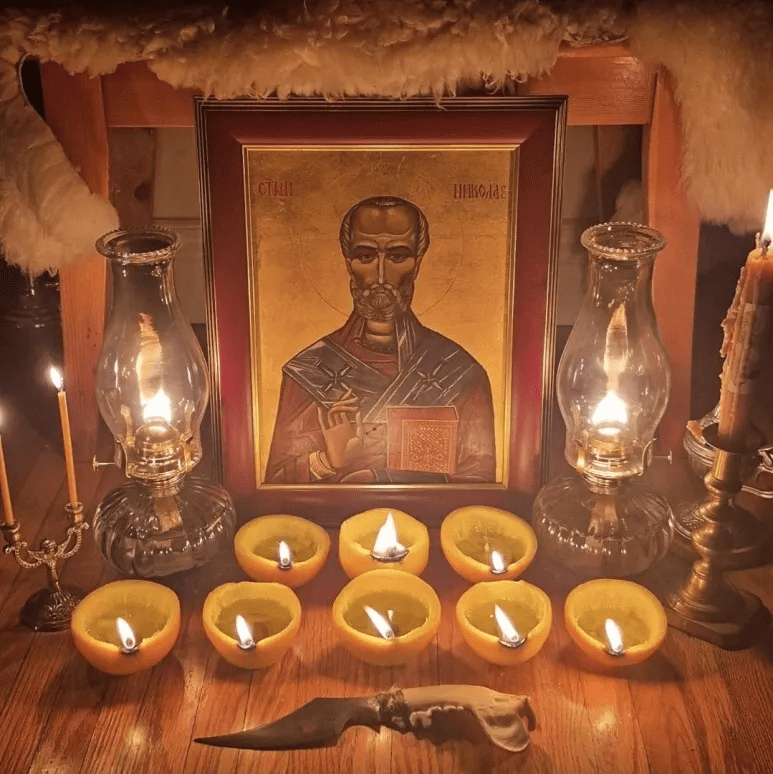
Once our guests had returned home, we set off to do our work on behalf of all patrons and named parties. Key and I prepared two oil lamps of St. Nicholas, one for the saint in his right-handed guise, and another for him as Devil, as Veles, as Master of the Wolves.
The right-handed lamp was built in several stages: for the first stage, the vessel of the lamp itself was prepared with an herbal wash, smoked out with incense, and lit on fire with some Florida water. Next, a little bit of the oil went in along with a wooden cross that was carved and blessed for the day, as well as crumbs from the slava bread baked that day and the full petition of names. Following this, we added our base of resins, including several kinds of Orthodox incense blends as well as frankincense, myrrh, Three Kings, and more. Key then took the grave dirt of nine different bishops to confer the blessings of those spirits unto the work. He also expressed some of the orange oil, harvested directly from the oranges we prepared as daughter-lamps, through a flame in order to consecrate it as the descent of the Holy Spirit into the lamp. Key then added a gold coin into the lamp as well as much more orange peel to code it for money, and then finished the lamp with a crown of rosemary.
For the left-handed lamp, every ingredient that went into the base was covered in charcoal and ash to “blacken” it with soot. The lamp itself was built over a black Joker card, specifically one chosen because it depicted the Joker riding a horse. This image coded the work both to the lore of the black Joker as a devil in a deck of playing cards, as well as calling upon his steed, which for our purposes also includes St. Nicholas’ boat. Additionally, in much of Dutch folklore surrounding St. Nicholas, the saint is depicted as riding a horse, or at least travelling alongside one. After each ingredient was added, pieces of coal were also put into the lamp, as well as pieces of tobacco from a cigar that fumigated the lamp, myrrh, and dirt gathered from the graves of 21 soldiers. Key then shotgunned a cigar into the lamp, shaking the vessel until the smoke infused into the oil, turning it grey. Sulphur, gunpowder, vetiver, and a final gold coin completed the work, built over the volatility and explosive nature of its ingredients, and handled carefully to bust open blocks, open roads, and ignite the raw power of luck in each named party’s life.
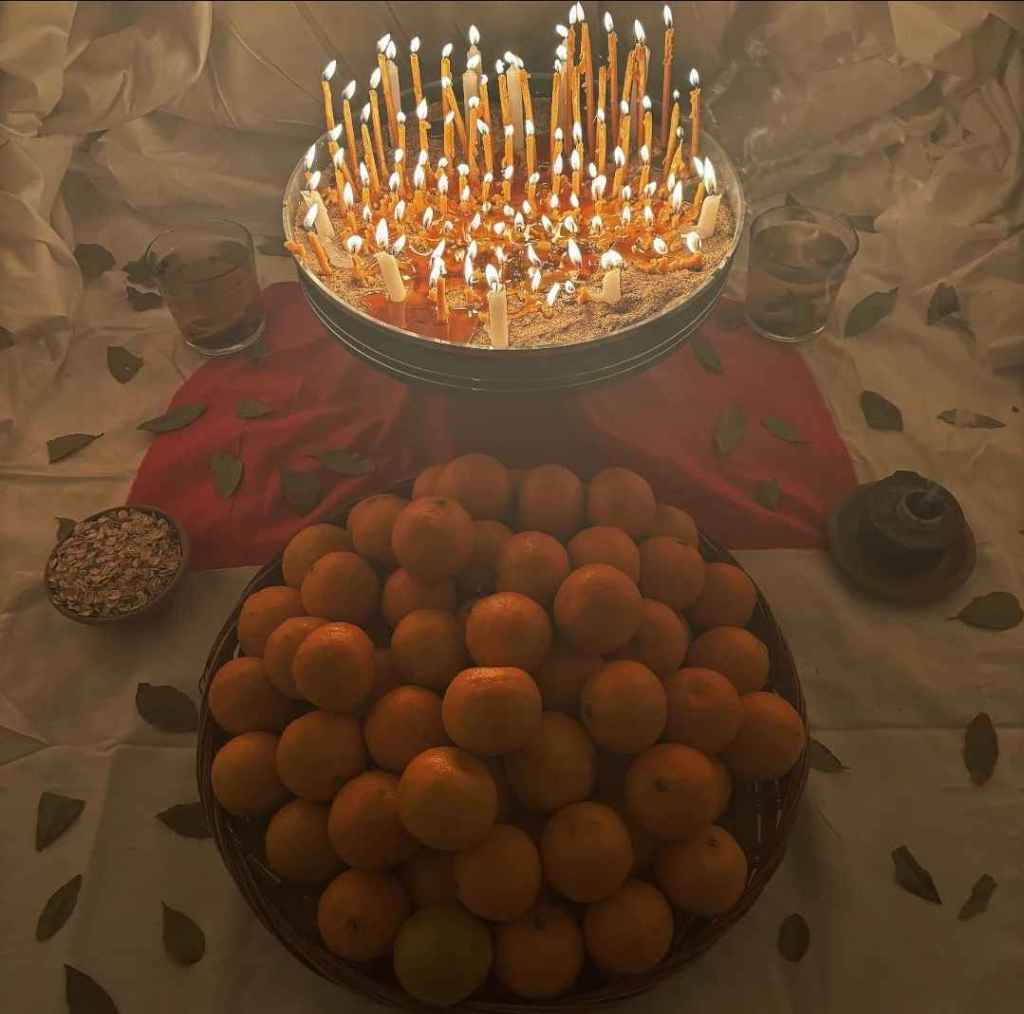
A pinch of the materia from both lamps, along with crumbs from the slava bread, then went into eight orange lamps which which were ritually born of their parents, and distributed to different crossroads to safely burn amidst the winter snow. A final pair of orange lamps, the youngest twins of the nest, were then taken to a nearby lake and left to float along the surface, carrying out the petitions crafted into the arms of the watery spirits that accompany St. Nicholas in both Balkan and Dutch lore. We completed the rite by offering one final battery of prayers to the saint, praising him for his potency and once more requesting that he open the roads to luck, fortune, prosperity, wealth, and new opportunities and horizons for everyone named. We are so grateful to each and every one of you who contributed! All proceeds from the rite are reserved for our Cabula as part of the charity of this working.
Srećan Nikoljdan!



 With Cunning & Command