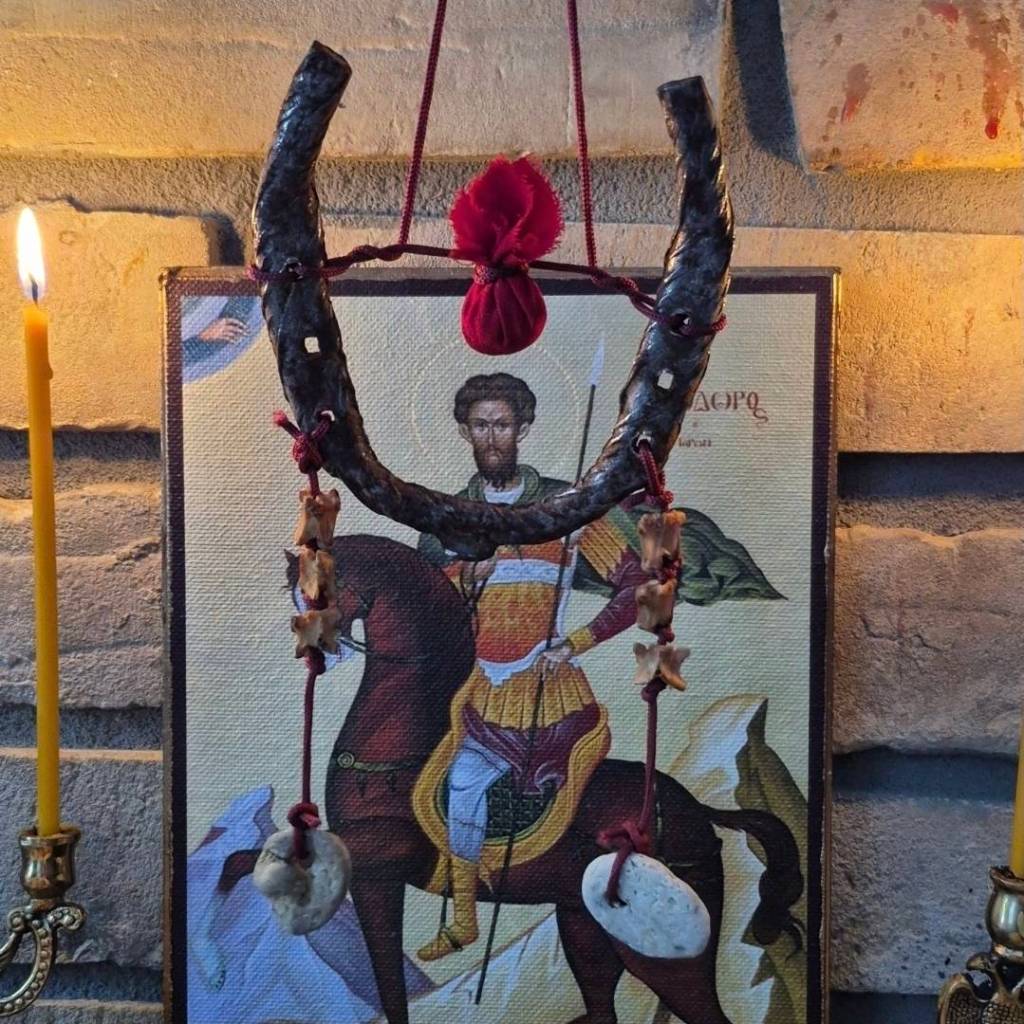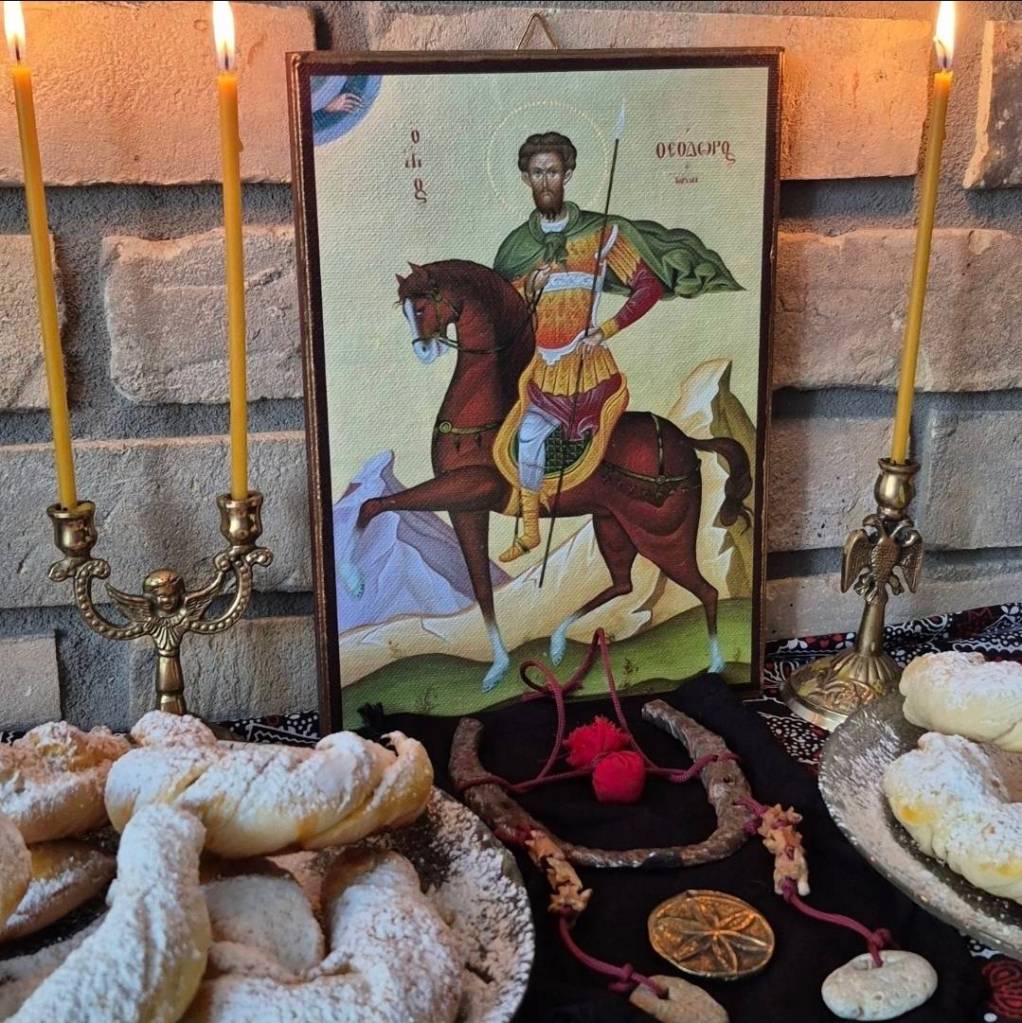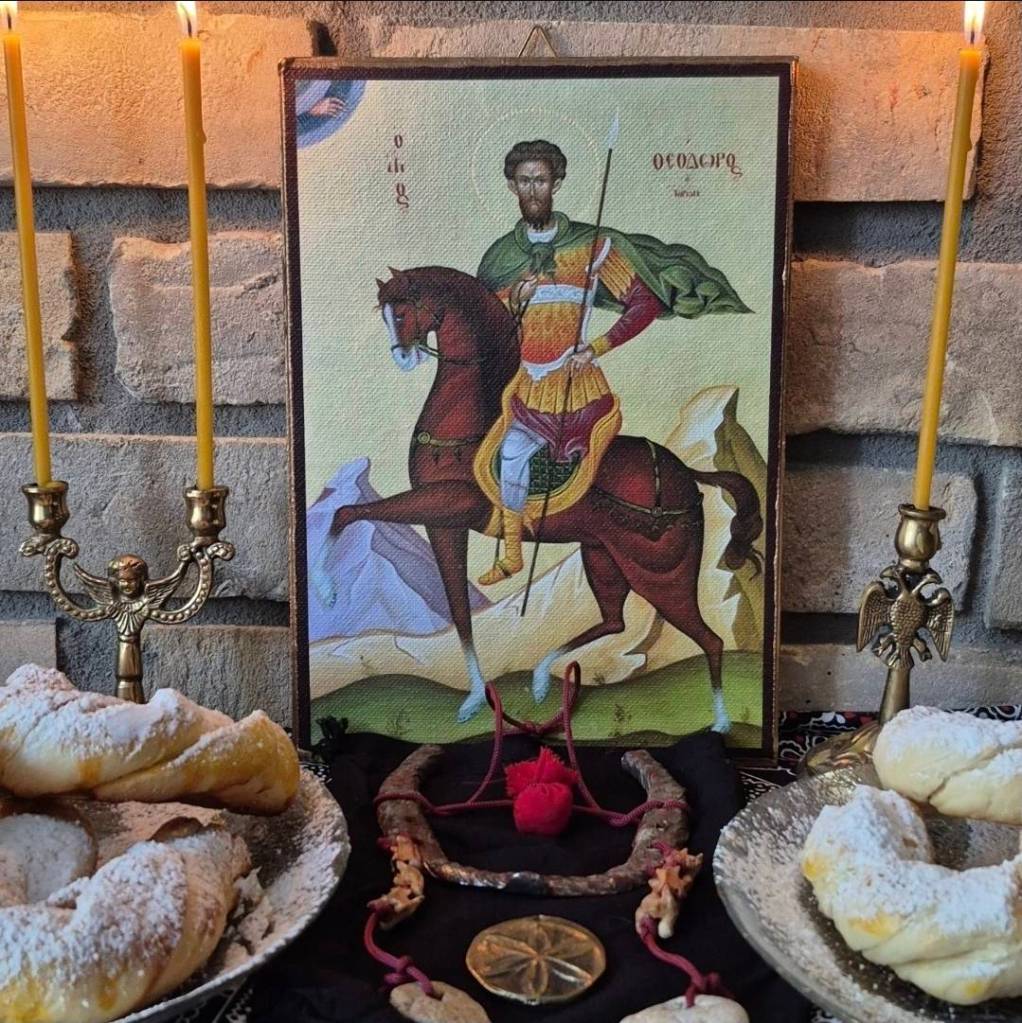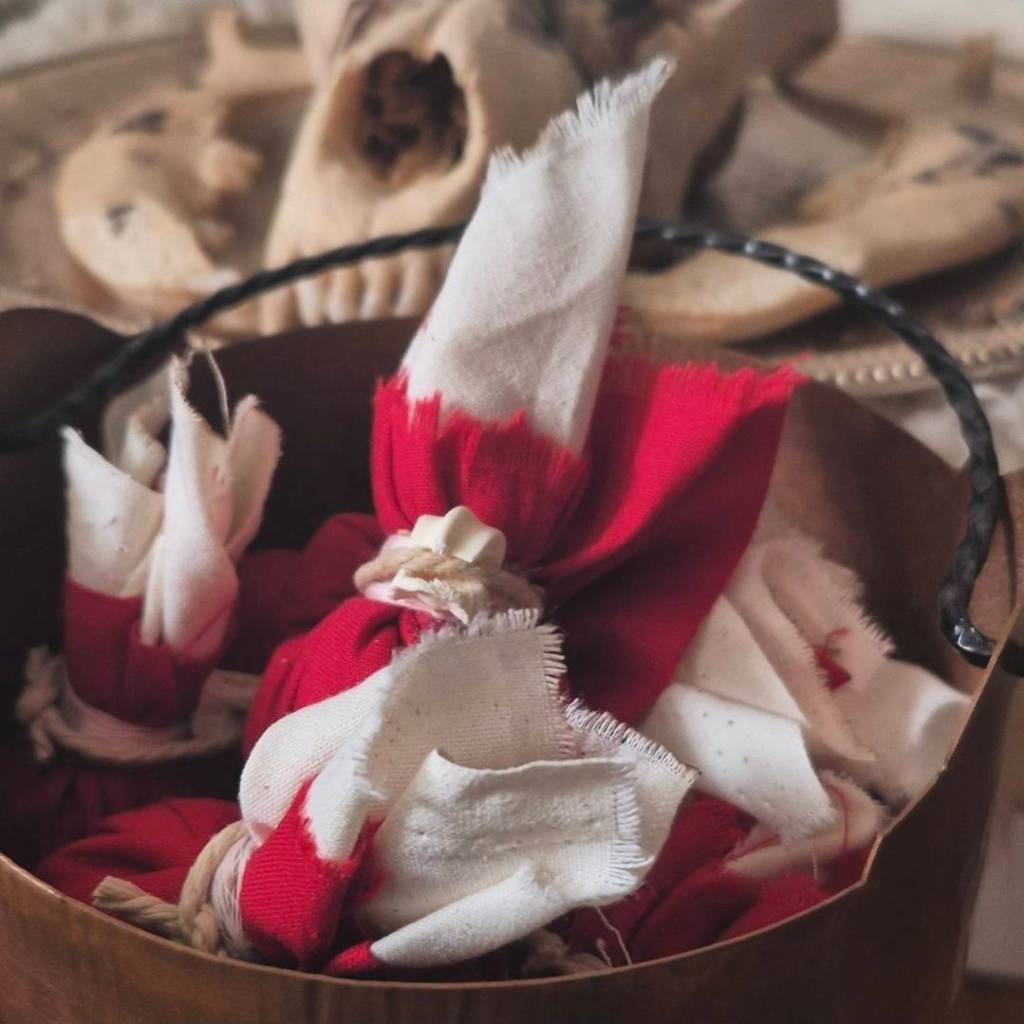
St. Nicholas’ Day 2025 Group Rite: For Luck, Joy, and Insight

Dearest Karcists! It’s hard to believe that it’s already been a year since we last announced our St. Nicholas’ Day group working. We were incredibly touched by the success of last year’s St. Nicholas’ Day Candle Service, which allowed Key and I (Sfinga) to raise over $2000 USD for our Cabula as part of a winter fundraiser. This year, we’ve decided to continue in our newfound tradition of December Nikoljdan (the Serbian Orthodox feast of St. Nicholas on the 19th of December) workings and open up this opportunity again into an even more involved community rite. As the winter grows and the days approach the longest night, we intend to take up the banner of Sveti Nikola once more and build on this opportunity to instantiate a yearly tradition of workings by our hands for the community—both in magic and in proceeds.

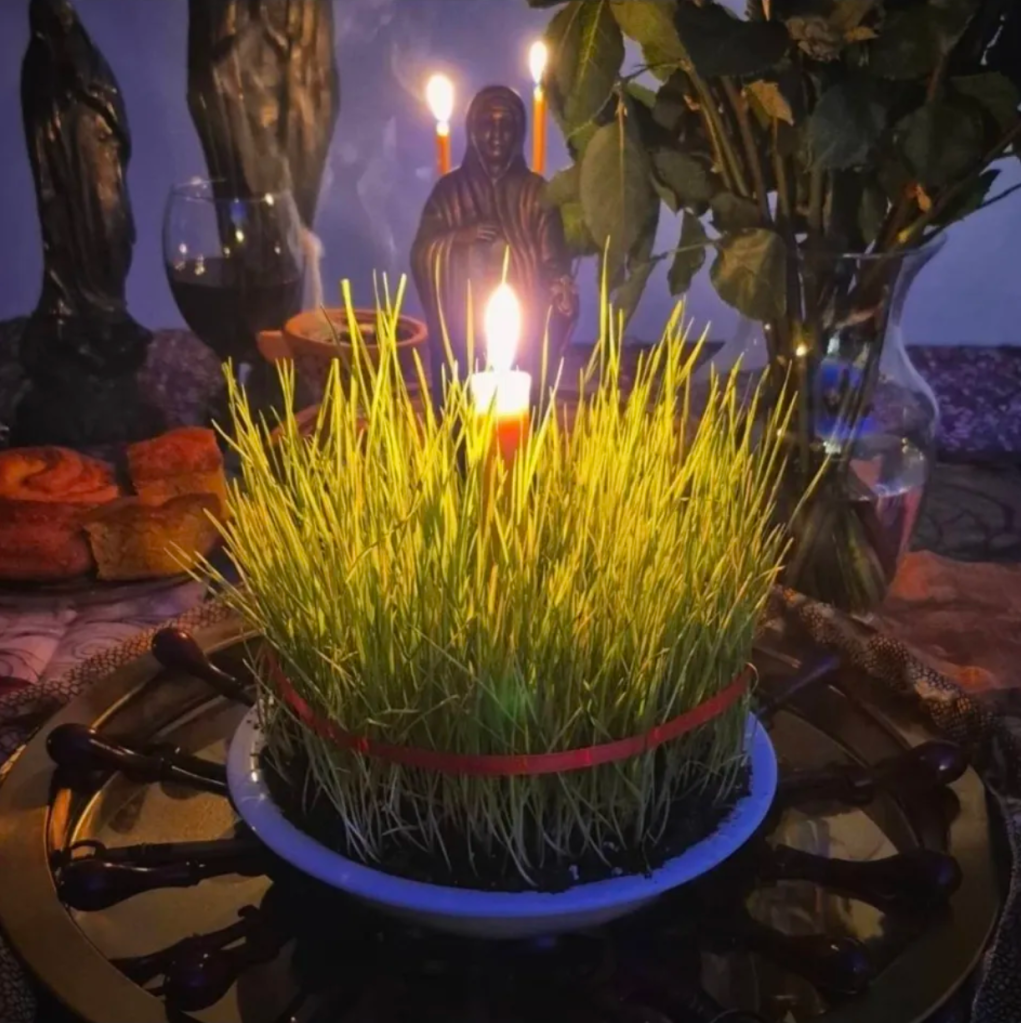
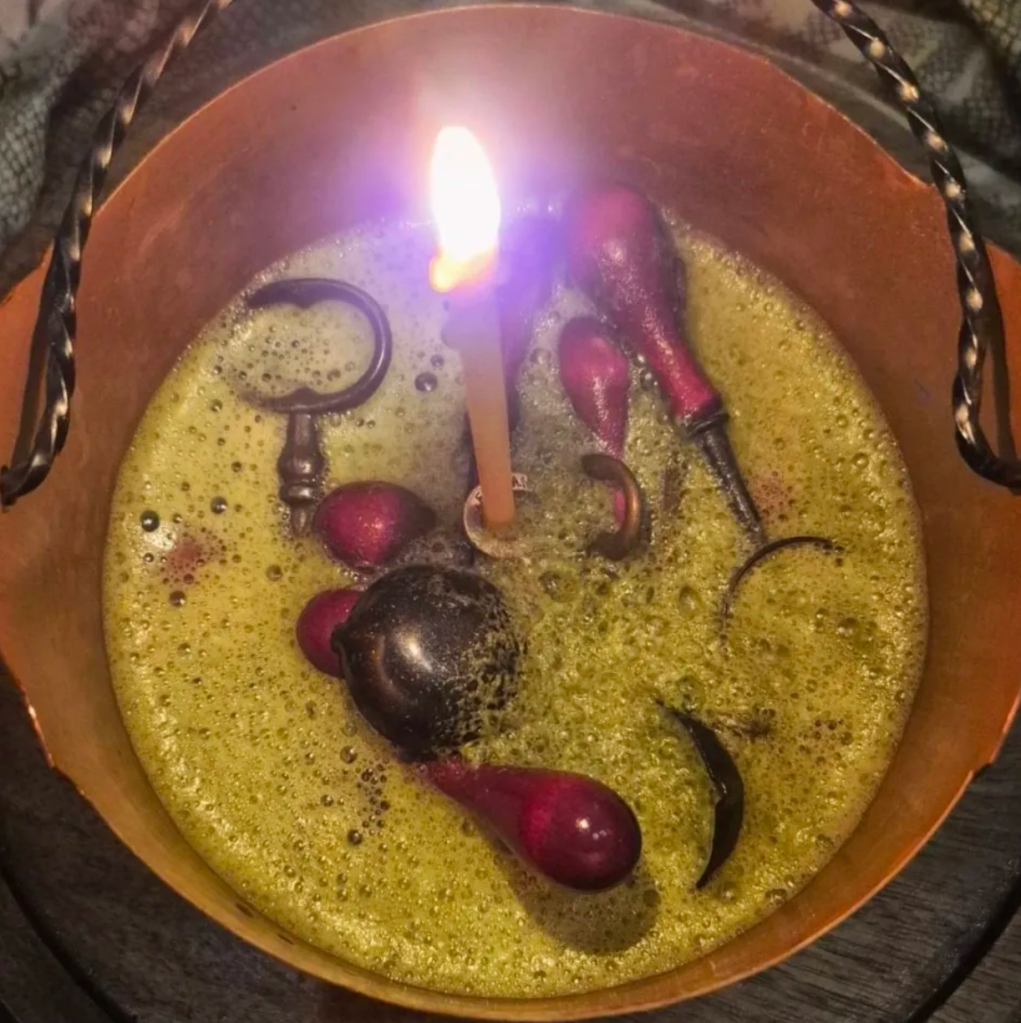
By donating to this group rite, your name (or the name of a loved one—please contact us if you would like the name to be different from that which appears on the PayPal receipt) will be dressed in two different petitions: a ritual of fortune, levity, and joy from myself, Sfinga, and a ritual for road opening, insight, and wisdom from B. Key. The goals are closely aligned with the previous year’s rite, and they will likely keep these themes going forward throughout the years with some changes determined by divination, albeit the methodologies will vary in the spirit of St. Nicholas’ many traditions. This year, we will be working primarily with by the light of the sorcerous lamp, calling on the saint as both navigator amidst the stormy seas and devil perched on the perilous cliffs.

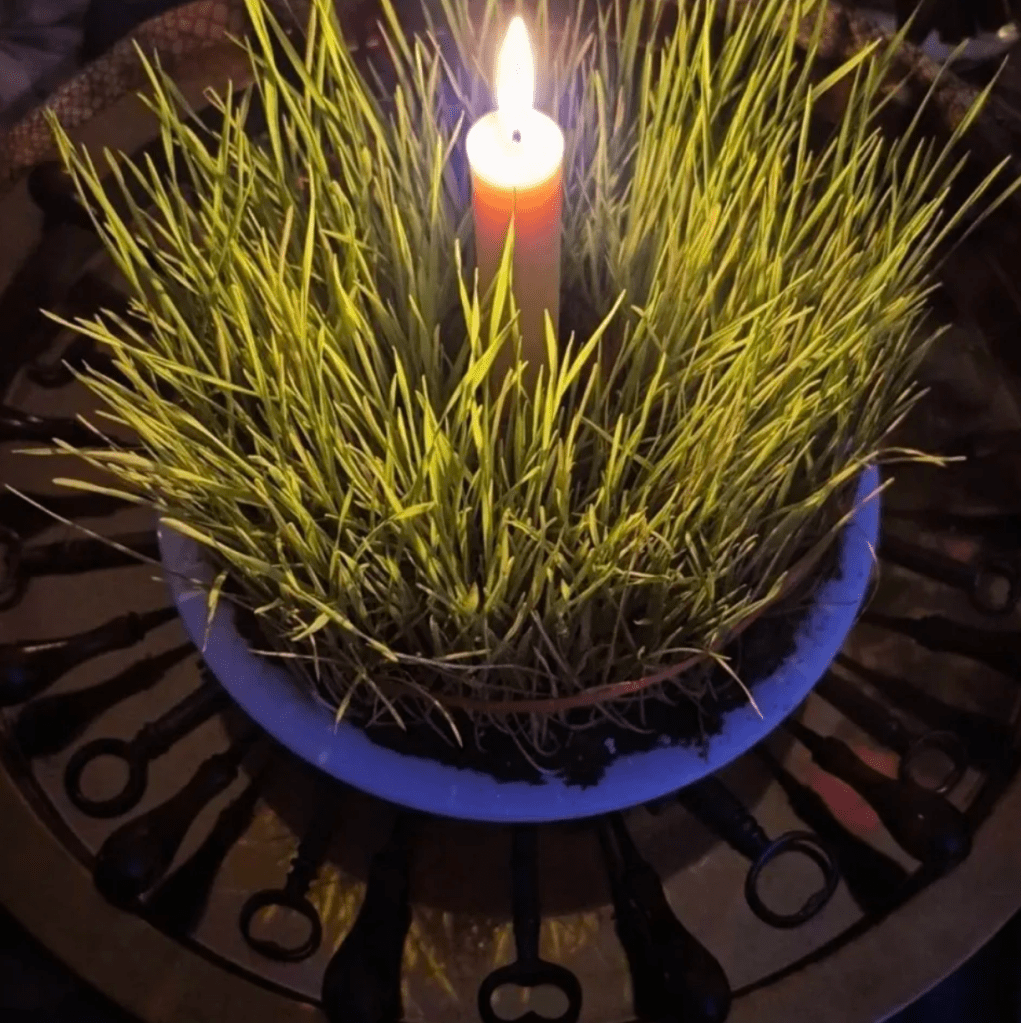
Key and I will once more draw on our familiarity of St. Nicholas veneration from the Serbian and Dutch folk traditions. Last year’s working was a candle service, and this year candles will only be one part of a greater whole, in which we will construct two complex oil lamps (one for the saint and one for the devil, as is tradition) with each name given directly to the herbal matter within. From these two mothers we will create many daughter-lamps which we will complete the feast with by floating them out into the lake to light the voyage for each named party’s prosperity, success, luck, and cunning insight into future possibilities in the new year. We will also prepare a feast for the saint and all the spirits that walk with him. In addition to a medley of Serbian and Dutch foods, a slava bread will also be prepared, whose crumbs, along with Thursday salt and a prosperity powder, will be added to the daughter-lamps we will float into the waters before midnight. We’re looking to double the offerings and double the effort for this year, and continue the momentum ever forward in love, honour, and gratitude to all the communities that have nourished us and whom we hope to continue nourishing in return!

This time will also mark the beginning of a series of workings on Sveta Varvara (the 17th of December on the Old Calendar for St. Barbara), linking the trinity of successive days of 17th (Varvara), 18th (Sava Osvećeni), and 19th (Nikola) for the growing of Christmas wheat and oracular power. Several charms will grow out of these workings which we will keep you updated on, including an exciting collaboration we’ll be able to speak more on in the new year.

A blog post containing pictures and our reflections on the ritual will go live in the days following the feast so that all who participated may have a record of its completion. The rite will be performed on the 19th of December.

If you would like to submit your name for this working, please use the link below. Subscribers to our Esteemed Initiate tier on Patreon are automatically entered into this rite at a discount as part of their monthly group ritual service.

All proceeds will go directly to our Cabula, as was the case last year, in the spirit of the Winter holidays. As always, we hope that this intersection of our traditions and communities serves you well in your New Year’s petitions and plans, and provides an ample boost to all you seek to grow and harvest in the coming months!

Thank you for participating in this year’s rite! A follow up post will be made available in the coming days.

St. Michael’s Charms of Spirit Valour

On the Eastern Orthodox feast of St. Michael the Archangel, Maria of Green Dragon Healer and I continued our work of producing charms adapted from the folk Orthodox tradition. We are deep in the Wolf Days now, and St. Michael the Archangel is one of the foremost wolf saints, known in Serbia as the Dušovadnik or Soul-Taker. It is to him that we light the final candle upon a dying person’s bed to guide their soul into the afterlife, and his sword that touches the water that bathes the corpse upon rest. Drawing on Serbian and Greek traditions, Maria and I celebrated his feast with koljivo, pear liquor, incense, and light. While koljivo is typically given only to those saints that have experienced an earthly death, typically excluding angels as well as the likes of St. Elijah, in this case we prepared the traditional dish in honour of the many ancestors and souls supplicated in this work.

The charms presented before the icon.

These charms are born of a recipe Maria and I divined on, drawing on our shared training and familiarity in Orthodox folk magic. Their purpose is primarily that of protection—against evil eye, curses, vengeful spirits, and outright spiritual assault—as well as the cultivation of spiritual valour, being the bravery, confidence, and raw might that helps one conjure and command, and make effective one’s petitions and prayers. Created under the aegis of St. Michael, who gave unto Solomon the very ring of fealty that allowed him to command the demons, we crafted our charms with the guidance of our spirits to empower those who hold them with increased authority, that their prayers are amplified by the celestial choirs and chthonic wolves alike; that each oral charm and prayer uttered have more vigour, tenacity, and power in manifestation, dragging others into being with every repetition.

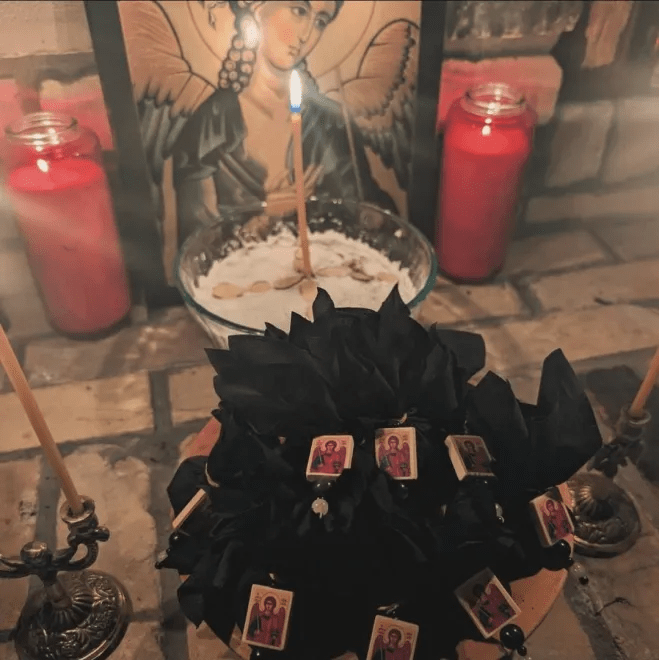
A close up of the miniature icons Maria created.

These charms are primarily born of earth and fire, each housing a complex matrix of dirts gathered from cemeteries, churches, and places of power across Serbia, Greece, Croatia, Cyprus, England, Canada, and the United States. In addition to dirts of nine nuns, nine priests, nine bishops, and nine cemetery gates, these charms also house dirt taken from the temple of Olympian Zeus, nine Orthodox churches dedicated to St. Michael, a Serbian ruin linked to the Master of the Wolves, and the banks of the river Acheron gathered by a dear friend who is also a traditional Balkan witch. Divination beans, rosemary, frankincense, Syrian rue, and a powder dedicated to St. Michael as Wolf Shepherd and Psychopomp are nestled within the heart of the charm along with many other unnamed ingredients, bound together by thread, gold sheen obsidian, yellow quartz, and custom miniature icons created by Maria. These icons were ritually prepared and anointed with a trinity of oils for protection, command, and necromantic power throughout the Wolf Days, while the core matrix was empowered from St. Demetrios’ Day to St. Michael’s, receiving an additional boost on Sts. Cosmos and Damian.

While the bulk of this work was carried out during this winter season, its inception was first born far back in the dregs of the old winter. Each charm contains a potent base of powders composed of burnt offerings, paper money, and talisman papers offered during the four most important days of the fifteen days of the Lunar New Year. While this custom is not Balkan in origin, Maria’s own fusion of practices from her training in Traditional Chinese Medicine and Taoist folk practices contributed to these charms heavily, as any practice that involves paying one’s debts to the ancestors, regardless of cultural and religious system, ultimately is one that will be recognized by the Master of the Wolves. During these days, Maria and I made offerings of fruit, cooked foods, rice, candies, alcohol, cakes, incense, and far more, with Maria reciting mantras she was given the transmission to use from her lineage in China to empower and uplift each prayer. It is the burnt offerings and talismans of these rites that were saved and incorporated into a powder for the charms you see here, ushering in additional protection, prosperity, and command by providing proof of previous pacts honoured, ancestors supplicated, and celestial guardians of the dead honoured in their own right during the turnings of the seasons.

These charms may be carried on one’s purpose for protection, authority, command, bravery, and an increased sensitivity to the celestial and chthonic guardians of the seasons. They may also be left on shrines, hung over doors, or placed with one’s ancestors for clearer messages, additional protection, passive increase to one’s authority in conjuration, and additional fortune in all ventures. One key boon these charms bestowed is an increased ease and levity when dealing with cemetery guardians, celestial judges, and any spirit of authority in charge of taking account of proper etiquette in liminal spaces. By relying on St. Michael’s command, the various priests, nuns, bishops, and mighty dead called on by dirt, spit, blood, and golden resin, and the additional lineage holders in both of our magical practices that attest to the efforts made to honour the seasons and their chthonic-solar emissaries, these charms assist their wielders in having increased luck, communication, and ease when entering cemeteries, churches, places of transition, and in the acquisition of raw authoritative power. While they pair well with our previous charms to Cyprian and Justina, they ultimately work on their own to increase authority, spiritual vigour, instil bravery before adversaries, soothe anxiety that can lead to spiritual offences, and instil command over the spirits of in-between spaces. Wield on your person when engaging in grimoiric work, hold when petitioning saints and angels, and deploy especially when you wish to move your ancestors to work for an intended goal in unison without fracture and disagreement. These charms are especially helpful to those who deal with ancestral resistance and blocks towards life decisions, as it soothes their worries through the authority of St. Michael and the memory of previous petitions, offerings, and supplications honoured and promises kept; encouraging them to keep their end of the same bargains.

Anoint with any holy oil heavy with frankincense weekly, especially on Sunday if possible, or burn the same incense below it.

All charms will be shipped out within a week of purchase. We thank you so much for your patronage and hope that they bring you luck, power, and vitality in the cold months ahead!

St. Michael’s Charms of Spirit Valour

Charms of might, vigour, bravery, protection, and valour through the aegis of St. Michael, as well as spiritual command over and in unifying the dead. Shipping included.

$150.00

Sts. George and Vitus’s Charms Against the Evil Eye

After many months of prayer, supplication, and consecration, these charms, born of the fiery hands of Sts. George and Vitus, are at last available.

I’ve teased the mention of these for some time both on the podcast and on our official Discord server for our Patreon supporters, but the origin of these vigilant eyes began early in April of this year, when I first began to flesh out the shape of what my yearly offering to St. George would involve. While not always resulting in a public charm to share with the world, this practice has been one that has helped mark the triumph of the spring and summer seasons through the auspices of St. George, Jarilo, and all the spirits that follow under his red banner. This year, the thematic motif elected through divination was that of St. George’s lance, specifically in its capability to blot out that most difficult and tenacious foe: the consuming voyeurism of the evil eye. So when my great friend Vanessa of the illustrious Sword + Scythe informed me that she was working on a charm for St. George’s lance as well, I was absolutely over the moon.

We spent the “George season” of his Catholic to Orthodox feasts workshopping what a collaboration in honour of this mighty saint might look like. Divination revealed that my own charms would require a base of three different powders, each prepared at a different point of the season between Đurđevdan (St. George’s Day) on May 6th and Vidovdan (St. Vitus’ Day) on June 28th—a time period associated with the vanishing of the Pleiades from the night sky so that those seven sisters (or brothers) may consult with the Mothers of the Sun, Moon, and Winds respectively. The first would be a powder of St. George’s lance, born of herbs traditionally harvested on his day for vigour, stamina, potency, and protection, united under the image of his spear to seek out, identify, and neutralize the evil eye. Born, fed, and sealed on his day, this was the same powder I mailed Vanessa to include under each garnet faceted in their gorgeous sterling silver necklace charms.

Slava bread made on Vidovdan presented to my icon corner.

The second was a St. Vitus powder created and fed on Vidovdan from traditional herbs and materia under his watchful gaze, birthed to lend these charms the ability to detect, identify, and anticipate sources of malefica, Evil Eye, intrusive scrying, and magical attack. I offered and prepared a full meal to the saint including fish, projara, ajvar, olives, cheese, a slavski kolač, and many more offerings as part of this work. The kolač itself would become an integral part of the charms to come, as each charm bag includes three dried squares of this bread to represent the Father, Son, and Holy Spirit (as well as George, Vitus, and the Mother of the Moon as a folkloric figure invoked in this work).

The third is an anti-evil eye powder to anticipate, nullify, and deflect three traditional sources of the eye: jealousy, awe/admiration, and spite. This formula was born out of several recipes and herb lists I collected across Croatia and Serbia, which were then confirmed and added to through divination. A brief list of some of the most vocal allies that went into its creation include: blackthorn, hawthorn, garlic, red pepper, fulgurite, salt, hyssop, dogwood, wheat, mica from a prominent witch mountain, yew, rosemary, valerian, fur of a black wolf, ground pearl, and much more. Additionally, powders I created with the instructions of my mentors in Balkan witchcraft for the Pleiades, the Mother of the Moon, and the Forest Mother were also included in this dust to further augment its virtues to the task at hand.

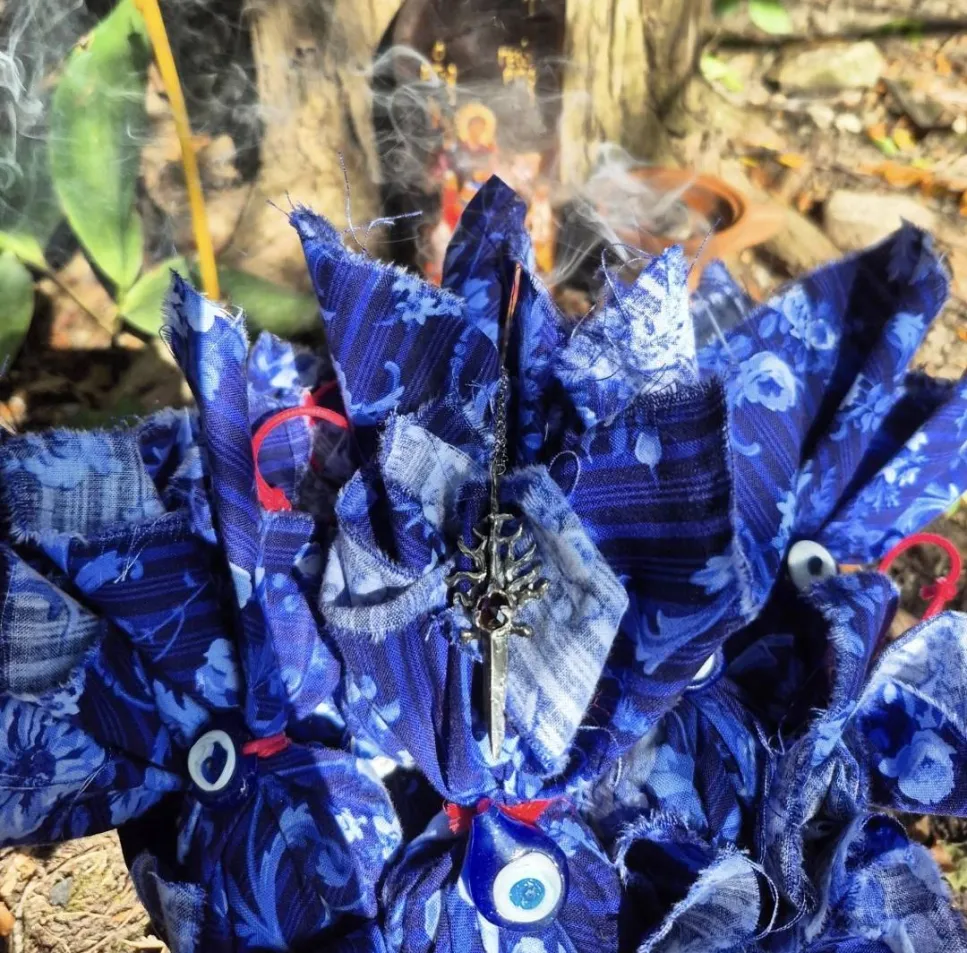
Each charm was tied up in cloth with red thread anointed in an anti-evil eye oil, and adorned with a glass nazar bead washed in seven holy waters sourced from sites of power in the Balkans, to watch for gossip, lies, threats, possessiveness (over one’s own work and spirits), and jealousy. I am immensely proud of these and have already given some out as gifts to close friends to test their abilities to great effect. The red threads are tied in a loop so that they may be hung in one’s home, facing the door or a prominent window of one’s choosing, so that their burning eye may blot out the venom of adversaries and intrusions with the might of St. George’s own spear.

The charms writhing beneath my tree of St. George.

Vanessa expertly made their own charms in the spirit of St. George’s immense ability to protect the weak and deliver decisive action in the face of danger. In addition to housing my powder, their charms include garnets that were prayed over on his Catholic feast day, washed with holy water, and placed with a St. George relic medal until they were set into the beautiful lances. I have been wearing mine faithfully in devotion to him and have already noticed its benefit as a protective amulet, especially in its precision and virility.

Vanessa’s photograph of our charms together.

I am immensely proud of our work together as the first of many other collaborations to come! Three dozen are available for sale below. Hang them above your doors and windows, or situate them to watch over where you sleep or work. These are slightly larger charm bags made to be hung in the home, in the car, or wherever the Eye’s consuming gaze watches you most. Vanessa has seven of their excellent charms available on their website available [here].

Sts. George and Vitus’ Charms Against the Evil Eye

One charm bag for voracious, proactive protection against all maladies the Evil Eye may bring. Shipping included.

$150.00

St. Charalambos’ Charms Against All Disease

Uždi svecu jednu svijeću, a đavolu dvije.”

After a full month of gathering, conjuration, and consecration, I am deeply pleased to unveil a new offering in the holy name of Sveti Haralampije, or St. Charalambos—the beloved saint known in the Serbian folk tradition as the Gospodar Svih Bolesti, or “Lord of All Diseases.” Here is a saint so beloved and revered for his capacity to heal any and all ailments that his very feast, celebrated February 10th or 23rd depending on the calendar, is understood to be a last chance to ward off the Čuma, a spirit of disease and illness sometimes said to be the wrathful form of the folk saint Bibi, who is her kinder, protective face when placated appropriately. The Balkan traditions vary on which saint’s day is the true feast upon which the Čuma is propitiated, with Čumindan being for the majority of Serbia Sveti Atanasije, whose feast at the end of January aligns with one of the most common dates that Bibi herself is honoured. It is during this period, right before Sretenje or Old Candlemas, that various rituals are performed to placate her wrath so that she does not become the “right hand of the Devil” and lay waste upon our settlements in her black-cloaked form as wandering witch.

It was on St. Athanasius’ day that this work began, then, with the preliminary offerings given unto Čuma and Bibi in both guises: shoes so that she may walk freely, a walnut comb so that she may brush her hair, a mirror so that she may see herself, and various sweets that she may refresh herself. According to folk tradition, by showing her this kindness and welcoming her as a house guest, as opposed to denying her entry and sustenance, her wrath is cooled, and she instead enters as an aunt and ally, softened by the hospitality. Much of Balkan folk magic, of course, involves the naming of familial pacts, such that even troublesome spirits are given their valued role within the clan structure. As Čuma is given her kindness, so too is she implored to pass over us and return that kindness by sparing us from her hordes of plague witches.

These blessings were built upon through the important holy day of Sretenje (Candlemas), finally leading into Charalambos’ day proper. The Lord of All Diseases is likewise given as one of the candidate dates of Čumindan in other parts of the Balkans—though more importantly this, for some villages, is the true end of the Wolf Days (the winter season beginning in early November), and the last opportunity to thank and herald the Master of the Wolves. It is on his day that the serpents below begin to burrow their way ever closer to the surface of the light, stirred by Old Candlemas and drawn towards the first Saturday of Great Lent, Todorova Subota or Hroma Subota (Theodore’s Saturday or Lame Saturday), in which Veliki Todor and his todorci riders embark on their nightly procession.

St. Charalambos is particularly notable for having lived to 113 years old. He was brutally martyred despite his age, lacerated with iron hooks and flayed alive, his only response to his torturers being: “Thank you, my brethren, for scraping off the old body and renewing my soul for new and eternal life.” It should come as no surprise, then, that St. Charalambos is deeply linked to serpent power within the folk tradition, as is any saint who was flayed; his ecstasies being inherently intertwined with the healing potency of shedding the skin.

In addition to being a powerful healer, he is also the patron saint of apiaries and beekeepers, precisely because he was able to heal others with honey. A jar of honey was sanctified in his name on his feast, during which he was also honoured with freshly baked bread, and the honey from within was used to mark my front door as well as each icon of him that I possess, in honour of his power and in memory of his pact with Čuma.

It was this bread and honey that laid the groundwork for the charms I created with him. From the period of his feast to Todorova Subota, I continuously prayed to the retinue of wolf and serpent spirits to which he belongs, gathering the necessary herbs and preparing the sorcerous powders that would go within these charms. In addition to propitiating Veliki Todor with sacrifice, I continually kept my shrine to the Master of the Wolves in illumination throughout, reminding him through prayer and offering of the ledger of deeds and boons made good on. Throughout this process, I continually prayed for the petition to be allowed to create a set of charms under his auspices for the healing of disease and the prevention of illness, by way of creating mobile, portable satellites of this pact between the martyr and Čuma for others to benefit from.

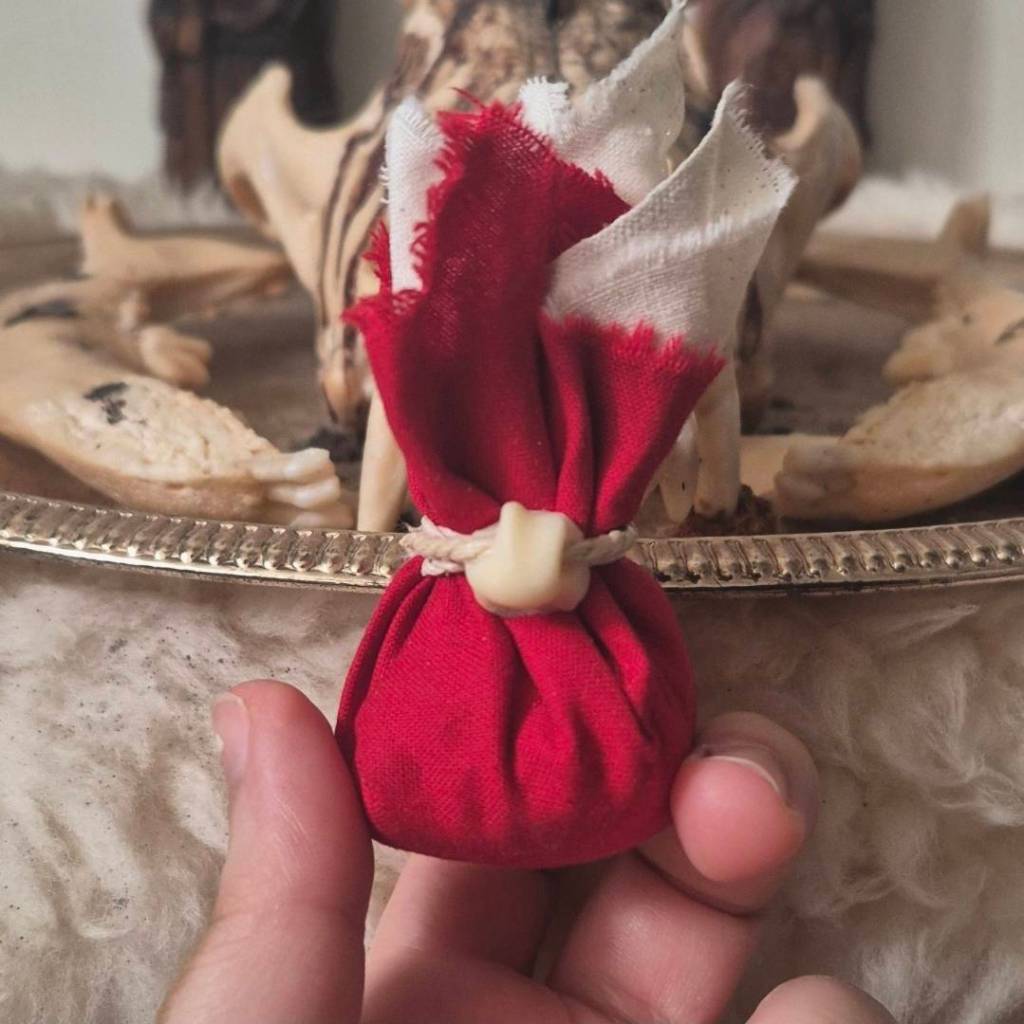
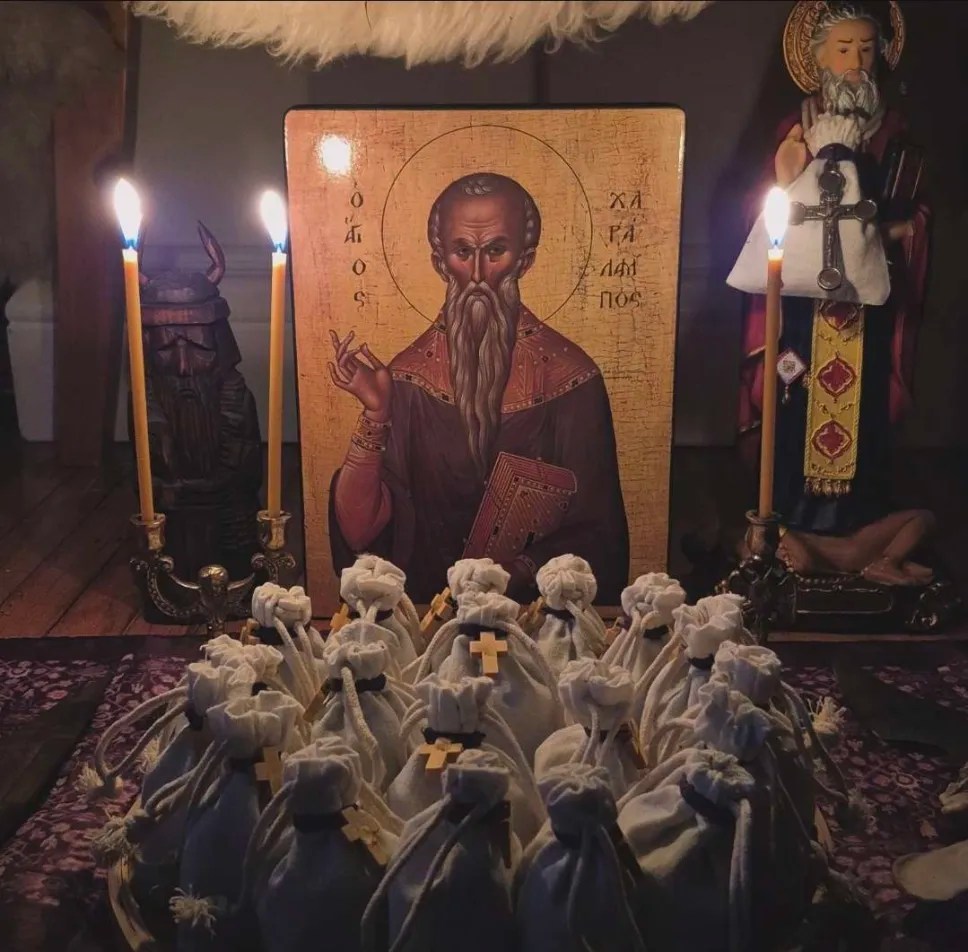
When the time finally came to create these, and the requisite omens were revealed, I prepared a set of cotton muslin drawstring bags, suffumigating them with myrrh and anointing them with holy water gathered from a well sacred to St. Charalambos. The bread specially baked for and offered on his feast was divided into equal parts and placed within each bag as a promise of the fulfillment of its magic. Rosemar, thyme, basil, lemon balm, wormwood, broadleaf plantain, eyebright, and many additional herbs picked for their virtues in healing different parts of the body were wrapped around this bread, to which were also divided the full 41 beans used in divination to approve of the recipe and enchantment and a generous helping of specially-made Thursday Salt. In addition to several powders sourced from my own recipes and study, attuned to different deities and fixed stars relevant for this working, I also prepared for each bag one small reflective mirror that was anointed with the honey consecrated on his feast. Each mirror was presented before Čuma, reminding her that whomever carries this bag upon their person has paid her their due and has called her “Aunt”—meaning that as they are family, so too must she treat them kindly and spare them.

To verify that these pacts were confirmed, a specific physical omen was demanded of every single mirror, with no charm being complete without its verified appearance. Key, who was present for the making of these charms, was my secondary witness—we both had to agree that we witnessed the physical manifestation before continuing. The design of these charm bags are intentionally plainer and more subtle than many of my other offerings, so that they may be carried easily on one’s person as an ordinary Christian amulet that one could easily suggest was purchased from a monastery gift shop. My wish is for these to be kept in one’s purse or shoulder bag without any anxiety as to what others would think or feel if they were discovered.

The completed charms before his icon.

Finally, a cumulative offering was given unto Čuma in her guise as Bibi, with candy, mirrors, money, bread, and honey placed before her alongside a walnut comb in memory of her pact. After reciting a lengthy prayer in her honour, she was reminded that each mirror within the charms was given the same honey sweetening her tongue now in St. Charalambos’ cooperation and care, and as such the charms carry, independently of me as their maker, the same blessing and safety my pact with her generates for me. Key and I tied little wooden crosses to each bag using purple thread and oral charms, completing the consecration by extinguishing one beeswax candle’s flame into each cross before relighting it again to instill the spirit fully within. In this way, each cross has already suffered once in the place of its owner—just as we say that lightning does not strike the nettles (“neće grom u koprive” in Serbian, “wo Brennnesseln stehen, schlug der Blitz nicht ein” in German), for nettle already stings as lightning does—so too do many of our rituals involve putting out controlled fire first on the tongue or into the wood of the home so that we are already “bitten” once, and therefore cannot be again by accidents and tempests. Through calling on Christ’s resurrection, each charm was fully imbued and reminded of their pact; that they have already paid their toll to the spirits of disease, and that they have already suffered a blight once. In this way, their conjuration is complete, through the settlement of their virtues and the honouring of their place as wards against all disease and illness, and the swift curing of any aches, pains, and viruses that may come with time.

Carry these on you for protection and to cure ailments. These charms are fully self sufficient and do not need any upkeep, but praying to them, holding them between the hands and above the afflicted area of the body, and anointing the cross with holy oil once a month is always welcome. Pray for continued safety and protection against all blights, in the name of St. Charalambos and Christ Eternal, and walk through the world with renewed confidence and peace.

Twenty of these charms were made under the auspices of St. Charalambos and his retinue, drawing on traditional Balkan folk magical techniques as well as personal innovations through spirit teachings. If you would like to purchase one or more for yourself or a loved one, the link is below and includes shipping. Please allow a week for orders to be fulfilled and shipped to the address provided via PayPal.

All charms have been sold as of March 27, 2025. Thank you so much for your patronage!

O, milosrdni mučeniče, moli se Gospodu za nas, da nas sačuva od gladi i svake bolesti, i da nam podari izobilje plodova zemaljskih, i umnoženje stoke potrebne ljudima i svega što nam je na korist a ponajviše da se udostojimo, molitvama tvojim, Carstva Nebeskog Hrista Boga našega, Kome priliči čast i poklonjenje, sa Bespočetnim Ocem Njegovim i Presvetim Duhom, sada i uvek i u vekove vekova.

St. Nicholas’ Day Candle Service (Recap)

On behalf of Key and myself, we truly cannot thank you all enough for your overwhelming support of our first foray into providing a group ritual service. With your generous support, we were able to raise over $2000 USD for our Cabula‘s furnace, all while giving back to the wonderful people who listen along to our podcast and follow our various lectures and online offerings.

As promised, we wanted to share a brief recap of the workings as we completed them. On my end, I and a good friend and fellow practitioner of folk Orthodox magic, Maria (recently featured on The Frightful Howls!) put together slava bread, koljivo, red wine, and baklava for Sveti Nikola before one of the several icons I have for him as the patron saint of my patrilineal grandmother’s family. For the over a hundred people who participated in the rite, I prepared one pure beeswax candle for each name, which I wrote across a piece of paper and anointed with holy oil, prosperity oil, and a protection oil specifically made to avert the Evil Eye. Crossing the names with a longform prayer to St. Nicholas in Serbian, I placed it at the bottom of a large, terra-cotta dish and filled it with Thursday Salt, flour, sorcerous powders of prosperity, and multiple kinds of grains to nourish the saint and his horse on their journey to fulfill each spoken and unspoken desire.

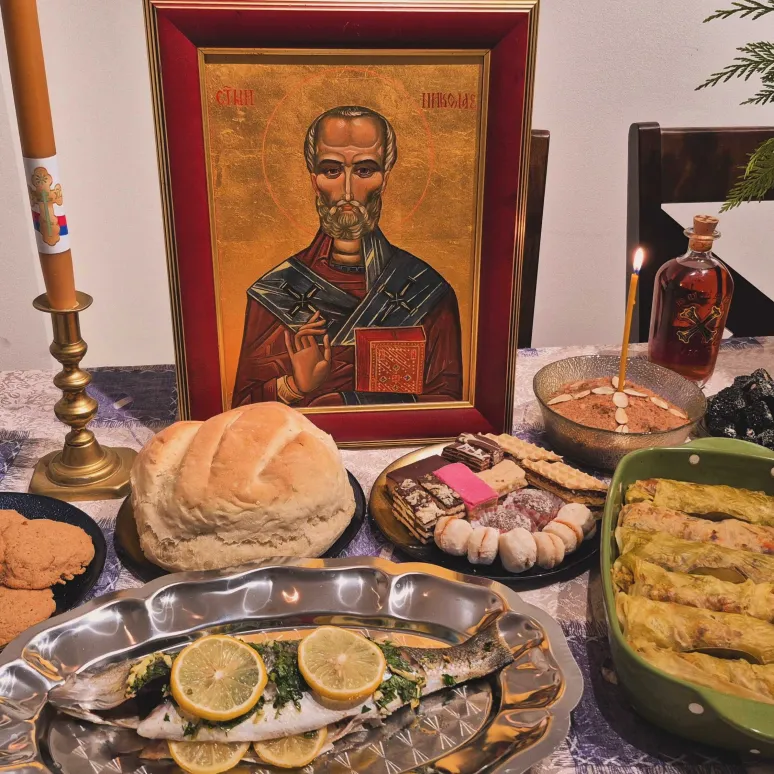
Sfinga’s table laid for St. Nicholas.

Each candle was individually anointed with the same combination of oils and placed within the dish, with a separate name spoken over each as they were lit. Maria and I stood vigil over the flames until the last extinguished, scorching the flour mixture until it was the same texture and appearance as the Thursday Salt. We then emptied out the bowl into a cloth bundle, over which we laid the bread and petition, and tied it up to be taken to church. After the mixture heard the mass, a bean divination was performed to elect where it should be buried for the greatest efficiency in manifestation, with the answer generated being by a riverbed. The day after Nikoljdan proper, I carried the bundle to the very same river I had consecrated all my tools for the Tuba Veneris, and let it lie there with an additional helping of rakija, incense, and prayer.

Sfinga’s candles reducing into the powder.

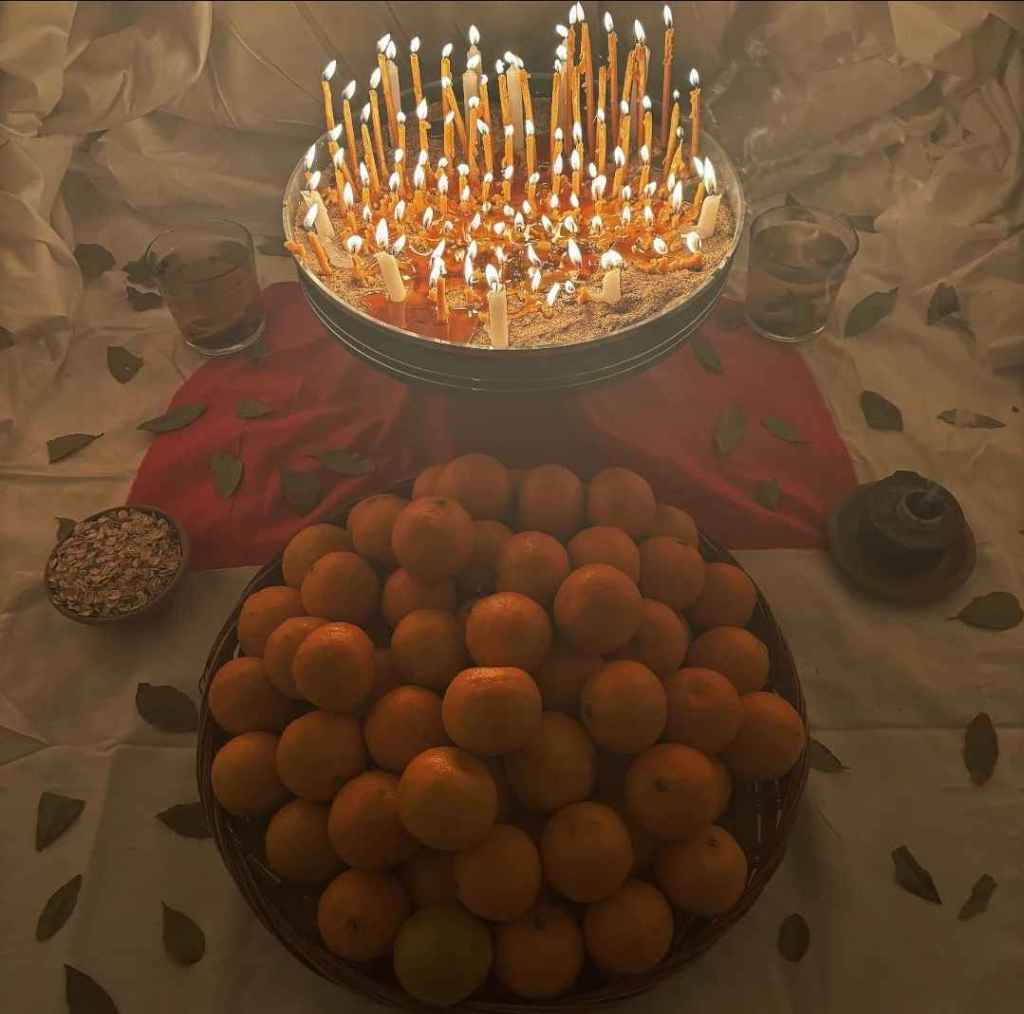
On Key’s end, he prepared a wash of fresh and dried citrus peels, cloves, star anise, cinnamon sticks, bay leaves inscribed with prayers, and allspice berries by boiling them all together, and allowed the aromatics to fumigate the candles used for the rite. This water was then allowed to cool, and mixed with holy water taken from three churches. A portion of this water was then used to wash the items on the shrine, the offerings of fruit, and the candles in the names of each respective donor, while the remaining two portions were divided into glasses and offered after receiving additional prayers and blessings to serve as vessels of refreshment and direction to the spirits inevitably called by the offering.

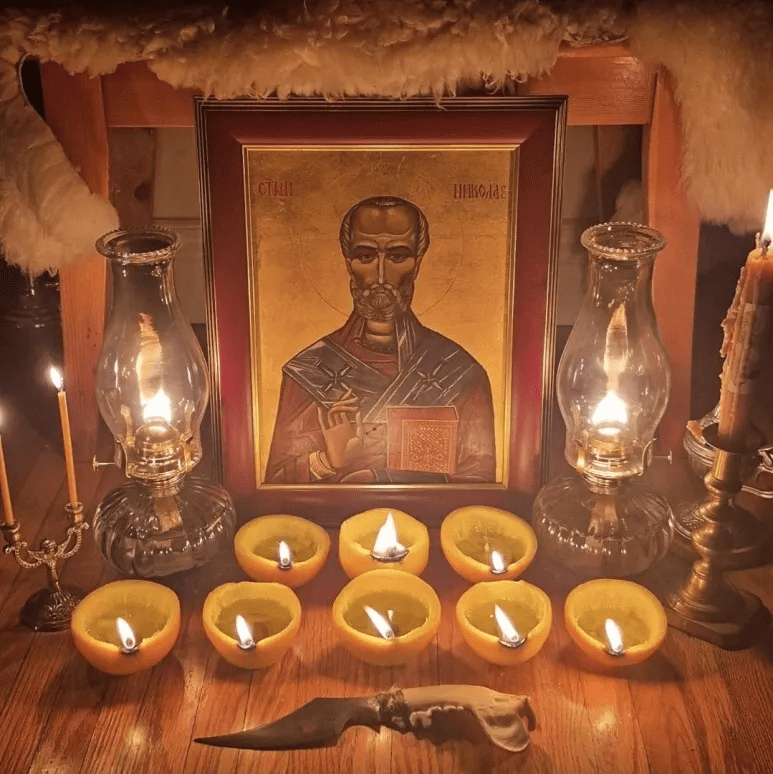
Key’s table set for St. Nicholas.

Key then hydrated a fireproof basin full of sand with another blend of holy waters from three churches, orange blossom water, and a splash of the herbal wash, then prayed over it a rosary dedicated to St. Nicholas, asking for his intercession. Each candle was then lit, naming each donor while doing so, then placed in the basin after pausing to interpret the omens that emerged from the candle as it pertained to each person’s condition. Appropriate oral formulas or prayers were offered to overcome corresponding blockages, uncross conditions, or wash away other forms of spiritual detritus.

Oats were then offered to provide sustenance to St. Nicholas’ horse, such that it may have the strength to bear each patron forward along their desired path, and the fruit offered before the saint with a prayer that he confer blessings of foresight, clarity, and prosperity on each patron. Incense was also offered to the Saint and the spirits present, and vigil was kept over the candles as further omens for the collective were observed and individual candles were maintained with additional remedies.

The candles burning down, each with their personal petition.

Each successive candle built off of the momentum of the last, eventually feeding into the sensation of the blustering squalls that drive the ships patroned by this saint forward, until the enchantment itself was caught by this wind and carried forth to each recipient.

Once our work was complete, we sent all the proceeds raised by the working to our Cabula, and gave the good Saint one final battery of prayers in thanks for his swift intercession, praising him for his good works and petitioning him once more over to elevate the wealth, prosperity, and luck of all those who submitted their names and the names of their loved ones to our group ritual. We are truly so grateful to each and every one of you who contributed to this first group offering, and look forward to offering more in the future for more good causes!

St. Nicholas’ Day Candle Service

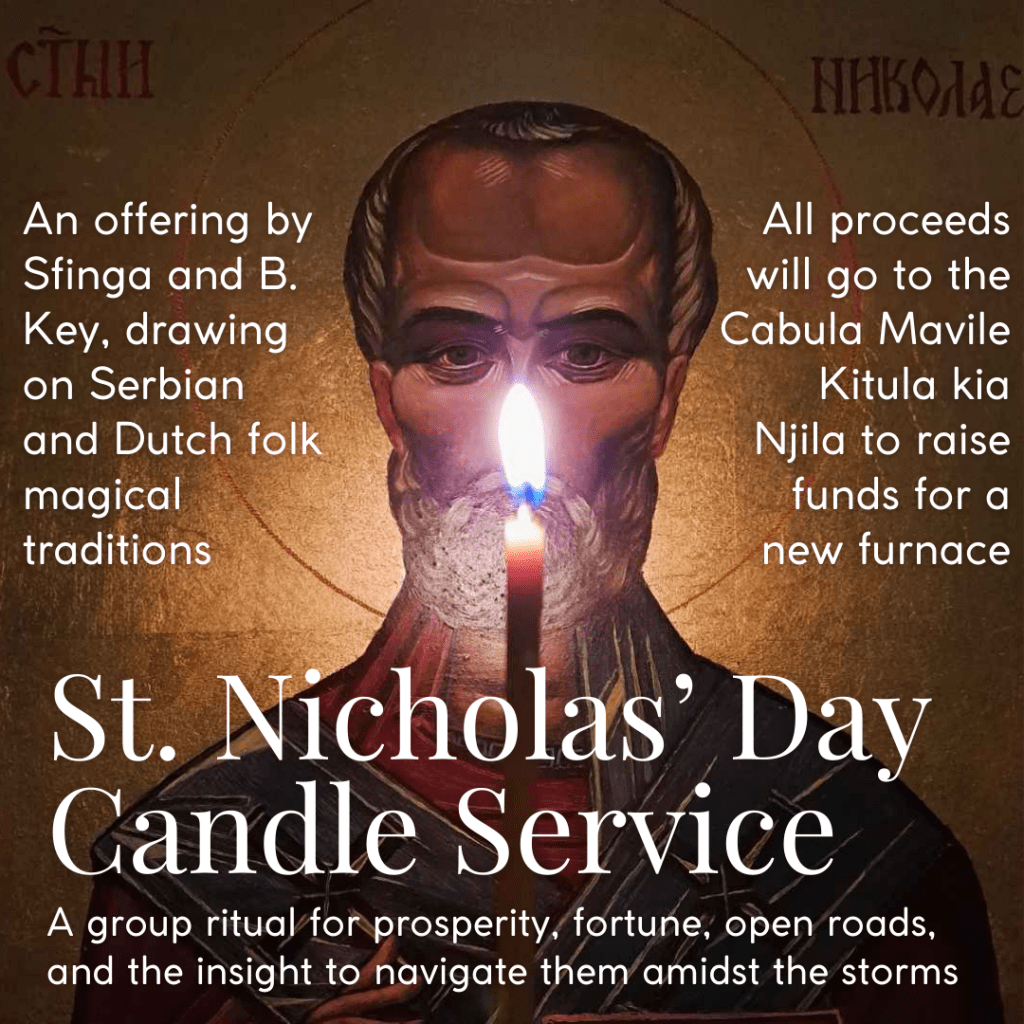
In honour of the holiday season, and the continual procession of some of the most important feasts and saint days shared in common by all three of our cultural backgrounds and magical services, we’re pleased to announce a special candle service held by Sfinga and B. Key on the Serbian Orthodox slava of Nikoljdan: St. Nicholas’ Day.

Recently on our podcast, The Frightful Howls You May Hear, myself and Key interviewed their Tata in Quimbanda de Angola, Tata Apokan (Jesse Hathaway Diaz), on the ins and outs of initiation, priesthood, and what it means to commit to a lifelong study in an oral tradition, especially in matters of co-creating community alongside elders and spirits alike. This was an exceptionally special episode to the both of our hearts and we’re absolutely delighted to continue having our Tata back on the podcast for many more to come! With the winter season fast approaching, and our temple in need of a new furnace, we wanted to contribute to our Cabula and our beautiful community at The Frightful Howls alike by offering our very first candle service fundraiser, in honour of an important saint at the heart of all of our practices.

By donating to this candle service, you will receive two workings performed on your behalf, or on the behalf of the person you wish to name: a prosperity ritual from myself, Sfinga, steeped in the association of Sveti Nikola as the Gospodar Vukova (Master of the Wolves), drawing on Serbian folk magical techniques, and a road opening and insight ritual from B. Key, drawing on Dutch folk magic and sailing lore. Combined under the auspices of the Serbian Orthodox slava of Nikoljdan on December 19th, both rites will be cast for you to bring fortune, as well as the clarity and vision to acquire and maintain it.

With St. Nicholas being perhaps the most important and celebrated slava in Serbia, it is no surprise that his cult inherited many of the qualities of the pre-Christian Dabog, the chthonic deity of healing, magic, death, wolves, mining, watermills, agriculture, and far more. Just as St. George, St. Michael, St. Sava, and St. Demetrius inherited many of the same qualities of Dabog through the cult of the Master of the Wolves, so too did St. Nicholas most prominently, as explored by the great ethnologist Veselin Čajkanović in his important work O srpskom vrhovnom Bogu. His cult is well-known throughout the Balkans and across its many religions, heralding reflections on divination, prosperity, travel, and seafaring.

It is these aspects that will be highlighted and honoured in my portion of the service. Each donation will allow you to submit your own name or the name of a loved one to the ritual, which will comprise of an offering of koljivo, slava bread, and red wine presented to the saint in the traditional manner of a Krsna slava, and a pure beeswax candle anointed with holy oil, prosperity oil, and protection oil. Each name will be added to the group petition and burned down into ash, which will be added to a charm of Thursday salt, holy bread, dirts from various Orthodox and Catholic churches of St. Nicholas from across the Balkans, and key powders prepared for this purpose. Once completed, the bundle will be taken to a mass for further blessing and then interred safely in one of three potential places of power, as bean divination performed on the feast proper will elect.

Key will draw on his own knowledge of Dutch folk magic and seafaring magics to open the roads to that same prosperity and grant the insight and divinatory ability to capture, retain, and protect the blessings to come in the New Year. Each name will be etched into candles fumigated with and asperged by an aromatic wash of citrus, clove, anise, holy water, world currencies, and other herbs for insight and security of received boons, blessed with prayers and recited formulas for the same purpose. Each candle will be presented to the shrine alongside an offering of citrus fruit to recollect the gold St. Nicholas so famously distributed in order to avert an unlucky future, and various grains associated with prosperity, diversion of misfortune, and a gentle nourishment of the senses, as to match the provisions of his journey by sea and to strengthen his guiding horse before travelling the road ahead. All of the edible components will then be donated to a nearby food bank in his name to continue this charity and distribute this enchantment to the world.

An Instagram post containing pictures and our reflections on the ritual will go live in the days following the feast so that all who participate may have a record of its completion.

All proceeds will go directly to our Cabula. We hope that this intersection of our traditions and communities serves you well in your New Year’s petitions and plans, and provides an ample boost to all you seek to grow and harvest in the coming months!

Our sincerest, heartfelt thanks to everyone who donated to this fundraiser! We not only met but exceeded our initial goal by double! A follow up post on the ritual as it was executed will be posted in the coming days. We’re so grateful to each and every one of you who contributed to this first group offering.

St. George’s Charms of the Victory-bearer

By the red cape of the soldier-martyr,
By the red wings of the adversary underfoot,
By the red-drenched spear piercing its maw,

The Charms of the Victory-bearer are born, baptized, and bled.

The charms at the foot of a pacted tree.

These potent bundles were first birthed on May 6th, the Orthodox feast of St. George, which this year happened to be the day immediately following Easter. I’ve much joked with friends about how much “longer” Lent felt this year in light of Easter being May 5th, but this too came with its own advantages. That the eve of Đurđevdan (St. George’s Day) was itself Easter provided the perfect folkloric confluence for a number of the key ingredients which went into crafting these sorcerous allies—fleetfooted, valiant, and unrelenting as the martyr himself.

Having collected the necessary herbs either on the eve or at dawn on the feast proper, retrieving each with the appropriate offering left in turn and through the auspices of a bajalica or basma (oral charm) specifically used on St. George’s Day for those very plants themselves, I began the core powder within the first hours of the feast. The shell of first red egg of Easter—a prized ingredient within the Balkan folk tradition—was crumbled and left to soak among the blood clots of an offered rooster, consecrated with the Jesus Prayer and given veneration through Good Friday, Holy Saturday, and Easter Sunday all. On the martyr’s day proper, I baked the kravaj or kravajče, a solar bread intended to mimic the wreaths which would crown cattle for protection, the first sacrificial lamb for protection, and the milk buckets that would receive the first milking of St. George’s Day for fertility. Across numerous villages, and most famously recorded in Vrtovac—a village in Serbia that has been much-studied for its detailed St. George’s Day customs of sacrifice and fertility magic—this bread would be wrapped in geranium, sprinkled with salt, and placed by the nearest river as an offering; or alternatively divided up amongst anthills so that the ants themselves may “lock up” the fertility gathered to protect it from negativity and the Evil Eye.

At the same time, bread baked specifically for a saint’s feast is itself a powerful fetish to be used in the creation of charms. I was trained to add a little piece to each charm I make (a ritual bread that was prayed over for many hours was a key component in the Master of the Wolves charms we released last year), and this case was no different. The rest of the kravaj was divided up between spirits, friends, anthills, tree hollows, the dead, and a river, each with a corresponding oral charm spoken over the piece as Thursday Salt was sprinkled over its resting place, tied to its post with white horse’s hair.

As an additional offering to the martyr and the spirits of his entourage, I cooked belmuž—a sheep’s cheese cornmeal porridge—and gave portions to each of my assisting familiars and to the holy saint himself. The banquet was laid over a red cloth that was consecrated as his cape, fumigated in red Orthodox St. George’s incense I brought back with me from my last trip to Greece, and sprinkled with wine, rooster blood, sheep’s milk, and holy water with sprigs of basil and plantain. When the time came to make the charms themselves, it was this cloth that was divided into the 21 squares that would host the cores birthed on his feast.

The feast given unto St. George.

Herbal materia, both freshly gathered and dried from previous corresponding saint feasts, were combined within a vessel along with personal fixed star powders made in my tradition, specific dirts corresponding with the nature of these charms, and the first red egg of Easter, which had itself undergone numerous rituals upon Christ’s rebirth. As the serpents of Aldebaran and Regulus were massaged for their dew, so too were the armies of St. George supplicated, in memory of his eternal triumph over the aždaja and his folkloric allyship with the zmaj. Propitiating the saint and the gods he masks alike, the raw powder was left incubate within the kravaj, veiled by his bloodied cloak against the glare of any stars not pacted to this working.

Finally, once the raw bundles passed their requisite three omens of manifestation—that they were indeed alive and bringing victory unto their bearers—I was given license by my spirits to bind them still. All three of us at With Cunning & Command and The Frightful Howls You May Hear take efficacy and results extremely seriously; nothing we offer to the world can be sold before it has succeeded in its tests of fealty and power. The trials these cores underwent were in line with their intended use: the overcoming of obstacles, the germination of fertility, the destruction of nightmares, the evil eye, and any other such spiritual malady, and the ultimate triumph of their carrier in matters of competition. Be they deployed for the protection of fertility (in matters of one’s own, those of animals and plants, or even those of other magical workings so that they may bear fruit), the defeat of enemies in matters where only one may prevail, or the destruction of jealous gazes, lingering spirits with ill intentions, or stray miasma and malefica brought home underfoot, the Charms of the Victory-bearer are the white-hot flash of the spear, the crack of the celestial whip, the hooves of the thundering hero-steed crushing each viper before it ever slinks across the threshold.

The base mixture includes allies such as basil, linden, geranium, nettle, chamomile, plantain, dandelion, and many other potent herbs collected in the dark such that they cannot be named. Dirts from the graves of 23 soldiers, 23 anthills, and 23 crossroads, as well as dirt from the village Başköy/Potamia where St. George was said to have been born, are combined with powders of Aldebaran and Regulus created in a manner taught to me in my tradition, as well as a more conventional Sun in Aries powder elected by Salt. Serpent bone, St. George incense, white beans from a chart that approved these charms with the most blessed omen of the Three Stars, and many more implements made their way into the bundles, which were then tied with red thread, a piece of carnelian, and a small pocket icon of St. George, finally bound over with white waxed linen thread. Each knot had the appropriate oral charm breathed into it, an offering of air bestowed as the final gift before they were once again perfumed in incense and left to breathe the sunlight for the first time since the feast.

Having received countless prayers, rich offerings, and diligent attention to omens, auguries, and folkloric expressions of St. George’s might in nature, these charms are finally available for purchase. They may be kept in one’s backpack or purse, nestled in their place of work, placed by the hearth or on appropriate shrines, or hung by the main door to your home. Give them a candle (white, red, or beeswax) and a shot of vodka, brandy, or whiskey once a month, preferably on the full moon to keep them refreshed and spry. These are workhorses and soldiers, aggressively targeting areas of weakness and conquering obstacles in your path. If you have an enemy you need to triumph over, or are looking to be the victor selected from among a pool of candidates, place the charm with a lit candle over a copy of your application with your petition written over it in red. Tuck the charm by your pillow or hang it over your bed to protect against nightmares and vampiric spirits, or to assist in conception and sexual virility. Gift the bundle to your protective spirits to act as arms for them, becoming a battery of power for them to wield against disease, poverty, malefica, and loss in the pursuit of securing steadfast agency.

If you’d like to purchase one for yourself, please click the link below. Shipping is included within the price. They will be mailed out within a week of purchase and a tracking code will be e-mailed to the PayPal address used to buy them.

All St. George’s Charms of the Victory-bearer are sold out. Thank you for your patronage!

It is not my hand that cuts these cords, but the hand of St. George upon his holiest day. Amen, amen, amen.

Master of the Wolves Charms: The Old One’s Guard

This offering has been a long time coming. Painstakingly birthed, laid to rest, and rebirthed over numerous Orthodox feasts, Balkan folk magical holy days, and stellar confluences; dragged clawing through the star-fallen chthonic and sun-devouring ouranic spheres; armed in teeth that have tasted fish, mammal, and bird; and nourished with the vital Red of communion and sacrifice alike—these charms are an expression of gratitude, and a fervent howling of further ingress, unto the mysteries of the Great Wolf Shepherd himself.

While little-known outside of the oral folk lineages in which his crooked gait wanders, the spirit known varyingly as the Lord or Master of the Wolves (in my first language, Gospodar Vukova), Wolf Herdsman, or the Wolf Shepherd, is an enduring figure across many parts of Central and Eastern Europe. My own pacts and understandings are grounded firmly within the Balkan context, most especially Serbian, though the pulse of his chthonic heart can be traced from Greece all the way up through Scandinavia. A dear mentor in Balkan traditional witchcraft was the first to introduce me to this enigmatic lord, who emphasized an approach that peers through the crossroads-pole masks of Veles, Dažbog, and numerous key Thracian cultic inheritances. He passed on his pact, through the wolf-saint he venerated the Master through, and in the capacity by which I have license, I’ve instructed our dear Key in similar ways.

His myths and stories are many, as are his myriad incarnations and forms. Much like the god Veles himself, the Master of the Wolves’ tales are retold and aspected through numerous chthonic saints, which include in the Balkans: St. Andrew, St. Demetrios, St. Sava, St. Michael the Archangel, St. Christopher, St. Blaise, St. Martin, St. George, St. Nicholas, and many more. Animal, man, god, and all between and beyond, he appears as a lame white wolf accompanying St. George, a lame old shepherd, an old white wolf, and various instantiations of each who shapeshift into the other. Ally to the Forest Mother and her spirits, wandering the landscapes as a poor shepherd, punishing oath-breakers and transforming the unfortunate into hungry wolves forced into his retinue (or in some instances, cursing a passerby to assume the office of the “Lord of Wolves” for seven years), and guardian of seventh and/or tenth-born sons; he is both the head of the furious horde and patron of the werewolf (vukodlak) sorcerers who make up his restless retinue. Even when he is not referred to by any particular honorific, the respect for this mercurial figure can still be felt in his abstract titles, common to the majority of his lands, including Latvia, Moldavia, Romania, Serbia, Bulgaria, Greece, and more: “The Old One”, “The One From Above”, “Lame Devil”, “The Unmentionable One”, “The Unclean (or Pagan) One,” “The One Made of Stone,” “The Hairy One”, “Old Grandfather”, and often only by “He”.

While the notion of a Master or Lord of Animals is well-attested across numerous Mediterranean and more broadly European sources, the Wolf Herdsman specifically is especially prevalent in the Slavic sources. In the Balkans, and especially in Serbia, Macedonia, and Bulgaria, he is most prevalently featured among the various customs surrounding the “wolf holidays”, varyingly located across the later months surrounding key saint feasts during which the dawning of the winter agricultural cycle is ever accompanied by a deepening respect for the threat of wolves. While the precise saint he is associated with will vary from village to village depending on the local custom, the practices are often largely similar. During these times, it is generally inappropriate to even mention the word “wolf” out loud, and they should be similarly described through titles such as “they” or “they from above [the mountains]”. Offerings, especially the first lamb or pig of the season, should be left out for the wolves at the far boundaries of the village, or at the first crossroads, in order to pay them off such that they do not threaten the precious livestock of the community. Should a wolf be killed for any reason, including defense of the self or one’s animals, the body should be carried from dwelling to dwelling in the village, apologized to, offered alcohol, milk, honey, and a meal, crowned in a wreath and mourned with the wailing of a child’s funeral, and then finally interred with utmost respect, such that the Master does not come to take vengeance for his child. It is also during these days that, in some parts of the Balkans, the Master is said to roam with his wild and hairy troupe, recruiting lost and restless dead into the fold and transforming them into wolves themselves, drumming up his shapeshifting sorcerers to go once more into the night and hunt down and punish any breakers of oaths. As such, much like St. Theodore’s Saturday, this is a period in which the settling of debts is of utmost importance; even the mildest broken promise should be rectified, lest a witch or wolf-sorcerer come to settle it on another’s behalf.

Yet this is also a time for his allied witches and sorcerers to enchant his tools. Indeed, anything which closes its “jaws” around sheep is intimately linked with him and with wolves themselves, including all manner of implements from sheep shears to barn doors and gates. The particular formulas and oral charms I have been passed down include those already documented in anthropological works, but the vast majority are those preserved by my mentor’s lineage. These charms, which you see before you, are born of much of that magic, personal ingress and devotion, and a deep love of this spirit, his associated masks, the deific forces his legends emerged from, and even his distant links to Hekate and Artemis via Hellenic and Thracian sources, especially in their preservation of the Great White Wolf Mother cult.

The ten charms at rest, crossed with sheep shears and a wolf’s jawbone blade.

The charms emerged out of a number of mutual explorations Key and I undertook in the past year, and took almost the whole year to fully create. As the visions came and the materia needed was confirmed with divination, the first roots began to sprout on the Orthodox herb-picking Midsummer feast of Sveti Jovan Biljober, when the birthing powders were made. Further materia was divined on and cultivated through the blessings and permissions of Ilija Gromovnik, Ognjena Marija, and Blaga Marija, a trinity of saints-as-Slavic-gods integral to the overseeing of spirit-ensoulments in the Balkan witchcraft tradition as I’ve been taught it. Following their summer feasts, and the collection of some of the rarer materia out in nature, we proceeded to construct the bulk of the charms upon Key’s visit in October, in anticipation of the particular Wolf Holidays I adhere to culturally: those cold days following the Mitrovdan feast with the honouring of the Mitrovske Zadušnice. The final—and in many ways, most important—of the four Zadušnice ancestral celebrations. Many of the wolf taboos emerge here as well, including the importance of caring for livestock through the oncoming winter, for women to not spin wool (and the Fates to not be invoked thereby), and for children to not venture out past nightfall.

It is on this day that we hear of many of the legends surrounding the wolves having their annual meeting with their Lord—in the guise of whichever regional saint is most associated with him—and then dispersing to carry out their orders. Some families also make a česnica, a ceremonial Christmas loaf made on Christmas Eve (January 6th for me, given the Julian calendar), and offer it directly to the wolves as a gesture of peace during this time. In my training, a meal is offered for the wolf spirits (in my mentor’s village, this includes the very physical wolves who stalk the mountains surrounding his home!) at the edge of your farm, at the first crossroads out of the village, and at a place where the devils gather: the nearest threshing floor, watermill, garbage dump, or cave. We carried out our offerings, baked a česnica, poured out koljivo and wine, and fed our spirits well. Calling upon the Master and his wolf, vukodlak, and devil brethren alike, we created the next most important powder, and ensouled the fossilized wolf bones which would animate as one under the auspices of their tutelary Mother.

The intention of these charms, constructed by the Master’s watchful eye, is to house a group of his warrior-wolves to defend their allied sorcerers against malefica. These are immensely protective charms, bearing the souls of wild and cunning assassins, a set of spies in the dark and a silent dagger in the shadow. They investigate and overturn plots before they congeal into reality, stalk the dreams of those who slander, break oaths, and lie while asleep, and repay insult, evil eye, and curse with adamantine force. Ultimately, their chief abilities lie in protection and anti-malefica, though it is crucial to note that each leather bag holds within it the pulsing heart of its own spirit—for those they protect and watch over, these are fully enspirited allies that may be petitioned, worked with, sent out to do their bidding, gather intelligence, and watch over the rest of one’s existing spiritual court as another layer of guardianship. The importance of protecting one’s magic and spirits, especially by secrecy and taboo, cannot be overstated, and so these wolves are themselves an excellent addition to the front line of defense for one’s existing pacts as well, hiding and obscuring workings and alliances from being scryed and divined on, and purposefully feeding false information to those who would attempt to peer beyond what is permitted.

Each wolf was selected and enthroned by my and Key’s efforts through a rigorous divinatory process that took place over the entirety of the Wolf Holidays. The spirits were tended to and more deeply incarnated over the feasts of Dimitrije (Demetrius of Thessaloniki) Kozma i Damjan (Cosmos and Damian), Arhanđel Mihailo (Archangel Michael), and Nikola (Nicholas). Once constructed, the bags were interred and rebirthed, and unchained briefly to hunt down and swallow the sun on Winter Solstice. Their final offering was given on Orthodox Christmas Eve: one last taste of freshly-made česnica, and a full bottle of a favourite drink for the Master.

Ten were made in all, though only nine will be available for on here, as the very “Master” of this group will remain on our own joint shrine to the Master of the Wolves as familiar and mother to the pack. These spirits were chosen for their compatibility, loyalty, sense of justice, and verified power; each having been tested individually in the carrying out of tasks and the successful manifestation of results. If you are interested in taking in one of these warriors, we ask that you keep in mind that these are very much living spirits. They can be carried with you for protection, or left at home on a compatible shrine to assist you remotely. Speak to them with respect, offer them a candle, a shot of strong brandy, vodka, or gin, and invite them to assist you in what ails you, either preventatively or actively. If you have a store or are public in any way about being a sorcerer, they would be an excellent ally to set over your business, and to patrol the boundaries of your public image to best shield you from the Eye.

One among the fold, resting over an icon of St. Nicholas.

If you already work with one of the saints mentioned above, it would be appropriate to keep the charm by their icon or statue. They may share a space with other chthonic spirits, provided that your personal divinations do not reveal any potential conflicts. Veles, Apollo, Artemis, Odin, Hyrrokkin, Hekate, and many other such deities are a welcome and natural ally. We recommend a weekly offering of at least a glass of water and a candle, asking that any omens may be filtered and expressed through the bubbles and flame. Allow the spirit to warn you ahead of time of dangers, and divine with them if these are already resolved and do not need to be addressed further, are on the horizon and require additional magical support to unmake, or are already present and are being dealt with. Ask if additional offerings are needed, or if the wolf warrior advises for a different approach. If they request through divination that other spirits in your court be called upon to assist, provide offerings for them as well, and allow the wolf to lead the charge and organize the defense on your behalf.

While protection and curse-breaking are undoubtedly the main areas of expertise for these spirits, they are ultimately fully independent and realized familiars of their own. They can teach and guide their sorcerers in the cunning of shapeshifting, the donning of second skins, the mysteries of the Furious Horde, and the hunting and consumption of ghosts. If one is not already experienced in these matters by training in witchcraft, it goes without saying that each subject must be approached with the sincerest caution, and under the strictest guidance of one’s patron spirits, mentors, and divining arts. Given what we have already noted about the Master, it cannot be underemphasized that these are spirits who abhor oath-breakers, and cut out the tongues of those who blaspheme the truth, or worse, abusers who believe they speak truth out of their own ego-driven needs to remain righteously victimized, and justified in their behaviour thereby. Suffice to say, do not request petty revenge of them, or conflate one’s ego and desire to seem mighty and powerful with a call to study under the banner of the wolf spirits. These spirits demand a level of agency, accountability, and self-knowledge to exercise their protection, and have little patience for those who wish only to lord over some malformed desire to be venerated and feared without any effort or discipline to cultivate right relationship with spirits, and with the very love of learning magic itself. They will vacate their fetishes and return to their Lord if those to whom they are pacted attempt to harness them for a puerile end. In this way, while one does not need to necessarily always be in the throes of a devoted practice to work with them, they should at the very least be comfortable with spirit communication and divination in order to best work with these ferociously protective allies.

The materia that went into the construction of these homes numbers in the hundreds, ground down to small traces of powders incorporated into the main mass. They are housed in leather bags sourced from the Balkans after a similar design by a mentor of mine (so that they may be discretely carried or even worn by the belt during ritual) and adorned with a fossilized wolf paw each, dating back to around 20,000 B.C. These bones were found in a cave in Germany in the midst of a search for cave bear fossils, making this bear-turned-wolf hunt an excellent expression of the Master’s own close ally (and syncretized deific form), Veles. Some herbal and animal allies that join our wolves include goat, serpent, linden, and blackthorn; materia from our personal Sirius, Pleiades, Mars in Scorpio, and Mars in Capricorn blends as elected by Salt and vivified by my own stellar pacts through my witchcraft; the first blossoms of a pear tree grown by Salt in honour of the Master of the Wolves (pear being one of his holiest woods); special dews, honeys, incenses, and beeswax intended to court the favour of the djavoli (devils) and vile (fairies); pieces of a česnica baked with my personal 2022 Thursday Salt and the aforementioned vila honey, each stabbed through by a horseshoe nail rebirthed through the auspices of the Pleaides and Sirius, and additional exorcistic and goetic cunning with the aid of each of the Wolf Saints whose feasts we celebrated and nourished the charms with, in addition of course to the ever-wily St. Cyprian of Antioch. The forty-one beans used in divination to confirm their final ensoulment were also divided between the ten charms, a technique often used to remind the spirits the proof of what they consented to with respect to the pact of their working itself. Much in the same way, the bread, which accompanies in some form the majority of Balkan charms, recalls the joy of life, the rising of the unmade into the made with the yeast, and the fruition of promises and powers.

A bundle of rosemary was taken to the cemetery, with the appropriate guardians propitiated, and brought back to brush over and consecrate each aspect, named and unnamed, that would enter the bundle. Being fed the blood of communion and sacrifice alike, they are now awake and ready to stand guard over their new allies. While this list is only a small preview of all the work and materia that went inside, we hope it is sufficient to give an overview of the great work that went into their careful cultivation and ecstatic midwifing into this world. The Master being an important spirit to all of three of us, being a pact I have helped introduce through my cultural training and lineage that quickly became even more vibrant and rightly-feral in the hands of Salt and Key, we are truly proud that our first collaborative offering honours this enigmatic and darksome Lord in all his many faces.

If you are interested in taking in one of these spirits, and feel confident by your own discernment with your spirits that they would be appropriate to work with, you may purchase a charm for $300 USD below. You will receive additional information for the care and maintenance of this offering to your e-mail within a week of purchase, in addition to the tracking number for the shipping. Please ensure you specify your shipping address when purchasing. We hope that these spirits find deserving homes, where they may be honoured, their names uncovered through signs and omens, and a true relationship built in frenzied communion with the spirits of their new ecosystem.

All charms have been sold out as of January 11, 2023! Thank you all so much for your support!

Note: Much as with the majority of Balkan lore, it is rare to find genuine information about the Master of the Wolves outside of the languages in which he is revered. For those interested in learning a little more about this spirit in general, here are some we’ve found fruitful in English:

Kumalak and Favomancy

Over the past five years, my main form of divination that I most consistently consult, both for myself and on behalf of clients on Instagram, has been favomancy. A while back (and it has been a while, hasn’t it? Salt and I have been finding ourselves so busy with our schooling, magic, and work schedules over the pandemic, but we are looking to get back into writing on here more regularly) I wrote a brief article on Kumalak specifically, a form of favomancy (divination by beans) that is especially known from Kazakhstan to the Balkans. The chart or image that it produces is that of a steppe horseman, whose body, horse, and the conditions of his journey are analysed through the virtues of the elemental configurations of each square. Relaying past, present, and future, spirit-divined omens, and mathematical configurations with their own interpretations (be they certain numbers of beans in a row, the sum of both diagonals, notations on the vertical columns, or even more advanced shapes that can occur with practice), this chart is especially versatile for all manner of magical and mundane questions.

Yet with respect to favomancy as a genre of divination, speaking especially to the Balkans as it is my area of language access, there are a great many charts that are used depending on the region, the diviner’s preference or training, or the inherited tradition. Generally, regardless of chart style the actual layout of the divination will appear visually identical: a 3×3 grid with each square having between 1 to 4 beans. As I described in the Kumalak post, they are generated by whispering a bajalica or oral charm over the 41 white beans (or corn, coffee beans, pebbles, etc.) taken in the right hand, giving the question, then casting them onto a surface, usually a red cloth. The beans are then collected into a pile, after which they are pushed outwards to the sides such that three piles remain. The diviner subtracts four from each pile until a number equal to or less than four remains, and places these beans into each of the corresponding squares in the first row. The process then repeats until all nine squares are filled, pushing the leftover piles back into one group and separating them again each time guided by the spirits.

Regardless of chart style, the bajalica I learned to give can be translated from Serbian as: “Forty-one beans, forty-one brothers and sisters, as you know how to germinate, make green, and feed the world, likewise you know of the fate of (question)”. There are many other versions of this charm which replace, add to, subtract from, or rearrange the order of the verbs, but the basic framework of the bajalica can be found across Balkan languages, including in Bulgarian, Greek, and Romanian. This charm is repeated several times, with the individual words comprising it being continually emphasised and intoned rhythmically, until the required trance is obtained and the spirits flow through to command the beans to land firmly. The divining spirits then guide the hands to separate the piles and create the glyph of the chosen chart. Many other charms can also be found, including ones that are far more explicitly Christian, Muslim, and even those referring to the powers of Slavic polytheism.

Different diviners will have different means of dealing with the final leftover pile: some will subtract threes until one, two, or three remain as a kind of final verdict or judge; with one being fortune, two being misfortune, and three being middling fortune, or fortune but only after a long delay or hardship is resolved. Others might create a new layer to the chart, sometimes referred to as the “foundation”, out of every remaining group of four, and use these numbers to calculate how long it would take for the end result promised in the chart itself to manifest. Another technique involves taking three remaining beans (or having three beans set aside for this purpose on top of the necessary 41) to cast for quick yes/no checks. If the beans do not have any natural grooves on one side, these would be marked so that they can be differentiated depending on if they land marked side up or down. These extra “checks” to see if the rows have been interpreted correctly as they are worked through can be performed in myriad ways. A popular one I am also aware of involves casting one bean alongside a small piece of bread (an item few Balkan amulets and charms are made without, given that it represents fulfilment, joy, and prosperity/manifestation), a coffee bean, and a coin. Depending on which of the latter three the bean lands next to, the character of the question and the interpretation are further developed, with the bread symbolising health, vitality, and manifestation, the coffee bean symbolising misfortune and bitterness, and the coin symbolising wealth and trade. The distance between all four is also further interpreted throughout the session.

For the main chart’s construction, 41 beans specifically are always used. This is a number with a long history in our folk magic, with numerous stories behind its origin. One folktale states that the Devil poked 41 holes into Adam while God was away searching for (not creating!) a living spirit to place inside his clay body, and that upon his return, he stuffed 40 of those holes with medicinal herbs so that the spirit will not seep out. Yet, since there is still one hole that has not been patched, Adam (and man by extension) was made mortal, succumbing to ageing. Hence, healing spells and folk remedies should include at least 40 herbs, or an herb in 40 parts, stored in flasks of rakija or baked into slava bread. Another tale, recorded from Bosnia [here], depicts the daughter of the Prophet, Fatimah bint Muhammad, as a gifted diviner of favomancy, and that she knew of a style that used double the amount of beans: 82. In order to conceal her art from her father who was about to walk in on her performing a reading for a friend, she hid half the beans in her dress, and as such only 41 are remembered. For some, this means that the readings themselves can only ever tell “half the picture”. For others, this means that spirits must necessarily fill out the missing shadows of the beans, and speak from beneath the ground where they grow from and from the skies where they reach to in order to give the clearest picture.

As for the charts themselves, we saw in Kumalak that the generated image is a steppe horseman. Here are a few other variants I have used just in the past month during readings:

The Bed

Woman’s head / Pillow / Man’s head
Woman’s heart / Hearth / Man’s heart
Woman’s legs / Threshold / Man’s legs

While this style seems on the surface to be concerned with matters of love, it is actually exceptionally versatile. The gendered language of the chart is due to its image: that of a woman waiting for her husband to return home from a journey. In all manner of questions, the querent is represented in the left column as the “woman”, and the subject matter at hand as the “man” on the right. Each square tells us something about the thoughts, internal vs. external motivations, preconditions, influences, and spiritual makeup of the querent, the subject matter, their relationship, and the potential obstacles and aids on the path to the question’s resolution. As such, it can be used even to assess the likelihood of a magical working succeeding, with the right column telling us about the journey and ultimate conditions/obstacles of the ritual, the left column describing the sorcerer’s ambitions, efforts, and existing alliances, pacts and resources, and the middle column depicting the ways in which each row’s theme crosses over from one to another, and how successful the translation is. Mostly used for love and familial concerns, I’ve made use of it for all sorts of topics, including workplace relationships, matters of employment, applications, sorcery, spirit pacts, and more. The beans themselves are not read elementally as in Kumalak, but rather numerically with their own unique attributions for this style.

The House

Mother’s Inheritance / Chimney / Father’s Inheritance
Mother’s Debts / Hearth / Father’s Debts
Fortune Departing / Threshold / Fortune Returning

We can see that the core features of the above chart are preserved here. Here, gendered language can be taken seriously in an ancestral reading, regarding the mother and father’s sides literally. More commonly, the mother squares are taken as the ancestry itself, and the father squares as belonging to the social community the client is participating in. Naturally, these can easily be understood as spiritual ancestors and spiritual/initiatory communities. The fortune squares, linked to the threshold, tell us of how the blessings and negative omens actually manifest, and the chimney, hearth, and threshold vertically tell us of the health of the situation, the stability of the querent, and the innate gifts, abilities, and destiny or purpose. This chart is used to understand spirit allies, inherited gifts and curses, the will of local as well as ancestral spirits, and the talents and merits of the querent. The beans can be read numerically or elementally, depending on the reader and their spirits.

“Gazing into beans”

Income / Head / Hand
Affairs / Heart / Expenses
Departures / Foot / Returns

I’m never quite sure what to call this one. It is, at least in my experience, by far the most common chart used in Serbia where I’m from. Generally, this is not even referred to as a chart or style, but simply as the method of of divination by favomancy itself, just as how tarot or playing card readings may be called “gazing into cards”, and reading by tea leaves or coffee beans “gazing into tea” and “gazing into coffee” respectively. The beans themselves are not read elementally, rather numerically, with the odd numbers being positive (three being better than one) and the even numbers being negative (four being worse than two). One is generally representative of news, communication, movement, and beginnings; two referring to trouble, indecisiveness, imbalanced states, fortune undulating, and two-faced people and situations; three referring to fortune, luck, love, and happiness; and four referring to misfortune, sorrow, being overwhelmed, juggling too many responsibilities and projects, and being burdened.

Income and Affairs on the left specifically should be prefaced with “problems with…”, in that they refer to issues in the querent’s life in the material and social spheres (in spiritual questions, this is extrapolated to the matters of spirit in each). Head and Heart discuss the mental and emotional states respectively, and Departures and Returns tell us of the efforts and rewards on the progression of the matter at hand. The Foot represents not only the journey, but also how whatever leaves in Departures and whatever comes back in Returns actually manifests, and how it is integrated into the life of the querent. The Hand and Expenses are always read together as a pair, with the former signifying the resources capable of sating the latter. In the case of the Hand, this is the only square where the beans are treated even more numerically, with four in this case being a positive omen of plenty. That said, four still retains its relationship with being overwhelmed and burdened. If the number in the Hand outweighs that of the Expenses, then the querent has the resources necessary to tackle any debts they accumulate along their journey, with more dramatic differences being generally considered more fortunate, with the reverse being true as well. That said, a three in Expenses is a highly favourable omen, as is a three in the Hand; this does not mean they cancel each other out or that the querent has “just enough”, but rather that they do not struggle with their debts as it is, and they have sufficient resources for whatever they must tend to in the present. A four in the Hand and three in Expenses, for example, suggests someone with so many resources that it suffocates them; a rich man with so many duties to tend to and employees and investors to report to that he is unable to enjoy his wealth (save for that he can live comfortably in terms of debts). Meanwhile, a four in the Hand with four in Expenses shows us that the querent is able to meet their significant debts with their equally significant resources, but that the balance is always threatened, and that at any point their situation may come crashing down. This is especially indicative of high-stakes gamblers, traders, and those who are self-employed or take commissions.

As always, in matters of spirit these squares will be interpreted in the appropriate translations. Furthermore, each chart style has its own significant omens that supersede other interpretations, much like the “Three Stars” or a row of all threes that I mentioned in the Kumalak article, as well as various other configurations involving the sums of the diagonals, horizontal combinations, and so on.

Given that the primary physical materia used for this divination style is generally organic (beans or corn), it is understood that the tools will themselves take on the quality of the reading and capture its essence. As such, a positive reading for love can be seen as a physical testament on behalf of the spirits as to the luck of the situation. These beans may then be cooked and fed to the beloved. Similarly, for wealth, they may be planted and grown to be later harvested, such that all daughter beans from the original reading would carry the same money-drawing power. Those for healing can be placed in a flask of rakija and used to spray down the sick person, incorporated into baths, and used as tokens of reminders to the spirits petitioned to heal that they have sworn to lend their aid and must work hard for that end.

Beans which have read on the nature of a curse can trap a portion of the curse, and as such should be handled carefully, disposed of at crossroads and burnt at graveyards, with care being taken to not inhale any of their smoke. If the beans have absorbed too much negative fortune, they are likewise disposed of. A reader will often go through many sets over the year, and special attention is paid to those sets given and consecrated directly to specific spirits to be their mouthpieces in this world, so that they do not get tainted by the nature ignoble questions. In the case of one of my mentors, whenever she sees a client she insists that they pick corn from her farm and bring it to her, picking off the 41 grains themselves. This way, the spiritual essence of the client is already inside the corn as they pass it to her, given their effort in the harvest and selection.

These are only a sample of some of the more popular charts one can come across by speaking with professional diviners, as well as the general protocols for the actual beans themselves. Of course, what is most important in any matter of divination is the light trance, offerings, and communion with the spirits overseeing the reading themselves. In time, diviners will receive their own charts with their own meanings assigned to the number of beans unique to their spirits, and these are often the ones that those I know make the most use of directly, and as such are also not the kinds that can be shared publicly. In my own practice, I will read for clients using whichever style best suits the question (or whichever my divining spirits recommend), and over time this has become a natural and fluid process. Generally, most diviners will use only one or two styles that are known, keeping those received from their spirits to themselves for more private matters. In truth, each chart is equally capable of answering any question one can think of; the decision ultimately rests on what one’s own spiritual faculties prefer to read with, as well as the preferences of their spirits in weaving and expressing the client’s story to them. The central image that the chart generates should always be one which speaks to both reader and client alike in lending assistance to the decryption of the question, its future, and fortune.