“…you are not a citizen of a democracy but the subject of a carceral state, just waiting to be cataloged.”
Associate Justice Sonia Sotamayor, writing in dissent in Utah v. Strieff
Coinciding with the release of Episode 33 of the Frightful Howls You May Hear, Law Stay Away and Magical Resistance, we’ve decided to make available the Patreon show notes as a resource for those who find themselves victimized by the state on the basis of race, class, gender, or sexuality. Included within are written instructions for all of the workings described in the episode, along with an extended reading list and links to resources that we enjoy and support.
As I also described in the episode, I’m introducing a small collection of oils and charms that work to curry favor in the courtroom, repel law enforcement, and provide protection to the home.
The Court Case Oil.
The first item in the collection is a court case oil nearly identical in composition to the formula that I employ when working with clients. Calendula, galangal, and tobacco form the body of the oil, each awakened to align with their traditional virtues for victory in legal matters. Additional ingredients, such as the ashes of scripture, the ashes of legal documents from dropped and successfully defended cases, dirt from court houses, and dirt from the grave of a prominent civil rights attorney were added to sow confusion, mire the process in fortunate errors, and to respectively loosen the tongues of favorable witnesses and silence those against you.
The Law Stay Away Oil.
The second oil offered is rooted in traditional Law Keep/Stay Away formulations, with additions to emphasize protection and luck in getting out of dangerous situations. Buried in locations noted for their significance to the contemporary civil rights movement in the United States, as well as a police station and the grave of a once-prominent civil rights lawyer, this blend of Devil’s shoestring, Dragon’s Blood, Tobacco, and more come together to protect the conjurer from the agents of the state. The lock affixed to the bottle was requested by one of the spirits who aided in the oil’s construction, itself previously closing a gate that continually frustrated a local police department.
The Indian Head Penny protection charm.
Additionally, small kits consisting of an “Indian-head” penny and two nails, each awakened and dressed in advance with law-keep-away oil, themselves having been buried in a similar array of places of power, are available. The “Indian-head” penny is a folkloric house protection charm, often punched through the center and nailed to the threshold (or otherwise near the door of the home), or suspended with an “X” formed by two bent nails, which is said to “X out the laws”. I opted for the latter permutation for this reason, as well as situating the single coin in a crossroads, in which the guardian spirit can look to the 4 directions.
My St. Christopher’s Protection Chaplets, back in stock after being sold out for a year.
By popular demand, I also prepared another batch of St. Christopher’s Protection Chaplets, which you can read about in a post all their own. They fit nicely with the other items in the collection, and in my experience appreciate the occasional drop of Law Keep Away oil.
The oils and coins included in the collection are slightly discounted when compared to my normal rates, as I’d like to make these particular products as accessible as possible. A significant portion of the proceeds will also be used to contribute to the very organizations and causes that these enchantments were woven in service of, as well as bail funds for incarcerated protesters across the United States. While the episode is fairly US-centric, in order to reflect my own background as an American (separately from Sfinga and Salt being European), these formularies are intended to help anyone, and especially anyone marginalized by the state or especially vulnerable to its oppression, in their work so that they may live freely and well. If you can’t afford a particular item but have need of it, or are yourself part of a marginalized community, please reach out directly by email (broaderkey[at]gmail.com) or on Instagram and I’d be happy to work something out.
Court Case Oil
A court case oil nearly identical in composition to the formula that I employ when working with clients. calendula, galangal, and tobacco form the body of the oil, each awakened to align with their traditional virtues for victory in legal matters. Additional ingredients, such as the ashes of scripture, the ashes of legal documents from dropped and successfully defended cases, dirt from a court house, and dirt from the grave of a prominent civil rights attorney were added to sow confusion, mire the process in fortunate errors, and to respectively loosen the tongues of favorable witnesses and silence those against you.
1 fluid ounce / 30 milliliter amber glass dropper bottle. Price includes shipping and donations to charitable causes local to and verified by Key.
$50.00
Law Stay Away Oil
Rooted in traditional law-keep-away formulations, with additions to emphasize protection and luck in dangerous situations. Buried in locations noted for their significance to the contemporary civil rights movement in the United States, as well as a police station and the grave of a once-prominent civil rights lawyer. Devil’s shoestring, Dragon’s Blood, Tobacco, and more in a blend of carrier oils.
1 fluid ounce / 30 milliliter amber glass dropper bottle. Price includes shipping and donations to charitable causes local to and verified by Key.
$50.00
Indian Head Penny kit
Consists of an “Indian-head” penny and two nails, each awakened and dressed in advance with Law Keep Away oil, themselves having been buried in a similar array of places of power. Price includes shipping and donations to charitable causes local to and verified by Key.
$40.00
Implements of Magical Resistance
A bundle of Court Case oil, Law Keep Away oil, and an Indian Head Penny kit, for a slight discount.
2 fluid ounce / 30 milliliter amber glass dropper bottles, 1 “Indian head” penny, and 2 nails. Price includes shipping and donations to charitable causes local to and verified by Key.
$125.00
St. Christopher’s Protection Chaplets for Travelers, Second Edition
A fusion of chaplet and talisman designed to be taken on the road. For safety and protection during travel, and the elimination of interference along the way.
$125.00
Stay safe, protect your comrades, and fight the good fight.
To say that this has been a long time in the making would be a perilous understatement. Key and I have teased and hinted at this undertaking for over half a year, at various points ruminating on if it was the right time or not to release our offerings into the world, and at each turn being rejected swiftly in divination. The spirits that have guided our hands and hearts have continually asked for more—the Venusian increase, the love-struck outpouring, the tremendous and awe-inspiring chorus of muses lilting in heart-song—reminding us to never shy or shrink away from the importance of our toiling. What began as a decision born of serendipitous chance had, after all, become a sacred pilgrimage; and what we brought back from those shores was an experience that fundamentally reconstituted us at our cores.
For our thirtieth episode of The Frightful Howls You May Hear, Salt interviews Key and I about what it was like travel to the Sanctuary of Aphrodite Paphia—the single most holy site of Aphrodite in the world, being a place of pilgrimage for countless cultures across centuries—as well as the Petra tou Romiou or “Aphrodite’s Rock,” being the place of her legendary birth within the foam. Even as we could only share but a fraction of the full experience—the rest being subject to the taboos of secrecy placed upon us by the spirits we encountered—we were utterly delighted to at last unveil a portion of what made this pilgrimage so special. Far from a simple touristic joust, our experience of the Heavenly Queen transformed us beyond every measure, elated us to tears, humbled us to our knees, and pacted us to a worship that will endure for the rest of our days. While Key and I are no strangers to visiting sacred sites and places of power—having spent the last several years being ready travel companions as best friends across countries—we have never hesitated once over the past six months to declare to ourselves and others that this was the single most illuminating and transformative experience across all our adventures.
The Baetyl of Aphrodite: the aniconic site of her cultic worship in Paphos.
The blessed rain that purified us, the hymns we sang at her Sanctuary, the museum guard witnessing the manifestation of the Goddess through the light of the clouds parting and celebrating with us that “She had come,” the voices we heard within the airs swirling her Baetyl, the second physical manifestation at the beach, and everything that occurred in between—all this, to our capability under the necessity of secrecy and privacy as directed by spirits, we go into at various points throughout the episode. If you’re interested in hearing us attempt to even begin to grasp at the significance of what this was for us, we kindly invite you to give the episode a listen. It contains our usual mischief and humour as we process a story we’ve told many friends and ritual elders over the past half year, but also a lot of vulnerability at the humbling manifestations that we bore witness to, and the deep sense of honour and privilege we feel in being able to share a portion of this experience with our kind listeners and supporters.
Aphrodite’s Rock, illuminated by the sun. We took this photograph after having collected our seventh hagstone.
Those on our Patreon (and especially our Patreon’s new Discord server) have seen plenty of hints and previews over the past little while of the collection Key and I have been toiling over ceaselessly since we returned to our homes last year. Every Friday of every month since the mid-fall, he and I have given of ourselves our fullest effort to a series of offerings to share with the world a distillation of that experience. One of our many agreements we forged with the spirit intercessors and intermediaries we encountered was to share the love of our friendship, love of this experience, love for this Goddess, and Love as the force which binds all together as the rapturous intrusion and fermentation of reality; that while some aspects must be kept sub rosa by necessity and by design, the nature of beauty and love is to unfold as the rose does. These violent blossoms must yet germinate their delights within the maws of desire, enfleshed in promise and fulfilled in need.
While the frenzied touch of the Goddess of Love and Beauty kept us restless, pushing us onward to continue perfecting formulas and negotiating pacts, the spirits that guided us throughout this journey (including those who returned home with us from those shores) kept a steady beat to our toiling. The three of us—Salt, Key, and I all—have intimately shared with each other the aspects of the most transformative and incredible spirit-experiences we’ve encountered across our traditions and the stories of our lives, especially as we’ve deepened the immense friendship between us. Yet so rarely are even a portion of these stories allowed to be public in any capacity. At the same time, it also struck us as only appropriate that, in cultivating this burgeoning veneration of Aphrodite in light of all that She had wrought for us on this journey—so suddenly and remarkably cleaving into our lives and reaching into the pits of our natures to wrestle forth our deepest desires to the forefront—it was only appropriate that we allow for some of that vulnerability to be shared beyond words, even beyond writing: but in offerings of the spiritual essence itself.
This was always our heartfelt desire with this Foam-born Aphrodite collection, named in tribute to She who made it possible. While we will certainly create many more offerings in the future with respect to Aphrodite, the spirits of the Tuba Veneris, the angel Anael, and all the powers under the All and Many that is Venus Herself, this gathering here is made both limited and special in the truest senses of the words through the pilgrimage and its theophanies. Key was in charge of the majority of the creations and carried out his work with the diligence and attention to detail of a master artisan. My chief role was to bring about the circumstances that would allow a troupe of Venusian daimones to become bonded to a series of hagstones as their desired vessels, such that some of the very nymphs in service to the Goddess may become familiars to those most in need of their service and companionship.
The view of the beach and Aphrodite’s Rock from atop the slope.
Locals we spoke to in Paphos continually emphasized that when Aphrodite arose, fully-formed, from the foam of the sea, she was carried to the coast by myriad nymph beings that guided her from her rock to the beach. We continued to find stones in the shape of slippers amidst the waters as we swam, which a number of locals told us were the “shoes” of these spirits. After making our offerings, singing to the Goddess, saluting the many spirits of shorelines and beaches we already hold pacts with, and completing the end of our pilgrimage by swimming three times around the Rock itself (said to grant blessings of long-life, beauty, and love upon all who embark on this venture), we fell into deep trance, encountering some of these spirits that guided us back towards the beach as we swam.
What awaited us at the coast was, without exaggeration, as startling as the sight of the clouds parting to the light of a woman’s form before us and the guard in the Sanctuary. Once we returned to where we had left our offerings under the large boulder on the edge, we were approached by an otherworldly beautiful woman with dark, curly hair and a splendorous garnet-red dress. This was one of those encounters which no description could do justice. Everything about her appearance, gait, composure, and ominous gaze—penetrating yet distant, awe-inspiring yet familiar, ferocious yet docile—left the both of us so speechless we were unable to even muster a polite greeting. Her bare feet appeared to effortlessly glide across the pebbles, undisturbed by their rough edges, until she was just a step away from embracing me. My voice was so caught in my throat that I could not even manage the simplest utterance. Instead, she suddenly grasped my hand and impressed in it a stone—the same deep garnet-red as her dress. She did not respond to my breathless attempts to thank her in Greek and in English, physically vanishing around the bend of the stones as Key and I attempted to follow her. Only upon closer inspection later did I realize that its shape physically resembles the coastline from the Sanctuary to the beach itself.
It was after this encounter that Key and I collected the seven smooth, flat hagstones that would become our own “Baetyl”. While there are no shortage of excellent statues of Aphrodite across Cyprus’ many beautiful shops, we were so moved by the aniconic representation of the Goddess at her Sanctuary that as soon as we found seven (and no more, at that, than her sacred number) hagstones, we knew that this would be our shared representation of Her for the rest of our days. Even their holes perfectly overlap each other, allowing water to flow freely through the cairn. Throughout our pacing along the beach, the nymphs that guided us continually inoculated us with their designs; that some wished to accompany us as daimones and intercessory oracles for the Goddess and her pact, while others sought to pass through our hands and into the company of others still.
The first and largest of the stones.
We took this charge sincerely and with extreme conviction. Even on our breathless ride back to the capital where we were staying, Key and I could not help ourselves but begin to urgently brainstorm how to begin to share some of this bounty with other devotees and sorcerers as we had been directed to.
In our bags I had carried with us a number of hagstones we had collected from our journey. Cyprus was not our first destination, nor would it be our last during this month of travel, and while our reasons for going together were more for work than for pleasure, after this crucial point we began to finally grasp back towards the hands of the spirits that had guided us along the way, with the serpents’ eggs of these holed stones being vital points of germination on the path. The spirits tasked us with bathing the set they had selected from amongst the whole within the very waters between the boulder and the Rock as the first of many steps which would come to dominate my own life over the next half year; a love letter written in wooing desire to bring those same delicate feet over countless many shores home.
The Eyes of Nepherieri
It is no exaggeration for me to say that I spent every Friday toiling over these since I returned home. I had such designs in my own mind for how the shape they could take. The spirits insisted that the hagstones had to be their true seats, outlining for me an entire regimen of how to enliven them as their hearts. In my eagerness, I imagined charm bags wrapped in animal skins and adorned with feathers and beads, only to be swiftly redirected in divination and in dream alike to what they unveiled and insisted upon: prayer ropes. The more I attempted to negotiate the aesthetics I had in mind, the more they insisted upon simple luxury: garnets the colour of the stone the woman gave me (and the colour the hagstones themselves would turn after consecration), mother of pearl in honour of the shell protecting Aphrodite’s feet, and carnelian for her fire, her light, her sighs, her kisses. Seven by seven, her number, and the number which continually revealed itself to us along each stretch of our pilgrimage. Firm in the weight of the beads yet light in their manipulation—these spirits wish to be prayed with to the Goddess, to send each intonation of vowels, each gasp of joy, each tear of grief and longing, each prayer for liberation and recognition in the arms and gaze of Another through their circuit and back through the hole that is the womb of possibility. To be wrapped around the wrist and pressed into the palm, to have yearnings hissed through the gaps and folded directly over spells, to be draped over statues, candles, and workings to empower them with not only the bonds they will forge with their eventual keepers, but everything we were able to pour of ourselves from our experience into their grasps.
The hagstone cairn that is our private Baetyl of the Goddess, looking over the Eyes of Nepherieri.
Deceptively simple as their designs ended up being, the process of ensouling these fetish-vessels was anything but. Named the Eyes of Nepherieri in tribute to the secret name given in PGM IV. 1265–74, to be intoned internally seven times in order to instill love in another, they were the sole focus of my spiritual labours every Friday for the last two seasons.
It is difficult for me to even begin to illustrate how much effort went into their consecration. With many details having to be kept private for the sake of the spirits involved, what I can reveal is that they received such attention and reverence that they consumed a full calendar month’s worth of continuous effort. They were fed white doves, sat within the blood within a copper vessel until they were dyed red, then macerated in additional red wine, sorcerous oils capturing a Venus Rising in Pisces election that Salt had procured for us, tears shed during declarations of love, dirts collected from famous lovers who were buried together as well as serpent holes within the Sanctuary, and pomegranate seeds collected from the pilgrimage. Each had to be hung upon the branches of seven different trees, all divined upon and associated with the worlds of nymphs, faery beings, and otherworldly passage, and buried under seven different holy mounds and mountains chosen for their own historic importance to the same across the Balkans, Mediterranean, and North America. Each tree and place of power was placated with regular offerings, and, once the stones were retrieved, presented with a communal meal which was then also shared with those in need.
One Eye among the many.
Their final gasping breath of life was given to them through a commingling of sea water collected from Aphrodite’s beach and holy spring water from a mountain dedicated to St. Petka, each poured through the seven hagstones of the main cairn and into their individual mouths. As the water passed through the gates, it was impressed upon me a notion I was all too familiar with from my own work with the Libellus Veneri Nigro Sacer: that the Queen of All claims ultimate victory over every planet and every sphere. Just as light travels from Saturn to Luna to Terra, so Venus claims her rulership over all of germination, placing herself as regent of every sphere of the chain of being. I am genuinely proud of these and feel so humbled and moved that I am able to share them with those who would claim them. Their spirits have passed every “check” of manifestation, ability, and fealty I have asked of them with flying colours, giving unto me individual nicknames that I will provide with those who will take them in; their true names will be revealed only directly from spirit to sorcerer once they are in their destined hands. They will be sent nestled within red velvet pouches filled with rose petals and bits of the Venus Rising in Pisces powder I crafted with Salt’s erudite election, along with instructions sent electronically on how to care for them and work with these incredible allies.
Forty-nine garnets by forty-nine prayers, kissing the womb that unites them.
If you are interested in welcoming one of these unparalleled spirits into your court, I ask that you divine first with whatever method is most appropriate—even a simple nature augury—to see if this would be welcomed by your spirits. They are priced similarly to astrologically elected talismanic jewelry on the advice of many kind astrologer-magicians, not only a reflection of the work that went into ensouling them, but also because the experience they capture beyond the translation of a pact between daimon and sorcerer is not one that we can reproduce in any meaningful way again, even if we ever find the time and ability to embark on a similar pilgrimage in the future. Our dear friend Sasha Ravitch had this to say in our Patreon Discord recently, which touched Key and I profoundly to have our efforts be witnessed so nakedly by another seer and companion of the Others:
One of the things I am struck by is how nothing like this series, nor any item in this series, has ever existed before, nor will ever exist again. It cannot be replicated – not just the creation of the materia and the devotions, but also the literal pilgrimage, the literal appearance of the goddess, the availability at the site of the materia that was to be collected and utilized. This surpasses any astrological magical Venus election. It bypasses all need for those boundaries or rules because the Goddess herself gave her flesh to the work.
If one of these nymphs calls to you, it would be my sincerest honour to assist you in facilitating this pact. May their gentle hands and fleet-footed gait empower you to the fullest experiences of a relationship with the Goddess Herself, and enchant every relationship and expression of love henceforth.
All Eyes of Nepherieri are sold out! Thank you for your patronage!
The Oil of Nepherieri
The Oil receiving its final consecration.
This is Key’s flagship offering for our bounty, an oil he has described on numerous occasions as an attempt to create a liquid personification of the blessings he bore witness to at Her holy site. Structured around historically attested offerings to Aphrodite, this oil also draws additional inspiration from Agrippa’s Three Books of Occult Philosophy, especially Book One, Chapter 28: What things are under the power of Venus, and are called Venereal.
Built off a foundation of apples and pomegranates gathered from her Sanctuary in Paphos, then dried, reduced to powder, and infused (some hot and some cold depending on the need of the spirits), this oil is itself a living spirit. It may be spoken to, prayed with, and used in any manner as befits the Queen on High. Its birth required immense attention and care, from the ways in which each herbal ally was freshly harvested by hand and by copper, to how each rose and myrtle bush was offered to and sung with. A powder made of the white doves given to the Goddess was added alongside countless other ingredients which must remain unnamed. The vessel of this oil was treated with just as much care as the contents, joining body and spirit in the sighs of incarnation and the joy of life. It was clothed with red and affixed with stones gathered from the temple as a calling to Aphrodite as Kythere (“the red one”), as attested in PGM IV. 2891–2942, and as Kythira; a purported birthplace of the goddess or alternative destination the nymphs carried her to in her most heavenly form. The red cloth itself was extensively consecrated, having seven feasts laid upon it and seven forms of love graced into its folds before it was ready to wrap the mother bottle in its embrace. Countless votive acts were performed to the bottle to ensure it was prepared to contain the essence of Key’s reflection upon his own devotion and experience at the temple.
The bottle you receive should be enshrined and treated as a cultic object of its own. It will be wrapped in its own cloth and act as its own mother bottle, an offering of the liquid form of the Goddess’ blessing. Use it in any manner of working you can imagine, to cultivate Her presence, to anoint your body and the bodies of others, to give unto spirits and to forge their pacts under Her gaze. This is not an oil designed only for the usual reasons of love, sex, beauty, fertility, and so on—there are incredible astrological elections and traditional recipes and formulas across the traditions we are initiated and trained in that can produce oils that work brilliantly for these goals instead. Rather, it is an offering of the Goddess unto the Goddess, forging a relationship between user and spirit directly. Include it in your own fetish vessels and add it to ropes that will tie together the pacts you will forge with even the most capricious of spirits. If you would like to use it for the everyday needs of sorcery and conjure, we recommend that you add seven drops to olive oil you pray Her hymns over to create a new mother bottle specifically for more regular engagement with practical magic.
Oil of Nepherieri
1 fluid ounce / 30 milliliter amber glass dropper bottle, draped in red cloth and secured as a devotional object of ritual use. Created by B. Key.
$220.00
Balm of Eros
Tins poured in submission and in domination.
The first of a trinity of offerings Key created in honour of the three most famous forms of love: Eros, Agape, and Philia. The Balm of Eros uses the Oil of Nepherieri as its main oil base, to which were added rose petals and thorns alike, lavender, red clover, damiana, kava, ashwagandha, skullcap, vanilla, a small portion of the dove powder, and dyer’s alkanet to turn the beeswax pink. There is a dream-like, opium haze to its kiss, liberating inhibitions and indulging the smooth, passionate glide of stripping silk, unveiled prowess, coy submission, and lurid command.
Having received extensive consecration and laboratory testing, these balms may be used to strengthen sexual and romantic bonds through mutual anointing over the skin, enhance the sensitivity of skin to touch, allow for more pleasurable and physical experiences with spirit lovers, heal minor cuts and bruises incurred through rougher, passionate play, and much more. They are also especially designed to make the clients of sex workers more docile, pliable, obedient to directions, and swifter to part with money.
Balm of Eros is sold out! Thank you for your patronage!
Tincture of Agape
A small vial of the tincture, gold as honey.
A gift unto the gods, this tincture was crafted with a number of coalescing goals in mind: to instill a benevolent blessing of overwhelming purity and the sensation of divine presence, to improve the intellect, to heighten spirit communion, and to make oneself friendly to spirits (especially those that are the least friendly of all) chief among them. Many herbal pacts were forged on behalf of this tincture, including hand-foraged motherwort as the base, hyssop, lemon balm, lavender, and more. Each individual vial was blessed with a mouse’s paw—taken from one acquired by a spirit at a three-way crossroad—to be as the gentle hand which removes the needle from the lion’s paw, ensuring that one’s humanity has a less abrasive effect to those spirits to whom we smell foully towards, and securing immediate communion between what was once stranger to become now beloved friend. In this way, this is also an incredible ally in repairing broken pacts, frayed bonds, and in allowing forgiveness to give way to lasting harmony.
In creating this tincture, we were both reminded of how deeply it is that love and beauty and the delights of this Goddess—so profoundly worshipped and so deeply called out to even to this day in her many forms and faces—is quite literally the force which makes all the stars in the sky shine and the world itself rotate on its axis, yet it is tragically what we often feel most guilty about claiming for ourselves and owning our own desires for. Our spirits have reminded us that our relationship to being seen and held by love’s embrace—romantic, platonic, or otherwise—is as necessary as breathing, yet so often we are taught it is something to fight for to become worthy of. This tincture is also an offering unto the mysteries of healing, rectification, and right alignment with the reception of love into one’s life, and that perilous and frightening as that journey may be, we never truly walk it alone.
While Key is proud of all of his offerings, this one holds a special place in his retinue for how potent its effects were upon testing. Even the very motherwort that was freshly wild harvested for this tincture was found through the assistance of the Eye of Nepherieri’s nymphs, who led Key directly through a bath of newly-blooming blue flowers into a grove pregnant with the herb. Deploy to approach the distant, to bridge gaps of understanding, to forge new bonds in impossible circumstances, and to urge ephemeral and cautious spirits rush to be present in communion.
Tincture of Agape
1 fluid ounce / 30 millilitre amber glass dropper bottle, crafted with utmost devotion, created by B. Key.
$150.00
Oil of Philia
Where there is one, may there be many.
The Oil of Friendship was born of a desire to strengthen all forms of platonic love. This oil is especially adept at finding new friends and colleagues, repairing familial problems and rifts to create peaceful homes, bring like-minded people into your fold to become fast and immediate friends, and protect existing agreements between parties. The oil is heavily strained and kept as sterile as the olive oil in one’s kitchen, especially that a drop may be incorporated in cooking without anyone being the wiser. Rub on the body, add to food, anoint on mirrors, and use in any way directed by your spirits to find, keep, stoke, and promote lasting harmony and exhilarating, adventurous, flourishing love among found and originating family alike.
For the majority of this oil’s consecration, it was not a fluid that was being addressed, but an empty bottle; slowly filled with words, sighs, blessings, incense smoke, and washed with seven veils of enchanted waters. Expressions of gratitude and love to friends were whispered daily for half a year into its mouth, perfumed with incense and bathed in elected and captured stellar milk. Once the oil was added, the effect was immediate and undeniable, setting instantly into the cushion of affection laid within.
Oil of Philia is sold out! Thank you for your patronage!
Star of Aphrodite Incense
An offering among offerings, to Her on High.
This is an incense which Key laboured over for months until he managed to achieve a smell identical to the fragrance we caught at the Sanctuary. When the Goddess appeared before us, this was the scent which permeated the temple. The smell it releases is utterly remarkable; rich and lofty, sensuous and spellbinding, lurid and elevated. The recipe draws heavily on PGM IV. 2891–2942, the Love spell of attraction which includes an “offering to the star of Aphrodite” composed of white dove’s blood and fat, untreated myrrh, and parched wormwood. Many other floral and herbal notes were added to this base until the scent was exact.
Use to manifest spirits tangibly, to call down divinities, to ensure intercessory spirits transmit your prayers to the ears of the Gods, to procure folkloric love, and call to the Mysteries.
Star of Aphrodite Incense is sold out! Thank you for your patronage!
Pigment of Venus
The hue of her embrace.
A pigment born of the kiss of copper, in honour of the relationship between the Goddess and this most sacred metal which harvested all the herbs of the collection. Key’s love of alchemy and his own background as a chemist led him to create a pigment replicating the colour of the waters themselves. Combine with oil to create a paint for sigils, seals, decorating statues, inscribing walls and pieces of art, and folding into the cracks of broken items to restore them anew.
Pigment of Venus is sold out! Thank you for your patronage!
Stele of Aphrodite
The famous Stele from the PGM.
The Stele of Aphrodite from PGM VII. 215–18, for friendship, favour, and success. These were cut from tin-plated steel and engraved with a bronze stylus, then reinforced with an engraving tool. They are sturdier than regular tin and can be placed within a wallet for easy carrying. These are a more affordable choice of talisman for everyday wear and use. In addition to following the PGM faithfully, these have been consecrated using the Star of Aphrodite incense, Venus Rising in Pisces incense, and left under the care of the Eyes of Nepherieri for additional potency. They have been tested extensively and have generated luck, fortune, wealth, soothed anger, courted deeper friendship, and propelled forward a feeling of control and peace within the turbulence of changing fortunes, that luck ever be by one’s side.
Beyond carrying them in wallets or on one’s person, they can be put in the bottom of boxes and jars as the core to prosperity vessels, given to spirits that preside over your luck/fortune/money, placed over petitions or under them with a candle burning over the top to nurture the arrival of soul-mate like friends, tied up in string to business cards so that they can persuade a boss or hiring manager to adore you without becoming too obsessed or attached, and far more. We highly encourage experimentation with these as they are a truly “super-charged” version of this reliable charm!
All Steles of Aphrodite are sold out. Thank you for your patronage!
Shields of the Sanctuary
Sherds gathered from the pilgrimage.
This famous and much-loved charm from PGM XXXVI. 256–64 protects against nightmares, spiritual assailants, curses/malefica, and physical harm. It is recommended that you hide these within your home or bury them somewhere on your property. What makes these amulets special beyond its usual formulation is that they are born of three-sided pot sherds gathered from crossroads that we found along the pilgrimage route around the Sanctuary. There are an incredibly limited amount of only seven sherds, each of which will be inscribed with your name in myrrh ink, consecrated before our shrines, perfumed in the Star of Aphrodite incense, and anointed with the Oil of Nepherieri. As such, these are especially precious and will be custom made for each individual client. If you claim one of these, please include in your notes if you would like your name to be different from the one on your purchase receipt.
All Shields of the Sanctuary are sold out. Thank you for your patronage!
None of the recipes and items will ever be in stock again once they are out, as they required the unique combination of the pilgrimage and its blessings to craft. Key and I were privileged to see many ancient temples and cultic sites across Dalmatia and the Mediterranean, including in Greece itself along our dealings. It would be our privilege and hope to be able to embark on such a journey again one day, immeasurably so with Salt in our company as well when our busy schedules afford it. Yet it was specifically in Paphos that an experience of this magnitude bore itself to us. We would not dare suppose that anything similar might happen again if and when we next find ourselves on those incredible shores. It is the unique confluence of the witnessing of the Goddess, the blessings with unfolded, physical manifestations of the path, and omens which hounded us at every turn that led to this limited collection, born of our deepest devotions. It would be our utmost honour and privilege to share our love and the love of this work and its spirits with you.
All prices include shipping. If purchasing multiple items, please note that each will ship from the individual who had created them, so you will receive two packages if acquiring offerings from Sfinga and B. Key together. Please allow for seven business days to ship your orders, as each undergoes an additional blessing before being sent.
May the heavenly, illustrious, laughter-loving Queen illuminate futures of loves untold, of passion thought only to exist in stories, and of fulfilled desire for companionship to be born of true perception. As She crests over the horizon, may your fulfilment surge to meet Her.
By the red cape of the soldier-martyr, By the red wings of the adversary underfoot, By the red-drenched spear piercing its maw,
The Charms of the Victory-bearer are born, baptized, and bled.
The charms at the foot of a pacted tree.
These potent bundles were first birthed on May 6th, the Orthodox feast of St. George, which this year happened to be the day immediately following Easter. I’ve much joked with friends about how much “longer” Lent felt this year in light of Easter being May 5th, but this too came with its own advantages. That the eve of Đurđevdan (St. George’s Day) was itself Easter provided the perfect folkloric confluence for a number of the key ingredients which went into crafting these sorcerous allies—fleetfooted, valiant, and unrelenting as the martyr himself.
Having collected the necessary herbs either on the eve or at dawn on the feast proper, retrieving each with the appropriate offering left in turn and through the auspices of a bajalica or basma (oral charm) specifically used on St. George’s Day for those very plants themselves, I began the core powder within the first hours of the feast. The shell of first red egg of Easter—a prized ingredient within the Balkan folk tradition—was crumbled and left to soak among the blood clots of an offered rooster, consecrated with the Jesus Prayer and given veneration through Good Friday, Holy Saturday, and Easter Sunday all. On the martyr’s day proper, I baked the kravaj or kravajče, a solar bread intended to mimic the wreaths which would crown cattle for protection, the first sacrificial lamb for protection, and the milk buckets that would receive the first milking of St. George’s Day for fertility. Across numerous villages, and most famously recorded in Vrtovac—a village in Serbia that has been much-studied for its detailed St. George’s Day customs of sacrifice and fertility magic—this bread would be wrapped in geranium, sprinkled with salt, and placed by the nearest river as an offering; or alternatively divided up amongst anthills so that the ants themselves may “lock up” the fertility gathered to protect it from negativity and the Evil Eye.
At the same time, bread baked specifically for a saint’s feast is itself a powerful fetish to be used in the creation of charms. I was trained to add a little piece to each charm I make (a ritual bread that was prayed over for many hours was a key component in the Master of the Wolves charms we released last year), and this case was no different. The rest of the kravaj was divided up between spirits, friends, anthills, tree hollows, the dead, and a river, each with a corresponding oral charm spoken over the piece as Thursday Salt was sprinkled over its resting place, tied to its post with white horse’s hair.
As an additional offering to the martyr and the spirits of his entourage, I cooked belmuž—a sheep’s cheese cornmeal porridge—and gave portions to each of my assisting familiars and to the holy saint himself. The banquet was laid over a red cloth that was consecrated as his cape, fumigated in red Orthodox St. George’s incense I brought back with me from my last trip to Greece, and sprinkled with wine, rooster blood, sheep’s milk, and holy water with sprigs of basil and plantain. When the time came to make the charms themselves, it was this cloth that was divided into the 21 squares that would host the cores birthed on his feast.
The feast given unto St. George.
Herbal materia, both freshly gathered and dried from previous corresponding saint feasts, were combined within a vessel along with personal fixed star powders made in my tradition, specific dirts corresponding with the nature of these charms, and the first red egg of Easter, which had itself undergone numerous rituals upon Christ’s rebirth. As the serpents of Aldebaran and Regulus were massaged for their dew, so too were the armies of St. George supplicated, in memory of his eternal triumph over the aždaja and his folkloric allyship with the zmaj. Propitiating the saint and the gods he masks alike, the raw powder was left incubate within the kravaj, veiled by his bloodied cloak against the glare of any stars not pacted to this working.
Finally, once the raw bundles passed their requisite three omens of manifestation—that they were indeed alive and bringing victory unto their bearers—I was given license by my spirits to bind them still. All three of us at With Cunning & Command and The Frightful Howls You May Hear take efficacy and results extremely seriously; nothing we offer to the world can be sold before it has succeeded in its tests of fealty and power. The trials these cores underwent were in line with their intended use: the overcoming of obstacles, the germination of fertility, the destruction of nightmares, the evil eye, and any other such spiritual malady, and the ultimate triumph of their carrier in matters of competition. Be they deployed for the protection of fertility (in matters of one’s own, those of animals and plants, or even those of other magical workings so that they may bear fruit), the defeat of enemies in matters where only one may prevail, or the destruction of jealous gazes, lingering spirits with ill intentions, or stray miasma and malefica brought home underfoot, the Charms of the Victory-bearer are the white-hot flash of the spear, the crack of the celestial whip, the hooves of the thundering hero-steed crushing each viper before it ever slinks across the threshold.
The base mixture includes allies such as basil, linden, geranium, nettle, chamomile, plantain, dandelion, and many other potent herbs collected in the dark such that they cannot be named. Dirts from the graves of 23 soldiers, 23 anthills, and 23 crossroads, as well as dirt from the village Başköy/Potamia where St. George was said to have been born, are combined with powders of Aldebaran and Regulus created in a manner taught to me in my tradition, as well as a more conventional Sun in Aries powder elected by Salt. Serpent bone, St. George incense, white beans from a chart that approved these charms with the most blessed omen of the Three Stars, and many more implements made their way into the bundles, which were then tied with red thread, a piece of carnelian, and a small pocket icon of St. George, finally bound over with white waxed linen thread. Each knot had the appropriate oral charm breathed into it, an offering of air bestowed as the final gift before they were once again perfumed in incense and left to breathe the sunlight for the first time since the feast.
Having received countless prayers, rich offerings, and diligent attention to omens, auguries, and folkloric expressions of St. George’s might in nature, these charms are finally available for purchase. They may be kept in one’s backpack or purse, nestled in their place of work, placed by the hearth or on appropriate shrines, or hung by the main door to your home. Give them a candle (white, red, or beeswax) and a shot of vodka, brandy, or whiskey once a month, preferably on the full moon to keep them refreshed and spry. These are workhorses and soldiers, aggressively targeting areas of weakness and conquering obstacles in your path. If you have an enemy you need to triumph over, or are looking to be the victor selected from among a pool of candidates, place the charm with a lit candle over a copy of your application with your petition written over it in red. Tuck the charm by your pillow or hang it over your bed to protect against nightmares and vampiric spirits, or to assist in conception and sexual virility. Gift the bundle to your protective spirits to act as arms for them, becoming a battery of power for them to wield against disease, poverty, malefica, and loss in the pursuit of securing steadfast agency.
If you’d like to purchase one for yourself, please click the link below. Shipping is included within the price. They will be mailed out within a week of purchase and a tracking code will be e-mailed to the PayPal address used to buy them.
All St. George’s Charms of the Victory-bearer are sold out. Thank you for your patronage!
It is not my hand that cuts these cords, but the hand of St. George upon his holiest day. Amen, amen, amen.
Blessings again to all for the Feast of St. Expedite, the swift intercessor and expedient chariot to our souls! For our annual offering to the wondrous saint, I’ve teamed up with Mahigan of Kitchen Toad to deliver a set of tools and ritual implements alongside revamped and reinvigorated versions of our staple offerings, with a surprise episode of The Frightful Howls You May Hear to top it all off! This year’s products primarily invoke that which claws at the heels of the saint, the ever-incessant one that croaks “whatever may be, may it be tomorrow”. The title of this post, and of course the work itself, invokes a Serbo-Croatian adage that I learned from Sfinga: “Uždi svecu jednu svijeću, a đavolu dvije,”which translates to “light one candle to the saint, and two to the devil,”itself emphasizing the importance of giving the devil his due. We’ve told the story before, but for those unfamiliar the crow-devil lurking in the shadow of Expedite, I can not recommend highly enough both Sfinga’s article about her incredible “Cras” Powder (wherein she describes the vision she had that started this journey), and Episode 27: Hodie Et Cras: The Feast of Saint Expedite with Mahigan Saint-Pierre for additional explorations of the darker aspects of St. Expedite, more recent experiences from the entire crew, a comprehensive review of the collection and musings on its very existence, and a detailed account of the creation of each implement.
The idol-fetish of Cras, a naturally beheaded St. Expedite statue painted black with various oils and materia, affixed with a crow claw found crushed underfoot.
Cras
The Cras (“Tomorrow) materials are being sold through Kitchen Toad, being a part of an exclusive bundle [LINK] with Mahigan’s own Cras chaplets and candles. If you would like to purchase any of these pieces as well as peruse Mahigan’s additions, please see his store page [HERE] while supplies last.
Double Fast Unluck Powder:
A play on the famous Hoodoo formula, double fast unluck powder is primarily a jinxing and cursing powder designed to bring misfortune. Emphasis is however placed on the exploration of the “left” and “right” sides of each of the offerings in this collection; teasing the benefic out of the malefic and vice versa. This powder can be used in works intended to liberate people from addictions of various kinds, and incorporated into aggressive protections against predatory or otherwise malevolently inclined spirits.
What follows is a selection of the ingredients that went into the powder:
Ashes of losing lottery tickets
Ashes of various talismans that protect against spirits
Dust from the graves of those whose deaths were called “freak accidents”
Dust and rust from many cemetery gates
Dust from many crossroads
Failed exams
Traffic tickets
Fixed rice
Poppy seeds
Sesame seeds
Black mustard seeds
Pepper seeds of various kinds
Vandal roots
A beheaded crow, found crushed underfoot
Saturnian powder elected by Salt
Martial powder elected by Salt
Mars in Scorpio powder elected by Salt
Small pinch of Sfinga’s Cras powder
A sampling of the losing lottery tickets left at the feet of the crow-devil of tomorrow.
Burning the tickets to ash with the aide of a fixed cologne.
The final powder, with its pact sealed.
Expedite’s Shackles:
Be it the chains that hold the soon to be martyred Expeditus in his cell, or the talons of the crow that beckon him into tomorrow, our marvelous saint has been bound by myriad different fetters. This implement aims to recreate the bonds that can be placed on hostile spirits, be it through oath, bind, or threat. We describe a few situations in the episode in which Expedite’s shackles can be used, be it for good (in the case of restraining the spirit of a problem, thus eliminating it by pushing it to a never-instantiating tomorrow) or for ill (causing procrastination, subterfuge, confusion, and a complete halting of fortune in enemies).
Each copy of the shackles is roughly one meter in length, cut from the black chain that encircles the statue. The chain was sprinkled with dozens of herbs, dirts, dusts, and powders over the course of its consecration. To one end is attached the claw of a crow; to the other is a charm representing chains of St. Expedite’s shadow containing additional crow materia and various herbs and powders (including a hefty batch of double fast unluck powder).
One of the initial blessings of the chain, granting the capacity to ensnare spirits and people alike in a never-ending spiral, burdened by the freedom of infinite possibility.
Much of the crow materia of these chains was sourced directly from a crow that I found immediately outside of my home right after musing aloud that I would like to find a crushed (but with the head, wings, and claws still perfectly intact) specimen somewhere in the wild for this collection. Only ten minutes at most passed between my uttering of this wish and my neighbor and close friend, who had just walked by the building, calling me to ask if I had seen the crow right outside. Its main claw went to anoint the idol of the Crow-Devil, and to replace the severed hand over the statue, such that it may dangle candles from both ends of the wick over the void where its head once stood.
The idol of Cras with its chains in action.
As an example of workings that can be done with the shackles, my personal chain is here being used to restrain the action of an exploitative boss. The statue sits atop a floor tile taken from the workplace of the client and is adorned with the square of Saturn, and the chain binds a charm bundle containing his links alongside seeds of confusion and compulsion. Temporarily affixed to the opposite of the chain as the claw is a key.
The Cras Idol with its claws intact.
The final chains consecrated and ready for use.
Hodie
Of course, as we must ultimately triumph over Tomorrow with a proclamation of Today, some old favourites are making a return this year to lend a hand in doing so.
First and foremost, my Mercury in Nutmeg charms are back and better than ever, featuring two major changes compared to previous editions. Most importantly, the amalgam contained within each nutmeg has been improved after much experimentation to correspondingly increase the efficacy and potency of the talisman. Secondly, I’ve worked to improve the seal that keeps everything inside the Nutmeg contained, and I’m finally comfortable enough with its durability to provide these talismans in a form more familiar to their folkloric counterparts: a green flannel mojo hand, containing the nutmeg alongside various luck and money drawing herbs.
Additionally, each of my three Expedite oils is stocked and reinvigorated, having received another year’s worth of prayers and offerings upon the altar and fed with tinctures to the purpose.
Moments before feeding gold, silver, and other semiprecious metals to the mercury.
A more effective wax seal contains the Mercury for the 4th edition of the talisman.
Mercury in Nutmeg, 4th Edition
The Mercury in Nutmeg charms once again rear their heads! These talismans for all manner of luck-enhancement can be petitioned with your desires in mind in order to bring about expedient and radical changes in fortune. Adding another year of continuous experimentation with the aim of refining the ensorcelled components therein to the methods used in creating these talismans, the 4th edition of the Mercury in Nutmeg charms contain an improved variation of the amalgam that drives the spirit onward, born of metallurgical and alchemical processes hard won from the various patrons of these arts. Additionally, the method for sealing the nutmeg itself has been improved, allowing the form of the talisman to be much closer its folkloric counterparts: a green flannel mojo hand containing the nutmeg itself alongside various luck and money drawing herbs. As with previous editions of this talisman, a cantrip similar to the “knotting the wind” charm has been included to unleash a brief yet intense boost in luck in a critical moment. In order to use this extra boost in power, untie the red cord affixed to the talisman and burn it, scattering the ashes to the wind.
Those who have purchased previous editions report best results when carrying the charm with them, or keeping the it situated in work spaces, on computer desks, or inside the cash registers of their businesses. As these talismans are very much alive, the spirit should be nourished with offerings of strong, dark liquors such as whiskey, brandy or dark rum, tobacco smoke, red, green, or yellow candles, and praise upon successful completion of tasks.
All 4th edition Mercury in Nutmeg charms have been sold! Thank you all so much for the support!
Oil of St. Expedite: Gold Edition by B. Key
An oil built at the guiding hand of St. Expedite over many years and just as many iterations, bringing about countless successful workings, manifestations, and results for both myself and others along the way. This edition of the oil serves as a distilled offering to the Saint himself, primarily stirring him and his legions to action and guiding his virtues and sympathies into workings under his auspices. I recommend applying seven drops to the right foot of an image of St. Expedite upon the reception of this oil in order to complete a final personalized consecration.
Cinnamon bark, cinquefoil, coconut flesh, coffee beans, dice, eucalyptus, lemongrass, blessed palm fronds from a Catholic church, crumbs from multiple pound cakes offered to St. Expedite in exchange for successful workings in his name, roses fed holy water from three different Catholic churches and offered to St. Expedite on Easter, whole vanilla beans, wintergreen leaves, skeleton keys, scraps of cloth from a cape that adorned a statue of St. Expedite, dirt from various shrines to St. Expedite, gold, silver, a carrier oil kept and fed on St. Expedite’s shrine for one year from feast to feast, and additional vegetable, animal, and mineral components.
1 fluid ounce / 30 milliliter amber glass dropper bottle.
$60.00
Oil of St. Expedite: Red Edition by B. Key
An oil that expands on a traditional Hoodoo formula to bring luck in all forms, especially in financial and amatory workings. This edition of the oil was tested through cash bingo games at a local bar, thoroughly satisfying my expectations after winning 4 of the 7 games played, much to the delight, or chagrin, of the bar’s patrons.
Alkanet roots, multiple varieties of cinnamon bark, coconut flesh, blessed palm fronds from a Catholic church, roses fed holy water from three different Catholic churches and offered to St. Expedite on Easter Sunday, whole vanilla beans, scraps of cloth from a cape that adorned a statue of St. Expedite, a carrier oil kept and fed on St. Expedite’s shrine for one year from feast to feast, and additional vegetable, animal, and mineral components.
1 fluid ounce / 30 milliliter amber glass dropper bottle.
$60.00
Oil of St. Expedite: Green Edition by B. Key
An oil that expands on a traditional Hoodoo formula to bring monetary, financial, and business success, along with myriad other forms of wealth. This oil’s construction was made possible only after the Gold and Red editions brought the material and financial components included within.
Shredded currency won through gambling using the Red Oil, multiple varieties of cinnamon bark, cinquefoil, hyssop, indigo powder, lemongrass, multiple varieties of mint, coconut oil, sunflower oil, sweet almond oil, wormwood, gold, a carrier oil kept and fed on St. Expedite’s shrine for one year from feast to feast, and additional vegetable, animal, and mineral components.
1 fluid ounce / 30 milliliter amber glass dropper bottle.
$60.00
A Trinity of Oils by B. Key
For those who wish to purchase a set of of each Gold, Red, and Green editions of Expedite Oil, a discounted rate is available.
Three 1 fluid ounce / 30 milliliter amber glass dropper bottles.
$160.00
The products herein are made in limited quantity and offered on a first-come, first-serve basis as curios only. Please allow up to one week from the time of purchase to package and ship each order. An email with tracking information will be sent to the address associated with the PayPal account used at purchase.
For those interested in bespoke work or wholesale opportunities, contact me [here]. For additional services such as divination, spellwork for hire, and sorcerous consultation and coaching, check out my services page [here].
Over a year ago, Key wrote an excellent reflection on his experiences performing PGM XI.a 1–40: a conjuration of a familiar spirit that serves the household, captioned as “Apollonius of Tyana’s Old Serving Woman” in the Betz PGM collection. The three of us, along with and a few friends interested in the ritual, pitched in to procure a donkey’s skull and the blood of a black dog—the necessary materia for the consecration of the phylactery that serves to conjure the goddess Nephthys, so that she may grant the titular paredros spirit of the rite. Shortly after obtaining his own familiar, as well as additional ones for friends who happened to be visiting him at the time, Key shipped the skull along to Salt and I’s home, ready for the next installment for “The Sisterhood of the Travelling Donkey”. Our plan was to continue sending the skull around, each household obtaining their tooth (the vessel for the paredros), until it eventually made its way back to us to be permanently enshrined by the hearth at our combined home.
Since the skull’s arrival at our doorstep, Salt and I came to increasingly notice its surging awareness. While it is the teeth obtained from the old woman and the donkey that are truly the vessels and proofs of pact, the phylactery of the skull had clearly come to be endowed with its own numinous presence and alignment throughout its repeated use. Even without the conjuration being actively performed—and in the case of its use, even after the dismissal of the goddess—it was clear that some portion of Nephthys’ power remained within the skull, and that this was a holy object. When not in use, we kept it veiled in linen, treating it with the utmost respect as befitted an image of the mighty queen and her consort, the mighty lord Set. Salt and I specifically have, since before we even met and became a couple, long held fast a religious devotion to various Netjeru (Ancient Egyptian divinities), and so the phylactery had an additional layer of significance for us in our private observances.
The skull atop its linen veil by the hearth.
Over the year, we’ve hosted many friends who have visited for various lengths of time to hang out, cook incredible meals, and get up to plenty of sorcerous adventures. In most cases, we actually got up to so many different projects that I had to draft an entire Google doc itinerary of planetary hours, elections, and roadmaps for where we’d go to gather what materia and what we had to enchant for at which time. In each moment, we intentionally tried to carve out a time to allow them to have their own midnight jaunt with the phylactery, especially as these were the very same folks who helped pitch in for its obtainment from the beginning. Yet an omen always arose for why it was not yet appropriate, even if temporally it would have been convenient for us all (shipping a donkey skull around is not fun!). In one case, we were about 20 minutes to the midnight hour, all dressed up with the wrapped skull in an IKEA tote, ritual printed off and candles for illumination at the ready, when I suddenly felt a distinct and knowing pang that led me to consult one of my closest spirits with their divinatory oracle about the matter, only to be told to call the rite off. The messages varied in each instance. Sometimes it was that our comportment was not sufficiently pure, in that even if we had all showered and donned clean clothes, something about our moods, excitement, earlier festivities of partying and revelry, or even the stench of the witchcraft we had been engaging in lingered still, rendering conjuring the goddess inappropriate. In other cases, the reasoning was even more nebulous, yet still felt by all. There was never any disappointment with regards to the timing—all present agreed something was “off” and that the skull phylactery would not consent to us proceeding with the ritual.
Naturally, I decided it would be better to ship it along immediately to keep the chain going, yet even this was interrupted. I could not shake that I should not yet part with the skull, and that there was still something left to do, or at the very least that it required some fulfillment still before being sent away on its long journey around and then back to us. Divination continued to advise for patience, as well as the completion of oaths already undertaken. I meditated for some time on what this may be, and continued to feel a nagging impulse that something about this entire scheme had to do with Salt in particular. Yet, the tooth we procured is to be shared between us, for our good lady paredros serves our combined household in which we live. We knew from the beginning that he would not be soliciting another, so what exactly was missing?
The answer came to us in vision in a truly illuminating and instructive fashion. Some time ago, Salt decided that he should procure a familiar from this ritual for his mother back in England and send her the tooth to assist her. By rank, she had to be next in line before any other. In other words, while sometimes the “vibe” was genuinely too off to proceed with the purity requirements of the ritual, the reason why we kept feeling as if we could not ship the skull yet to its next destination regardless was this essential matter in household authority. Before the goddess’ phylactery could impart its next boon, its blessing must first be addressed to the very person who kept Salt’s house throughout his childhood.
With this complete, the skull is now free to travel to its next keeper, passing all the necessary checks in omens and auguries. In addition to sharing our own experiences with the ritual (and again affirm its efficacy and usefulness to those discerning karcists interested in attempting it themselves), we wanted to give an example report of how the nature of the rite itself is imprinted in the very ethics of how it is conducted. If an agreement has been made to share a skull between sorcerers, and one of its intended beneficiaries is one of their mothers, then by rank she must inherently go immediately. Since the skull is ultimately going to remain with us once it has completed its circuit, Salt and I were planning on carrying out this additional rite then and giving it to her in person when we next visited, but the phylactery’s numinous awareness was adamant that the essential order of the proceedings must honour her first. As the paredros granted participates in the domestic mysteries, it is only right to address first whomever has played an essential role in one’s own life in such a manner, if they themselves are one of the intended recipients of the rite, regardless of the temporal proceedings of our visitations.
Without further ado, below you’ll find the accounts of what our individual experiences of performing the rite are—myself and Salt together for our own assistant spirit, and Salt’s when he conducted this another time.
When the night came for Salt and I to accomplish this undertaking, we first began by ensuring we were clean, freshly showered, and wearing new clothes. I printed off a copy of the ritual as it appears in Betz from the composite screenshot in Key’s post and prepared some candles and a candle holder so that we would have the light necessary to read it in the dark. With the skull wrapped tight in hand, we made our way to the middle of a three way crossroads, unveiled the donkey at the center of the fork, and lit the candle. I had my left foot over the skull as instructed, while Salt held onto me with the same glyphs beneath him.
Key’s experience with the ritual matched the level of intense manifestations and physical omens I witnessed in my own working of PGM IV. 3086–3124: The Oracle of Kronos. While none of us are strangers to those kinds of manifestations across our individual and shared traditions, they never cease to fill us with wonder and awe when they do occur. From the beginning of the first recitation of the formula, Salt and I immediately saw the otherwise still night air whip up into a frenzy of howling winds. The more we chanted, the more it screeched, shaking the trees and forcing us to continually shield the candle flame with our bodies so that we could read from the text. We saw the goddess appear top her donkey midway through the second repetition, swiftly appearing in all her brilliance, beauty, and divine splendor. Salt and I were stunned into silence by her theophany, bowing our heads swiftly at the sight of the beautiful young maiden sat atop her steed, her skin a vibrant gold and her hair extending into the night sky in streaks of lapis, jet, and labradorite.
An image of the rite as it appears in the Betz translation, pages 150–1.
The dialogue proceeded roughly as the text describes. We stuck to the script, replying as the rite advises. When the goddess dismounted her steed (which appeared to us black with glowing red eyes, evocative of her husband Set), the light that illuminated her from within shifted, her skin sloughing to become that of an old woman, spots forming along her wrinkles, hair turning course and draining of colour. She only took this form momentarily before quickly receding into the shadows, within a blink taking on her earlier form. Scholar Eleni Pachoumi, in her article “Divine Epiphanies of Paredroi in the Greek Magical Papyri“, notes a similarity between the drama of this ritual and a scene from the Gnostic Apocryphon of John, from the Nag Hammadi library. John witnesses an epiphany in which Jesus first appears to him as a splendid youth, then as an old man, then as a servant. In this ritual, Nephthys first appears as a beautiful maiden, then takes the form of a crone herself, before eventually differentiating, emanating the old woman as a familiar spirit to be imparted upon the magician. We implored her to not leave, and that we would keep her until she grants us the old woman, at which point for the first time Salt and I saw the both of them, with the latter emerging from behind the steed of the former, pacing out from behind its tail.
At this point I felt a shift within the skull beneath my feet. While Key found a tooth already manifest outside the cloth as he was carrying the skull to the site of the ritual—somehow emerging from the tightly-bundled phylactery with a supernaturally loud clang on the pavement—we experienced a tooth visibly begin to wiggle and clatter about with the winds. As we gently moved to touch it, the howling air screeched even further, going from whipping from each direction to swirling around us, creating a visible circle of air that continued to lift higher, sending my hair up into the sky while the tunnel flexed towards the heavens. Throughout our dialogue, Salt and I continued to hear the physically audible barking of dogs and the braying of a donkey, as well as a persistent sound of bells ringing in perfect harmony. There was a moment when I thought there must have been several people with incredibly loud and animated dogs walking around at midnight in the middle of nowhere, but it was immediately obvious that there was no one around but us.
Salt knelt down to examine the skull under my foot, and carefully withdrew the wiggling tooth, which emerged easily into his hand. The rite says that the goddess will take from the old woman one of her molar teeth and a tooth from her steed and give both to you, after which it will become impossible for the spirit woman to ever leave you unless you burn the teeth. What we saw was the goddess retrieve these two teeth as described, present them towards towards us, and then merge them from physical apparitions into the body of the donkey’s tooth that had loosened and fell from the skull. Once we were absolutely certain that the pact had been signed, we scryed the tooth together, confirmed the presence of the old woman, and gave the dismissal. The goddess did not waste any time, mounting her donkey immediately and galloping off into the mists beyond the horizon. As soon as this was done, the cacophony of sounds—braying, barking, ringing, howling and all—ceased entirely, returning us to the silent and still expanse of the crossroad.
The next phase was carried out once we had determined the source of the delay. I was not present for this round, rather it was Salt alone who went to the crossroads. From conjuration to dismissal, he completed the ritual in record time, with all the same physical manifestations returning as if there had been no temporal distance at all. While in our first attempt, the tooth that wiggled forth was a molar, here Salt noted that all the teeth were completely fixed, rooted even deeper within the skull as if none of them had ever come loose, save for one incisor in the front that popped out immediately. The goddess made an additional instruction of him, as this was petitioned by him on behalf of a relative as opposed to purely for his own benefit—and especially as he had already solicited a familiar from her collectively as part of our collective domestic realm as a couple. With this agreed upon and sworn, Salt was able to complete the ritual swiftly and return to our home with his prize in hand, ready to be given over to his family.
Now with the skull freed up to go on its merry way to the next sorcerer, the three of us are even more excited to see what results will come of their own explorations. Our pool of experiences has widened to include several attempts now, each showing remarkable consistencies between manifestations, immediate proofs of power, the efficacy of the familiar spirits granted, and the entirely physical and immediately verifiable nature of the ritual’s conjuration. Not only can we vouch for the power of the ritual, we can confidently recommend its reliability through multiple tests.
After so much prodding and teasing from dear friends who have been (generously!) boosting my work despite my complete lack of social media, I’ve finally been conjured by the Tetra-instagram-maton to go more public, and also to offer a full spectrum of services.
I’ve been quietly coaching a cohort of mentees in scrying, mediumship, spirit work, and sorcery, stewarding the growth of their abilities to take charge of their own craft and identify and commune with their spirit courts ever more deeply. Now, thanks to the generous support and encouragement of our supporters and listeners, I’m ready to open my books to wider array of clients.
I’m happy to offer divination, spell work services, mentorship, and custom talismans, charms, oils, and wares to suit your needs, informed by spirit augury and confirmed with divination, to better assist the flourishing of your sorcerous agency on your terms. You can find a full list of all my services at our link [HERE]. I’ll be posting more on Instagram over the next little while of my previous work as well as current projects, and debuting some important new collections over the coming months. I’m greatly looking forward to taking in a wider array of clients full time, and building on the great work already accomplished with my current mentees in the cultivation of further freedom and agency through magic.
Some of the materials called for by recipes preserved in various traditions of magic, be they oral or written, are fairly time-consuming to obtain. Thanks to popular demand from the listeners of our podcast (we love each and every one of you—thank you so much for making the show a joy to produce!), I decided to make some of the materia magica I’ve collected or crafted over available for purchase through the blog.
This is the first in what will undoubtedly be an ongoing series of materia which I will endeavor to refresh with some regularity. As mentioned on Episode 13: So You Think You Can Ward, every talisman, charm, and fetish that we make available on With Cunning & Command goes through strenuous testing to confirm its potency, which includes refreshing, praying over, and individually consecrating every building block which the spirits presiding over the work ensoul to their specifications. Much of this process involves how the materia itself is collected, by what manner its spirits are nourished, and how the ongoing pacts between land and witch are fed to ensure a profitable arrangement for both in every step of the gathering.
Before collecting any of the dirts herein, offerings were made to and permission was gained from the lords and ladies of each cemetery—as well as each individual grave the soil was collected from. In the case of the priests, archbishops, and nuns, the Our Father, Hail Mary, and Glory Be were prayed over each jar of dirt in the number of the individual spirits contacted (seventy-seven of each for the highest number of the batches). Each dirt is contained in a 1 fl. oz. / 30 mL glass bottle with cork lid, and each holy water sample is contained in a 1 fl. oz. / 30 mL amber glass dropper bottle. See Episode 14: Gathering Materia to hear some of the background philosophies behind their collection, as well as our advice on how to stretch your materia further and replenish your stock.
Dirt from the graves of 4 Catholic Archbishops
$21.00
Dirt from the graves of 7 Catholic priests
$21.00
Dirt from the graves of 7 Catholic nuns
$21.00
Dirt from the graves of 77 Catholic priests
$49.00
Dirt from the graves of 77 Catholic nuns
$49.00
Dirt from the central crosses of 7 cemetaries
$21.00
Holy water from 7 Catholic churches
$21.00
Holy water from 9 Catholic churches
$27.00
May this humble offering serve you well in the construction of your own charms, powders, incenses, and oils, and in further developing the tools and vessels of your individual spirit courts.
Inspired by our recent bespoke talismanic work, and much-teased on our podcast (that more such charms are indeed coming!) I’m proud to offer a new ally to our kind readers and listeners: protection chaplets diligently crafted under lamplight reflected by the watchful wolf-eyes of St. Christopher.
The talismans receiving blessings following their assembly.
As much-beloved protector and guide for all three of us at With Cunning & Command, St. Christopher is the immensely popular cynocephalic patron of travel by land and sea, athletics, bachelors, and surfing. A deeper analysis of the figure of the dog-headed warrior reveals a deeply-rooted identification with Hermanubis and resultant patronages of the dead, exorcism, treasure hunting, storms, gardening, conditions such as epilepsy and the plague, and of course the mysteries of wolves and dogs (all deserving of posts in their own right).
His most exoteric magical function is, however, situated in his protection of travelers, especially those on long journeys. Images of St. Christopher carrying the Christ-child are said to have excellent protective properties toward this purpose, so great in potency that simply viewing an image of the saint is said to be equivalent in spiritual benefits to receiving the Eucharist, prevent illness (especially plagues), and to avert any sort of sudden death. This lead to a massive proliferation of materials related to his cult, especially throughout Europe and the Americas—in a survey of images conducted for the British Archeological Association in 1904, a Mrs. Collier reports that his images were only outnumbered in English churches by those of the Virgin Mary. As a result, St. Christopher metals serve as the protection talismans par excellence in the popular imagination and find instantiations in folk magical traditions the world over. For these talismans, I decided to fuse the two most common protective modes for drivers and travelers that incorporate these properties: the charm bag and the rosary.
As recorded in Cat Yronwode’s book Hoodoo Herb and Root Magic, “A red flannel mojo containing Mugwort, Comfrey root, and a Saint Christopher medal is said to provide safety and protection to those who visit foreign places or venture away from home, and to make journeys more pleasant by eliminating interference in one’s travel plans.” The full composition of these charms will by necessity remain secret, but the core around which they are built is composed of the same mugwort and comfrey, each empowered and focused in their tasks by additional materia. Rosaries also serve as powerful and near-ubiquitous protective talismans throughout the Catholic world, especially seen hanging from the rearview mirrors of automobiles. This tradition has spawned various forms of rosaries and chaplets specifically made for this purpose, a set of which I repurposed for the construction of these talismans. The prayer that adorns the reverse of the image of St. Christopher reads: “São Cristóvão e São Miguel, protegei este motorista aqui na terra, para que ele não chegue adiantado no Céu!”, meaning: “Saint Christopher and Saint Michael, protect this motorist here on Earth, so that he doesn’t arrive early in Heaven!”
While a little more straightforward in its construction in comparison to other talismans I’ve created, these particular chaplets differentiate themselves through effort: they received extensive daily blessings and lavish offerings on my shrine to St. Christopher over a period of six weeks, culminating in various rosaries being said on each individual set of beads, and the charm bundles being fumigated through a sequence of astrologically elected incenses to further construct the enchantment. This particular diligence reflects the number and nature of the dangers inherent to the act of driving, each of which requires the utmost care in its aversion.
All St. Christopher’s Protection Chaplets are sold out. Thank you for your patronage!
Greetings, all! Ever since we released our podcast and its Patreon, a staple offering I’ve been making available to our Patrons has been the monthly Astrological Almanac & Ephemeris. It’s been a true pleasure seeing everyone’s responses to it, and how creative many of our Patrons have been with their applications of the Almanac to their own practices.
Now that it’s September, I wanted to release last month’s issue to the blog, so that our beloved readers and listeners alike can get a feel for what this project actually is and entails. We’ve received many e-mails inquiring about this offering, so without further ado, here’s the August 2023 issue as it appeared on our Patreon:
This monthly e-zine is meant to accommodate those who have interest in astrology, as well as practitioners of folk magic, traditional Western and Galenic medicine, gardeners, farmers, and anyone else with a mind for the stars and the patterns of the sky on their craft. Each issue includes a number of different subjects, spanning electional astrology, articles on particular trees and herbs, monthly prognostications for particular horoscopic signs, astro-meteorology (or weather) prediction, as well as a calendar featuring daily Psalms and Saints for the particular days of the month to help you in consolidating your ritual calendars. In addition to all this, we also include an Ephemeris, giving the positions of the planets for each day of the month. Finally, we have the Voice of the Spirits, a monthly report presenting useful advice for those amongst our readers taken directly from a spirit-informed divinatory oracle on behalf of our Patrons.
Whether you want to look at the best day for a ritual purification, exorcism, what day would be best to use herbs belonging to Venus, or when the best time to administer a herbal treatment is, our monthly almanac aims to provide useful and condensed, immediately actionable advice on approaching all these topics and more. If you’d like to subscribe for access to the almanac as well as numerous other perks related to our podcast, myself and my co-authors and hosts would be honoured to have you at our Patreon. Our one (and only!) tier grants you access to our monthly magic Q&As, the ability to suggest episode topics, first dibs on new offerings at the website, and our show notes.
Thank you all so much for your continued support of our podcast, and stay tuned for new offerings and charms we’ve been hard at work on!
Blessed Feast of the Assumption of the Blessed Virgin Mary to all on the Gregorian Calendar, and Happy Feast of St. Stephen the Protomartyr for those on the Julian! In my neck of the woods, today is Sveti Stefan Vetroviti, as our nickname for St. Stephen is “the Windy” or “the Windswept”, in thanks to his continued syncretism with the god of wind, Stribog. This is a powerful feast of the zduhać, vertovnjak, oblačar, gradobranitelj, and zmajevit čovek class of weather-manipulating healers and sorcerers, given Stribog’s enduring patronage of their arts, through his fatherhood of the Vjetreni Vojvoda spirits and his own fights against the ala, hala, german, and aždaja. Moreover, it is a day not only associated with the collection of hagstones, but their deployment in charms for knotting the wind, protecting livestock, and providing homes for spirits.
One of our recent episodes on our podcast, The Frightful Howls You May Hear, featured an overview of some of the basic lore around hagstones from the British, Germanic, and Slavic contexts. We’ve been so overwhelmed by the outpouring of support, love, and engagement on the podcast from so many of you; the warm reception and incredible feedback we’ve received has truly nourished us in our creativity and excitement to share more. We are so deeply grateful to everyone who has sent in comments, shared their thoughts on the episodes, and signed up to support our Patreon where we post bonus content such as our show notes, Salt’s incredible monthly astrological almanac, our Q&As, and far more! Over the next few weeks, we hope to share with our readers here on the blog not only a little of what we’ve been up to behind the scenes, but also new offerings to come in the form of courses, mentorships, readings, charms, and far more. It’s truly been a blast for the three of us to share more regularly, via our bi-weekly episodes, aspects of folkloric and magical research we’ve been up to, as well as tidbits of our personal adventures and sorcerous journeys.
The Hagstone episode (also adding the YouTube link since we only made the channel a few episodes after the launch, and most of our viewers are on Spotify and Apple Music—so for those of you who prefer YT, we’re finally live!) came about while the three of us were scattered over the past two months, travelling for work, spiritual training, conferences, and everything in between. Even on my travels, I had been collecting them where I could see (or, in the case of their hissing, hear) them, and asked Salt and Key if they’d be interested in contributing some German and English sources to an introductory episode on these most reliable of magical companions.
One of several hagstones I found at the Colombia River Gorge recently.
I thought it might be helpful to share some of what we went over in the episode here as well, in honour of Sveti Stefan Vetroviti. While we covered a great many names that holed stones have been referred to across Europe, “hagstone” is the name we’ve all used with each other in English from the beginning, and it’s certainly the one that’s stuck in our common parlance, as well as across occult spaces. That being said, while the list of names is especially long, a sample of our favourites from the episode include mare stones, bitch daughter stones, witch stones, and adder stones in English; Lochsteine, Trutensteine, Schratensteine (see our episode on the Schrat for more on this one!), and Hühnergott in German; and a great many coming from the South Slavic dialects, of which I’ll provide below with their translations from Serbian:
Chicken god (pileći bog)
Identical in meaning to Hühnergott, which itself is believed to be a German neologism form Slavic languages, referring to their use in the protection of livestock and especially chickens by being hung over their coops
Dog’s heart (psećim srcem)
Dog’s god (psećim bogom)
Dog’s luck (pasja sreća)
These dog-related motifs are a reference to Veles, lord of cattle, wolves, agriculture, the wilderness, magic, the chthonic world, and far more
Perun’s arrow (Perunovom strijelom)
Thunderbolt (gromovnikom)
Thunderstone (gromovnički kamen or kamen groma)
These three come from the belief that these stones are formed when Perun, the god of thunder, order, and the heavenly realms, strikes the holes through with his furious lightning
Serpent stone (zmijski kamen)
from the belief that holed stones are black eggs from which basilisks are hatched
Snake’s poison (zmijski otrov)
Serpent’s egg (zmijsko jaje)
Witch’s stone (kamen veštica)
God’s eye (božje oko)
An example collected from a beach.
The uses for holey stones are all but endless. They protect livestock from curses, witches, and being ridden to the point of exhaustion by fairies, heal toothaches, headaches, and all manner of illnesses (in the Balkans, a common technique is to sandwich the afflicted area with a hagstone on either side, and conjure them to pass the pain through them and away, so that they may be disposed of later), ward against nightmares, and allow for the seating and ensoulment of spirits (in my tradition, this is typically done with seven-holed hagstones, which are especially prized). Some cultures recognize classifications of hagstones and their abilities and proclivities based on number of holes (with each having their own uses), whether they are seen as belonging to fire or water (based on their shape and hardness), whether they are male or female (less commonly used, but often having to do with roundness and pointedness), and in which location and weather conditions they were found. I went over a few variations from Slavic speaking countries with regards to these in the episode, though these classifications can become so detailed and so varied that they could take up their own chapbook!
One of our favourite charms that we shared, coming from Reginald Scot’s Discoverie of Witchcraft, is the famous “Man of Might” rhyme:
Tha mon o´ micht, he rade o´nicht wi´ neither swerd ne ferd ne licht. He socht tha mare, he fond tha mare, he bond tha mare wi´ her ain hare. Ond gared her swar by midder-micht she wolde nae mair rid o´ nicht whar ance he rade, thot mon o´ micht.
With the modern English being:
The man of might, he rode all night with neither sword, nor army, nor light. He sought the mare, he found the mare, he bound the mare with her own hair. He made her swear by mothers might that no more would she ride at night where once he, rode that man of might.
A common charm one can make from this cantrip is to braid horse hair (especially white horse hair, given that the “man of might” is none other than St. George in many understandings) through a hagstone while repeatedly uttering the verse, making an offering to your spirits and the good saint immediately after in thanks to empowering this anti-nightmare ward. I’ve made several of these for friends, family, and especially children’s cribs and found them to be exceptionally useful. The one which hangs over my and Salt’s bed is a two-holed hagstone, with the horsehair looping through the topmost hole, and the other being used to assist me to return to my body in dream and spirit flight.
A charm made in this manner using a hagstone I found while travelling.
Indeed, a very similar charm comes to us from the mid-16th century, as recorded by Thomas Blundeville of Norfolk in his The Order of Curing Horses Diseases (1566):
In nomine patris, &c. —-Patris et Filii et Spiritus Sancti Saint George our Ladyes knight, He walked day so did he night, Until he her founde, He her beate and he her bounde, Till truly her trouth she hym plight, That she would not come with the night, There as Saynt George our Ladyes knight Named was three tymes, Saint George.
Holed flint stones were typically hung, like iron, to ward people and horses alike from being ridden by night-mares—in the case of the latter, they could be placed around the manger or the neck of the animal. Blundeville considered this to be a “foolishe charme” that was to be written down while hanging a “flynte stone that hath a hole of his owne”, which was naught but a silly way to con money out of “playne folks purses”. Yet, much like Reginald Scot, in his very disdain he ultimately preserved for us this oral charm in writing, allowing us to make good use of it even now.
Another dreaming protection amulet, made from a hagstone, an iron key, crossed rabbit’s legs, and mandrake root.
While hagstones require no special ritual to make them “work” or to activate their virtues, there exists plenty of folklore with regards to how they should be acquired. J. Geoffrey Dent’s article “The Holed Stone Amulet and Its Uses” (1965) tells us that there is evidence from the South of England of beliefs that hagstones should be received as gifts, or, even better, stolen. Generational stones, that is, those which had been passed on throughout successive owners within a family, all used for the same purpose, are perhaps the most powerful through their repeated victorious efficacies, and presumably all the more potent if stolen. Yet in the Balkans, we repeatedly encounter the lore that hagstones indeed will only properly “activate” and bond with their owner if they are deliberately found within nature by them. I shared a few charms for how to actually go about and acquire them in this way, both with regards to luring them to you, such that spirits reveal their places and that you stumble upon them naturally, as well as how to seize their fortune once they are found in the episode.
Regardless of what you choose to say out loud (for ultimately many of these “charms” are oral prayers passed on that someone may have at some point invented, or, in the case of bajalice, received from a spirit), a good way to hunt them is to take off your left shoe, and walk barefoot along the shore or river while dropping one millet seed from your closed left fist into the ground at each step and repetition of your prayer. In this way, the spirits of the land are petitioned to receive your blessing of fertility, and accept your alm in exchange for revealing your prize.
A collection Salt and I brought home from a trip to Brighton Beach together.
Many of the oral charms we shared ultimately serve the purpose of bonding a stone to you, especially if they are not already claimed by one of your spirits. The three of us have often had the shared experience of bringing home a great many hagstones from a hunt only to find that 2/3rds of them had been immediately spoken for by our spirits, who wanted them for their own ends, vessels, and amulets. I’ve often had to string them in groups of seven, nine, thirteen, or twenty-one as soon as I’ve brought them through my door as a saint or house spirit immediately wanted them placed over an important threshold. In cases in which I’ve bought hagstones over Etsy, specifically because I was searching for particular numbers of holes that a spirit requested, I’ve left them before my spirits in small bird’s nests that I’ve collected for them, such that they can incubate, receive the rays of the sun, and lubricate their hissing through the maws of their gates.
If you listen closely for their hissing, the serpents below may even lead you to them by sidewalks in the cities.
While different aspects of lore disagree on whether or not the thread which hagstones are hung on should be knotted or not, the notion that they should be strung up with natural material (such as wool, linen, or hemp) is fairly universal. If I’m about to use mine to scry, I will often make use of a fairly well-known technique across the Balkans to whisper through the whole what I wish to see while moving it around my left palm with my right index finger. Afterwards, I will breathe through the whole, and place it to my right eye while closing the left, and then scry for the augury—or directly at the sky in the morning to witness the rising star, that it may be captured later within that very stone.
There’s so much more that could be said on their collection, uses, and enchantments, such that we’re already planning the next edition of our hagstone episode series. If there’s anything in particular any of our readers are curious about or would like to be included, please feel free to write to us below, and we’ll do our best to include some tips and folklore on each matter in the next installment! For now, happy hunting, and thank you all so deeply for supporting our podcast!
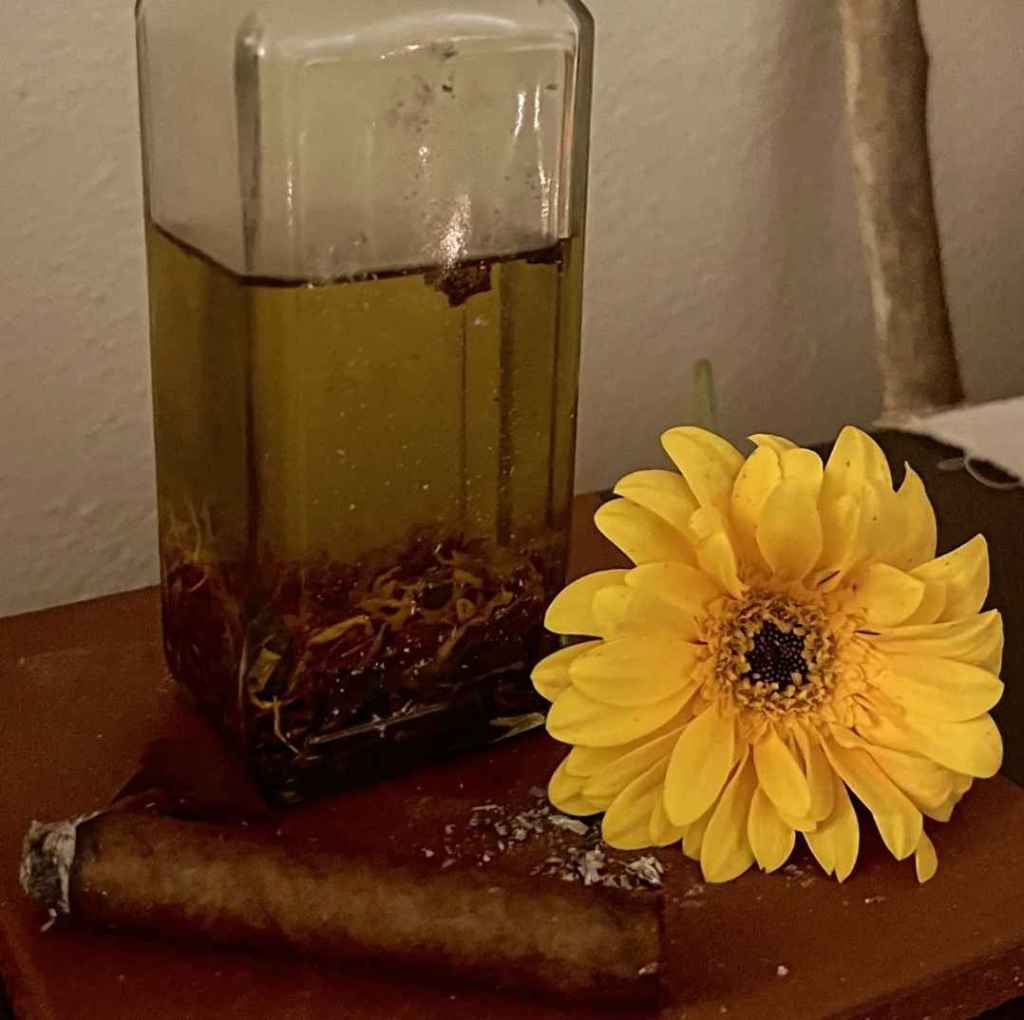

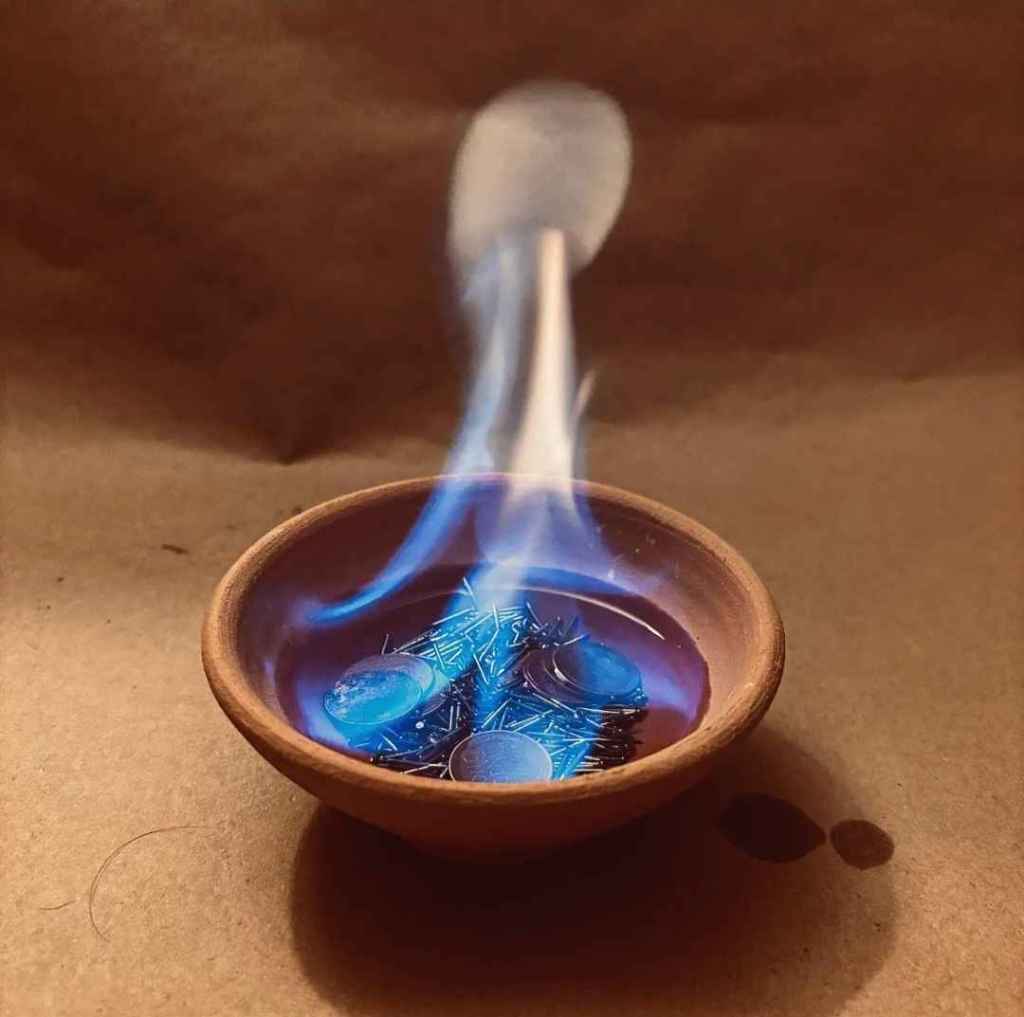


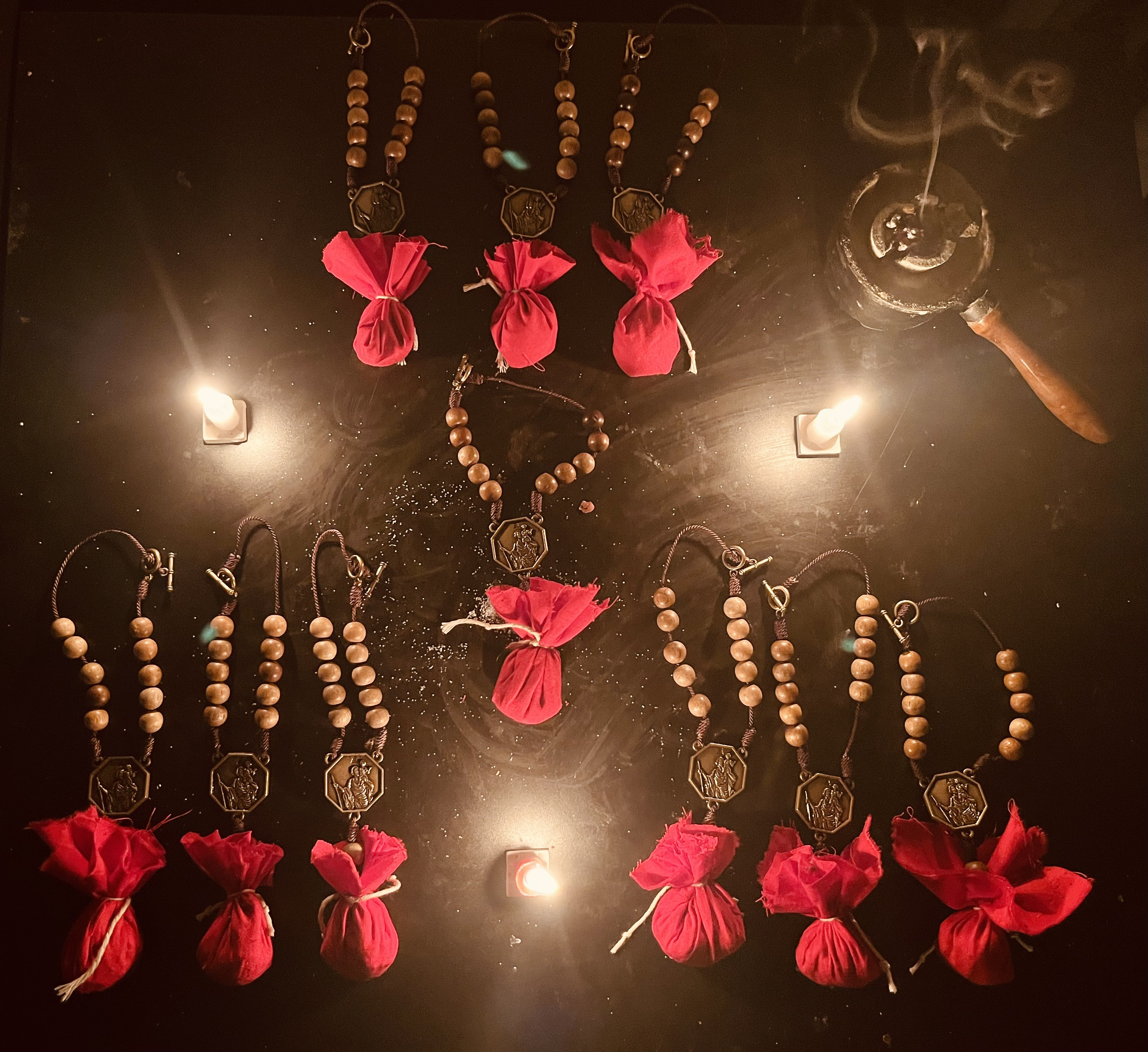
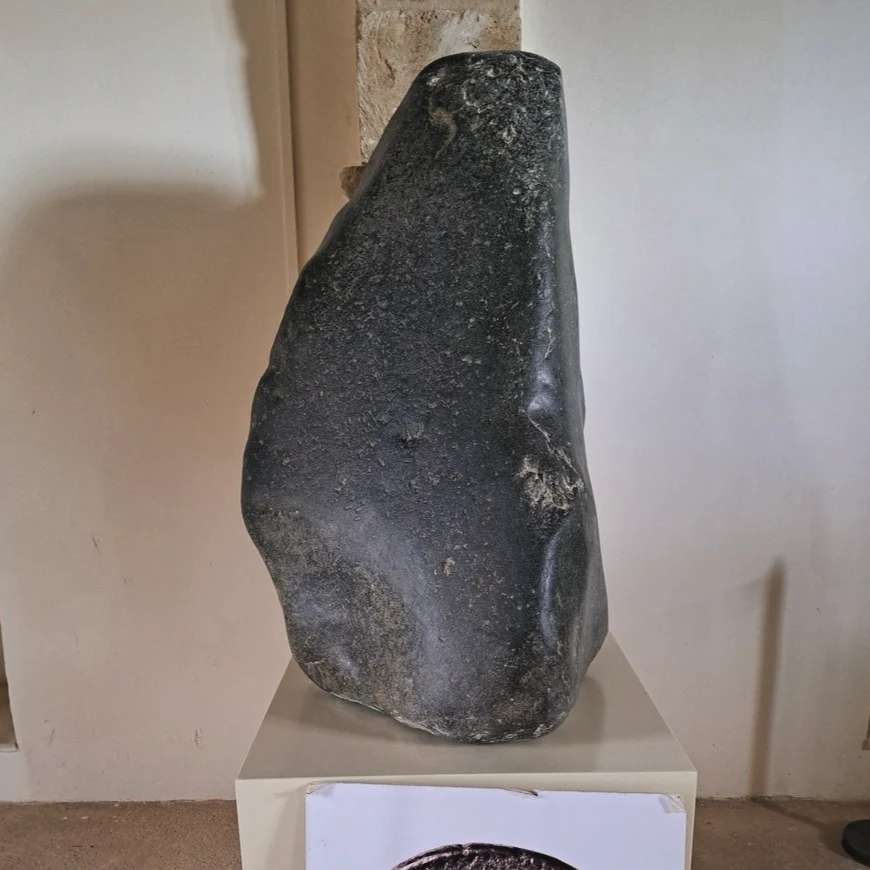


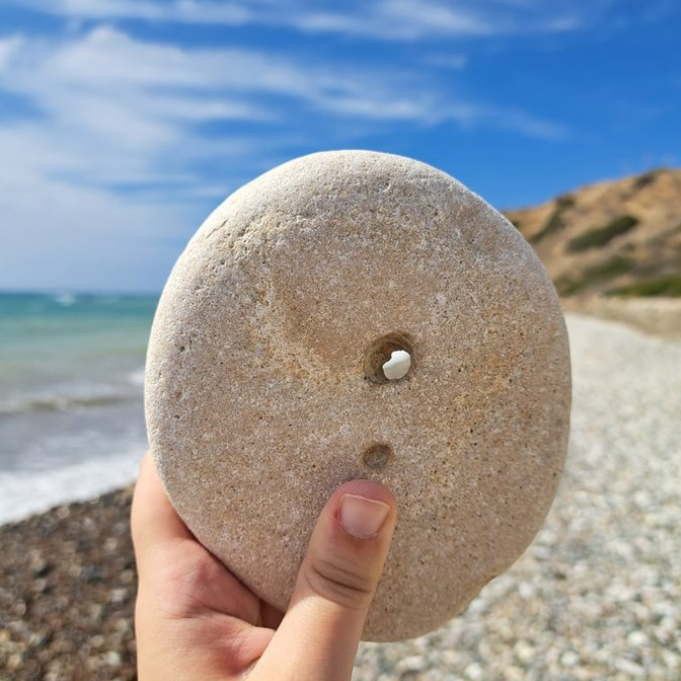
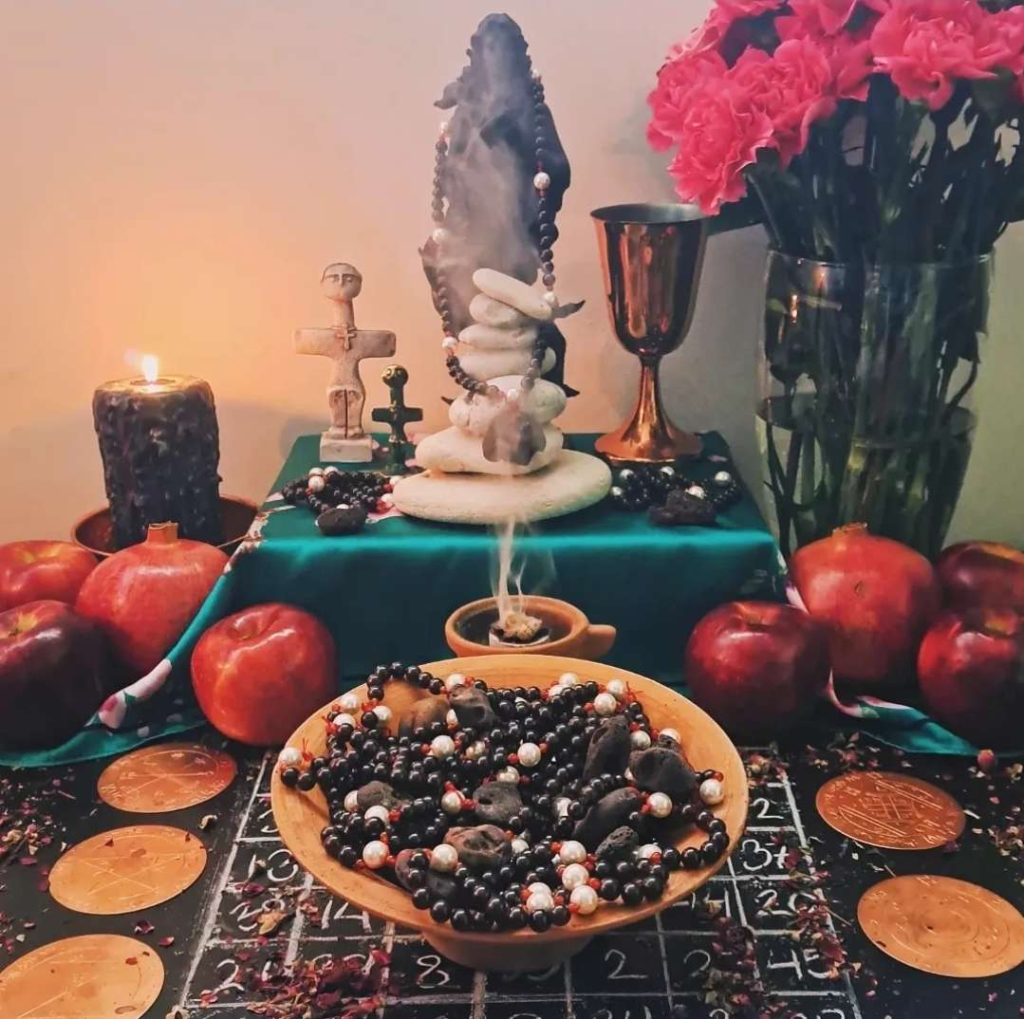


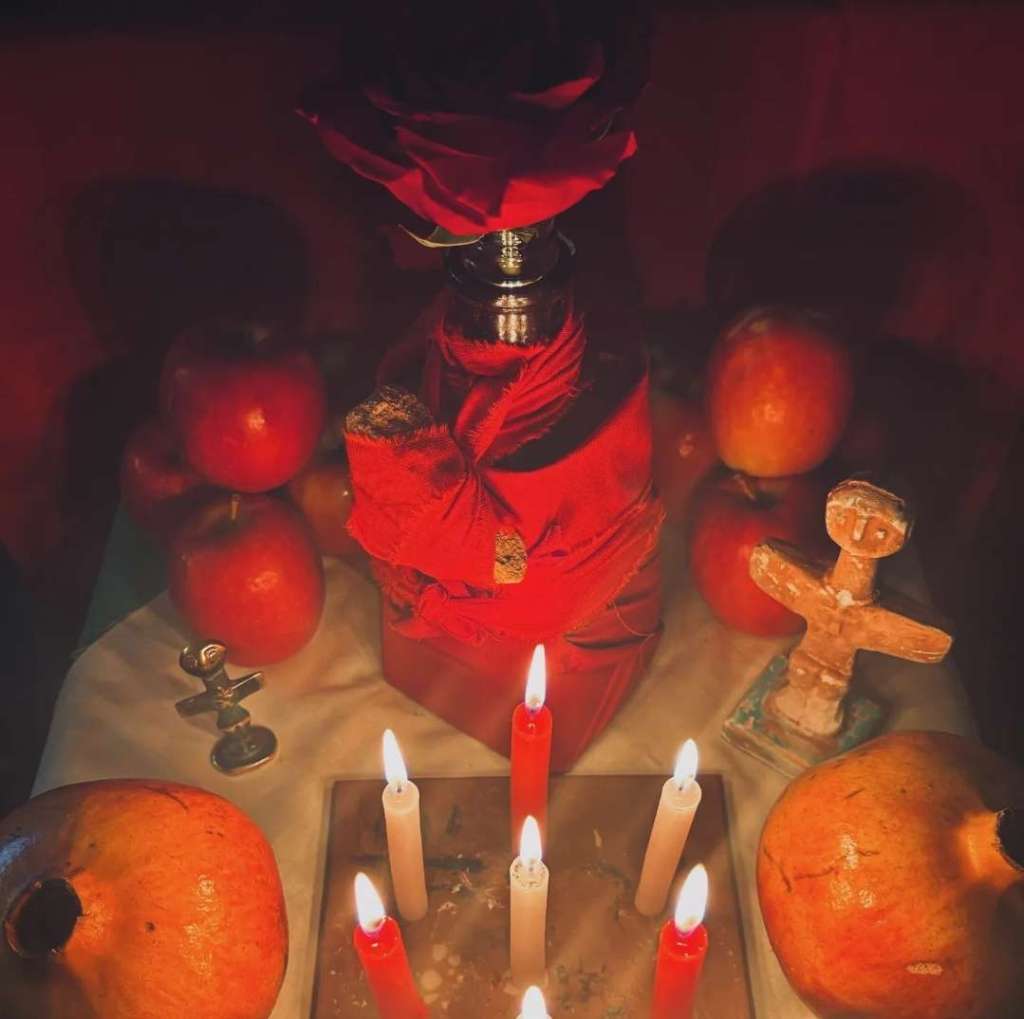


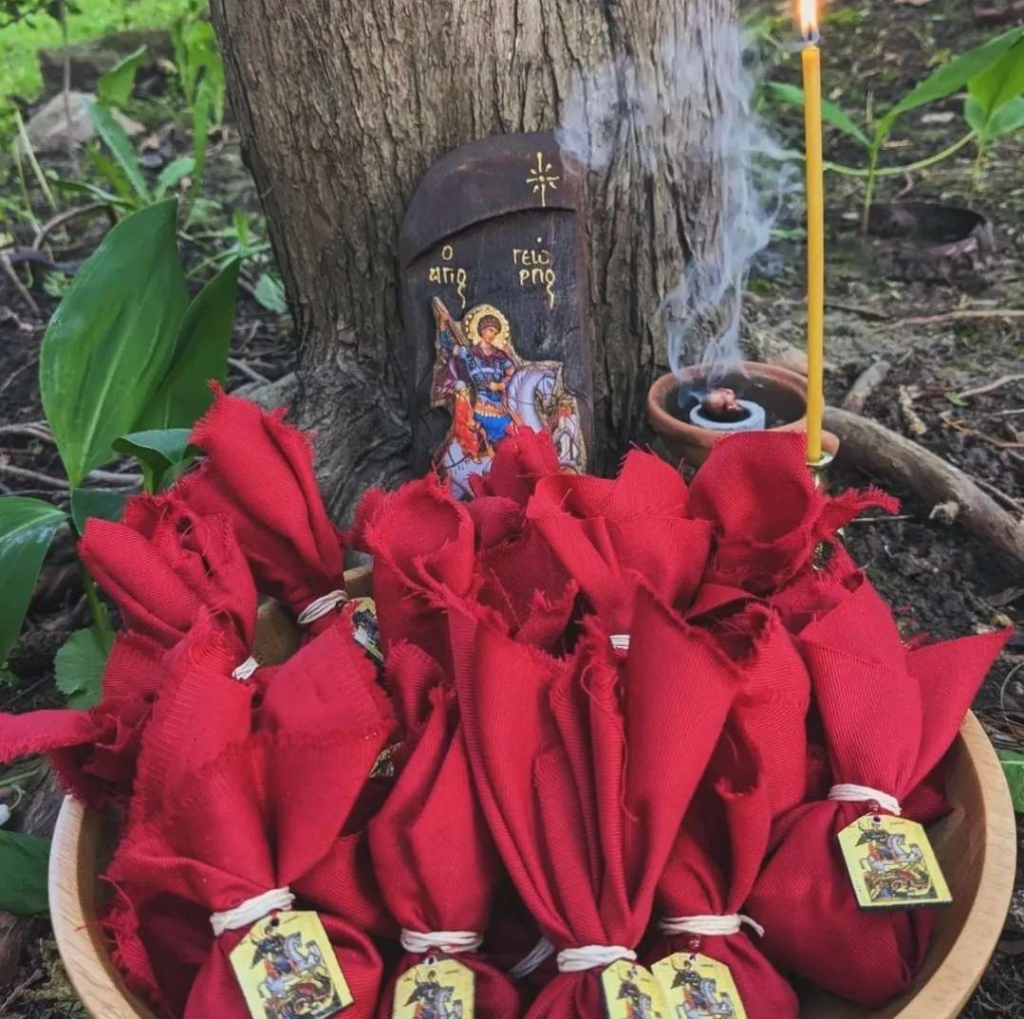
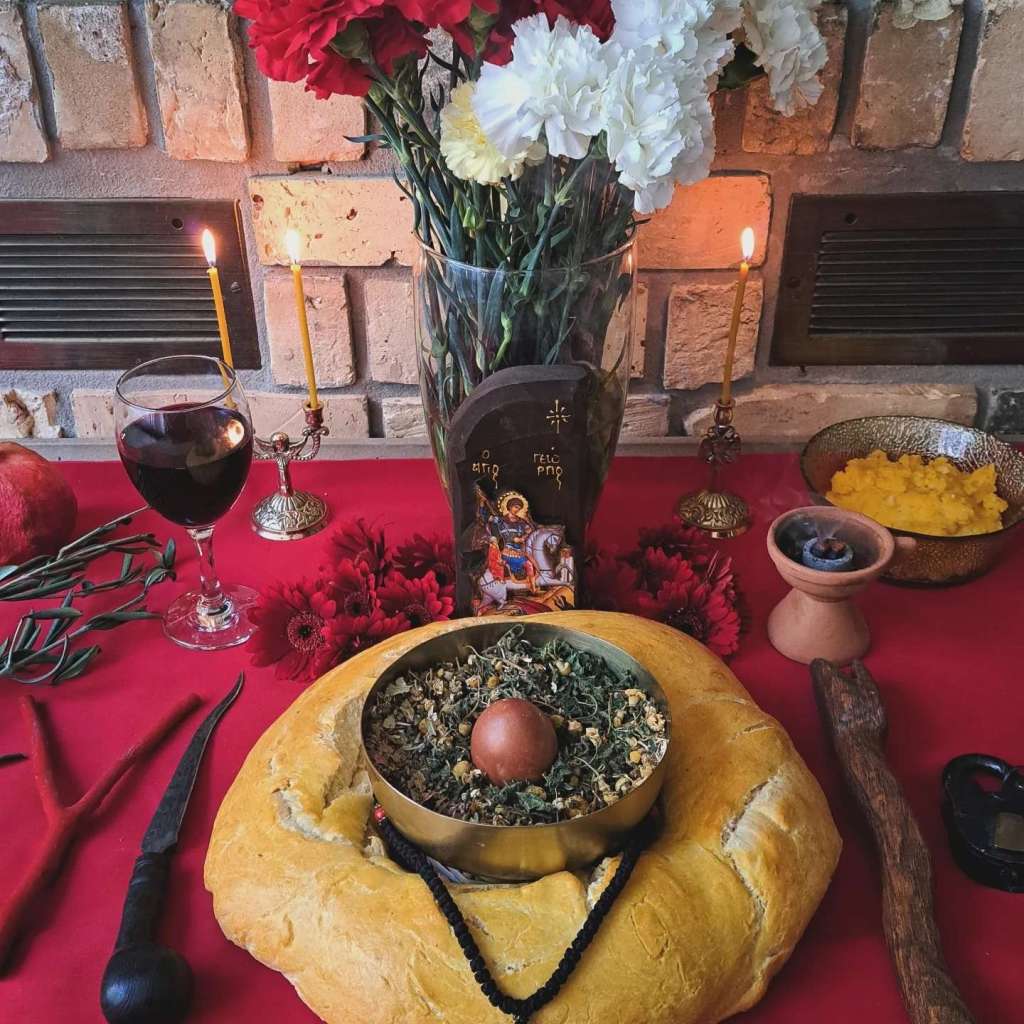
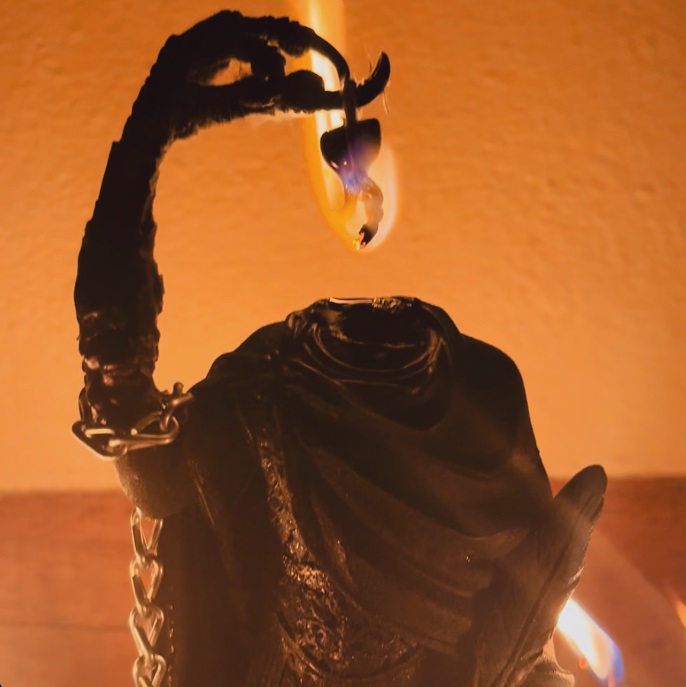

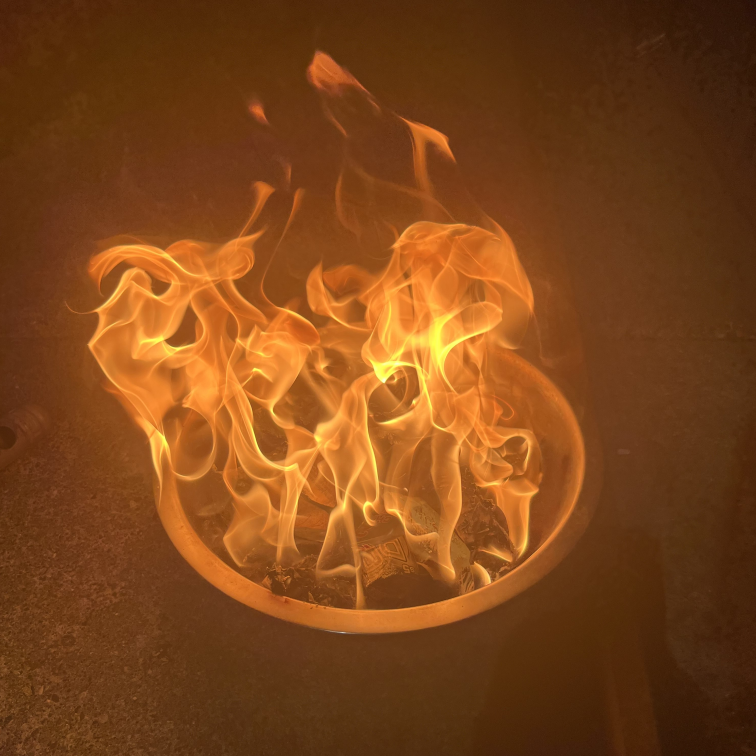

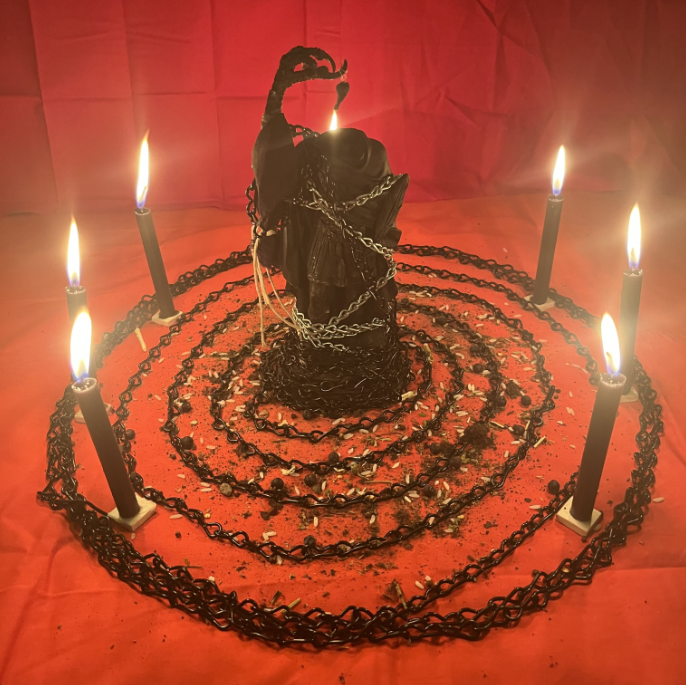

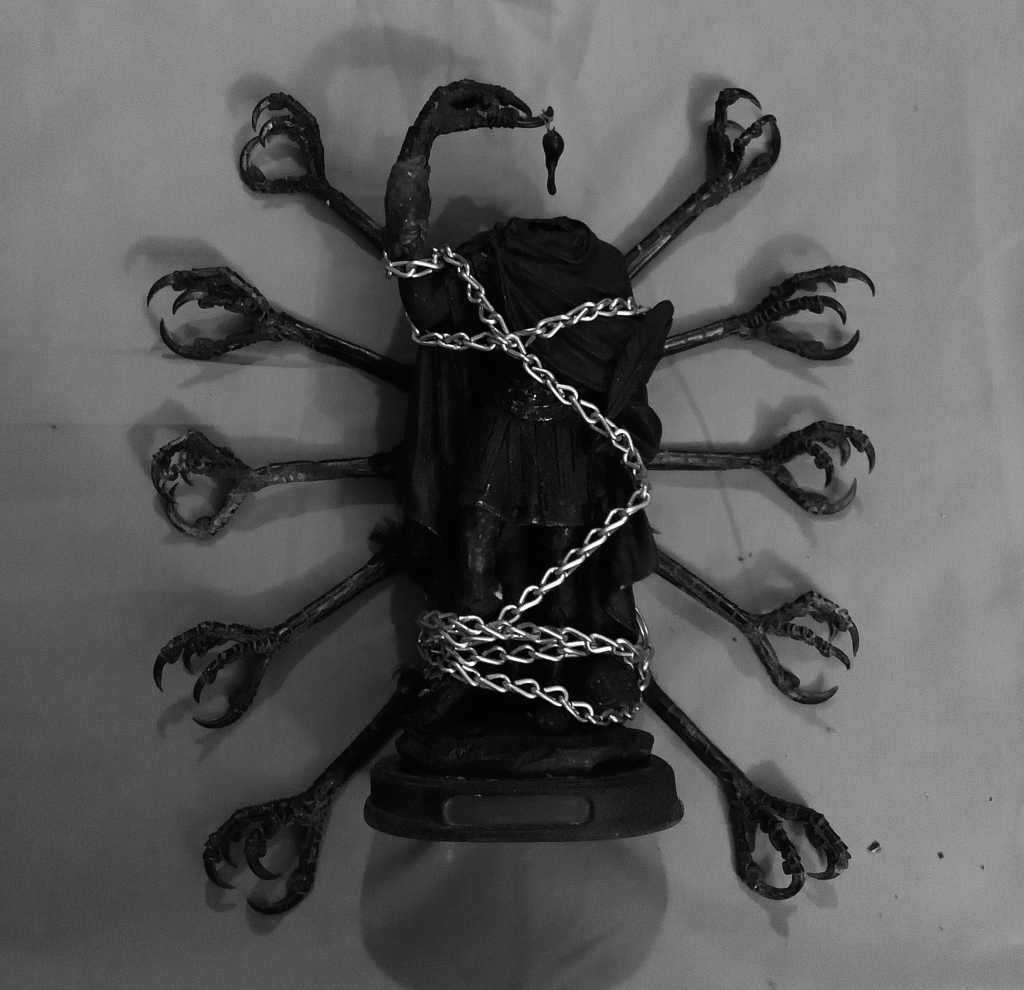


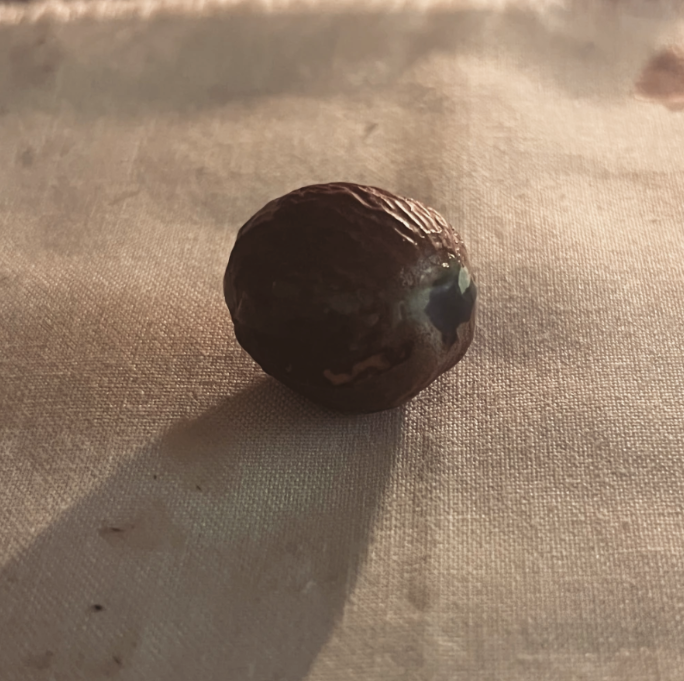


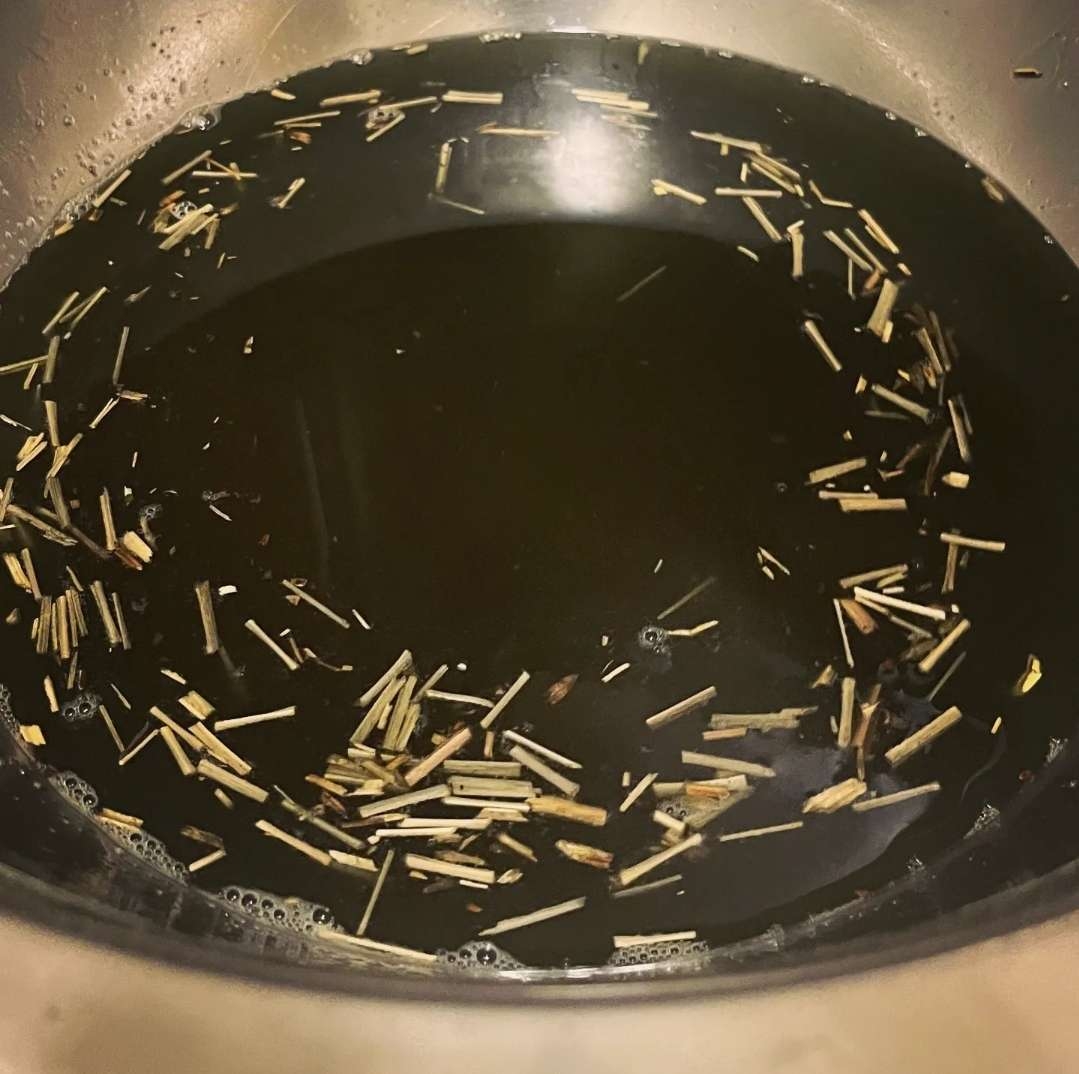
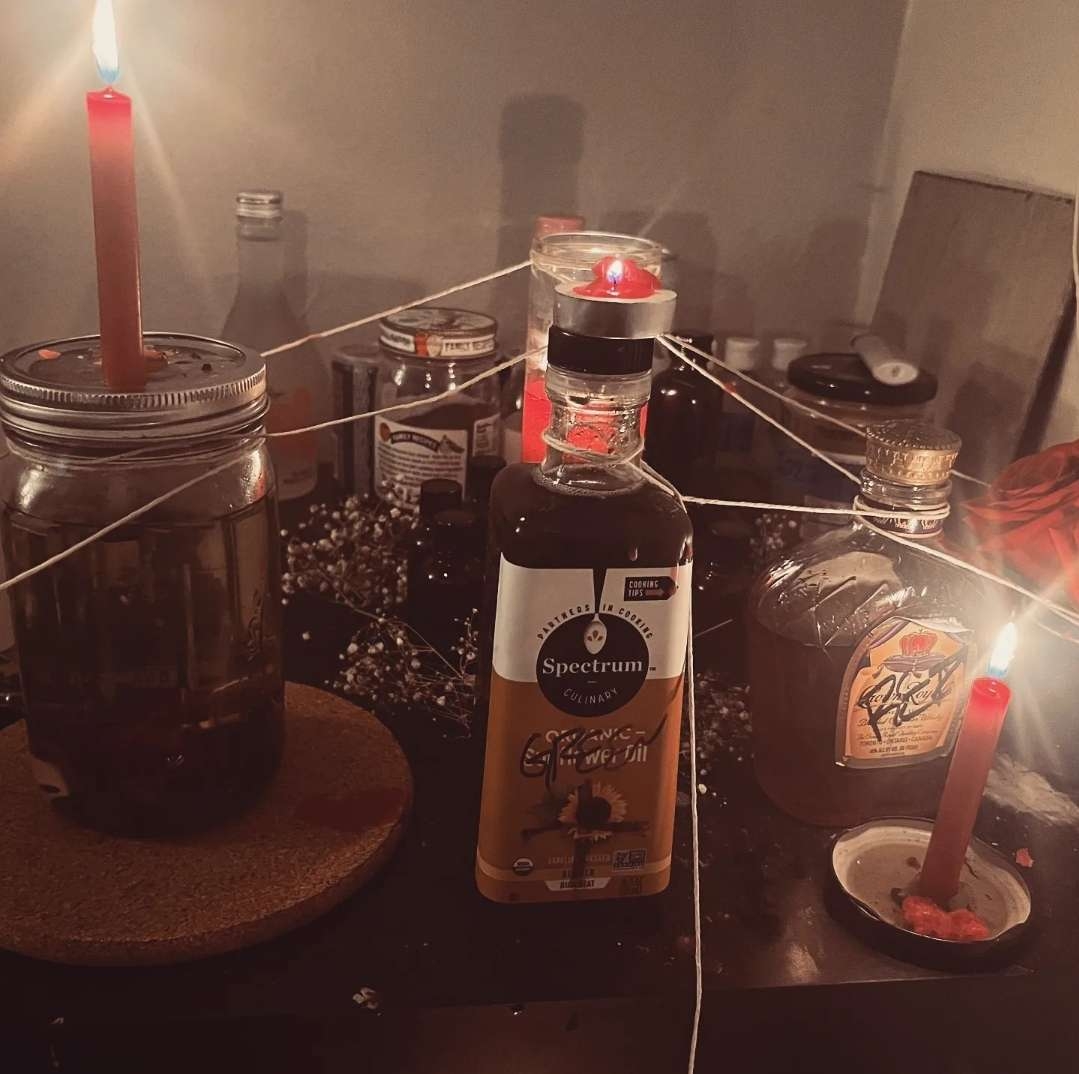

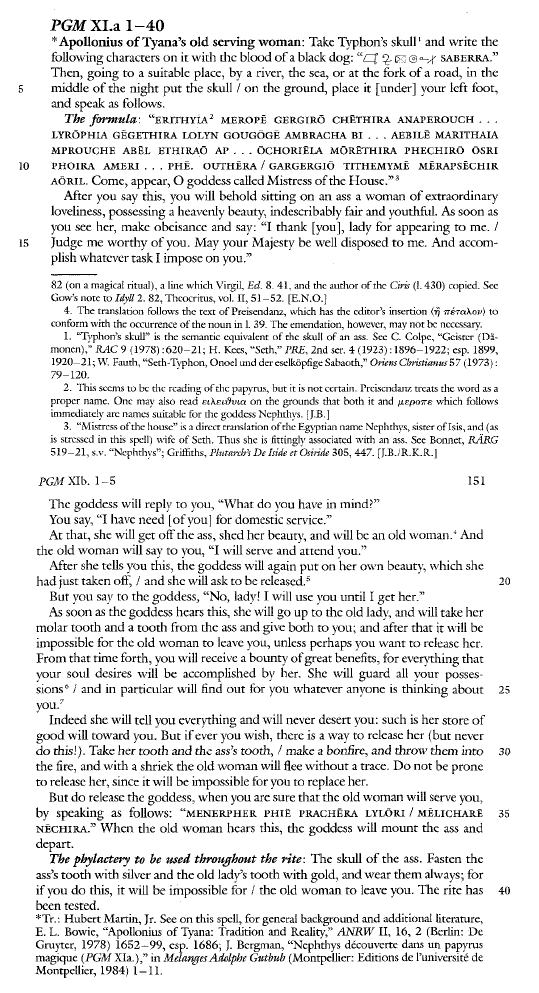
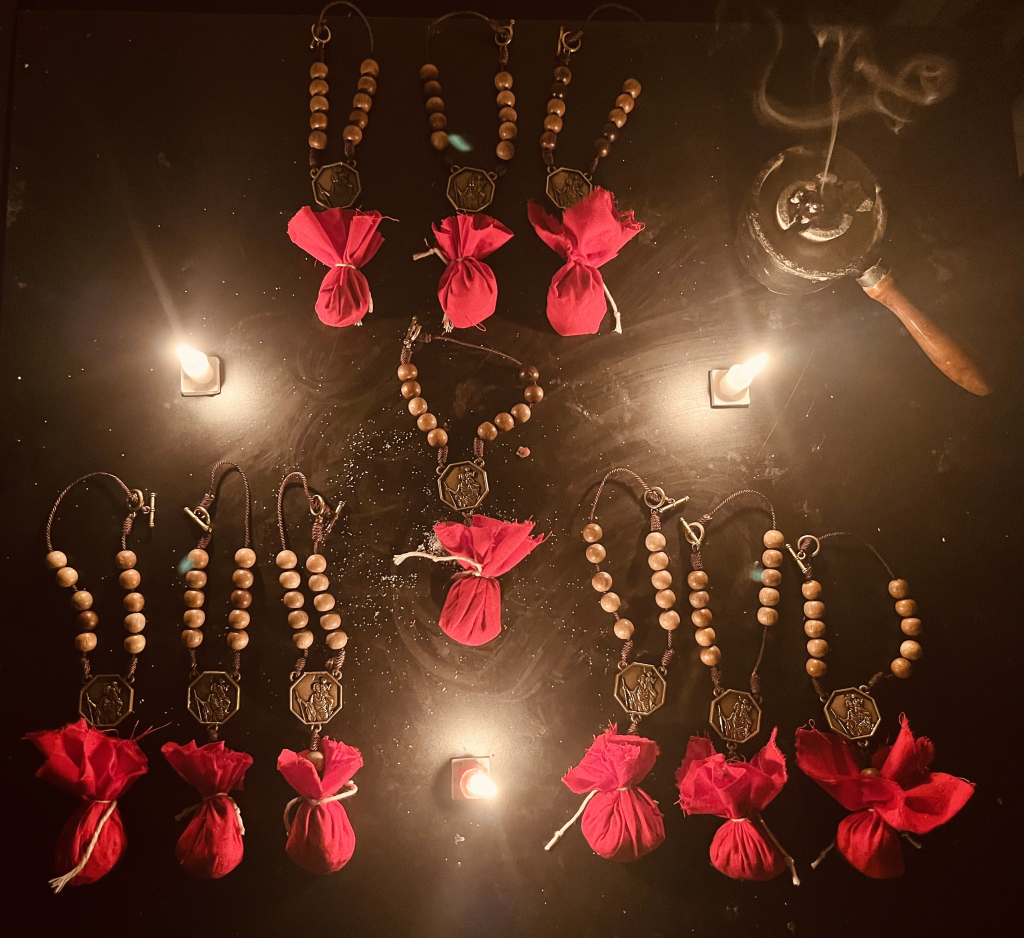
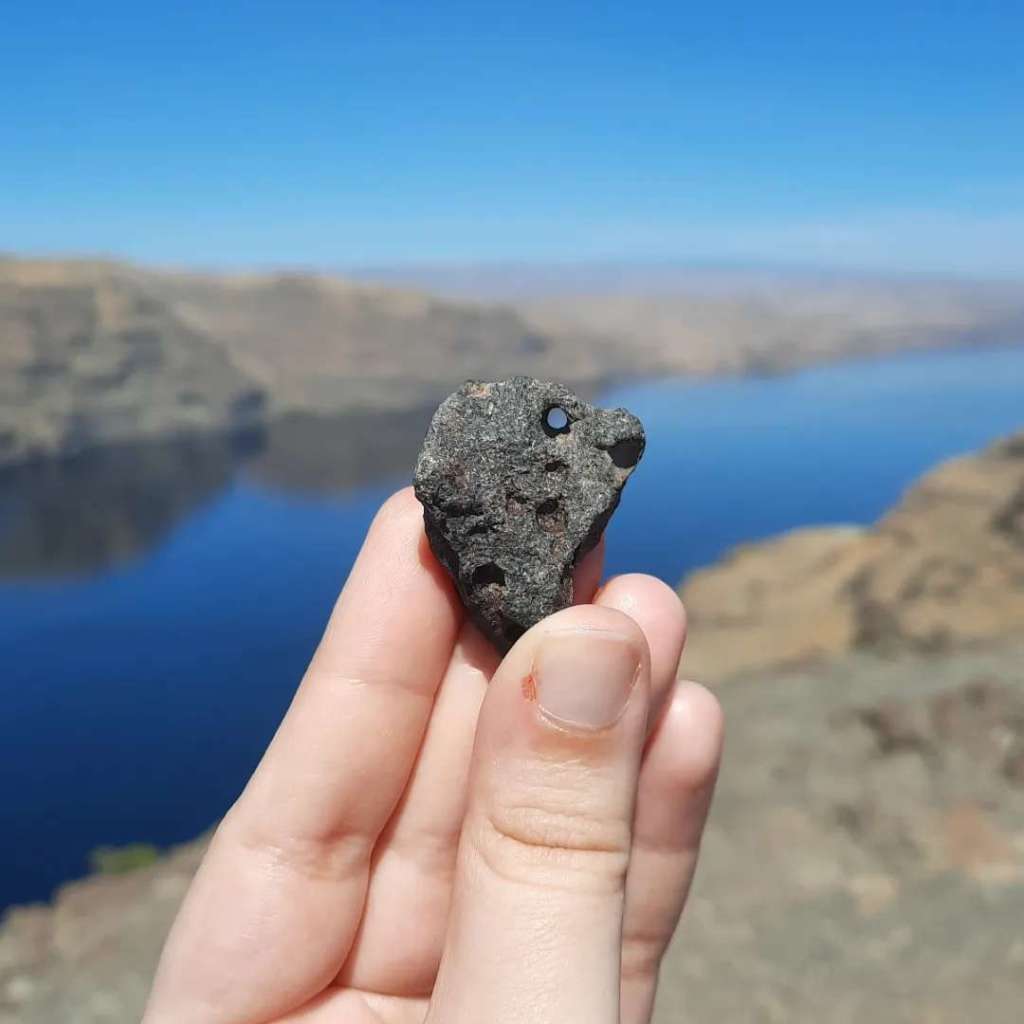
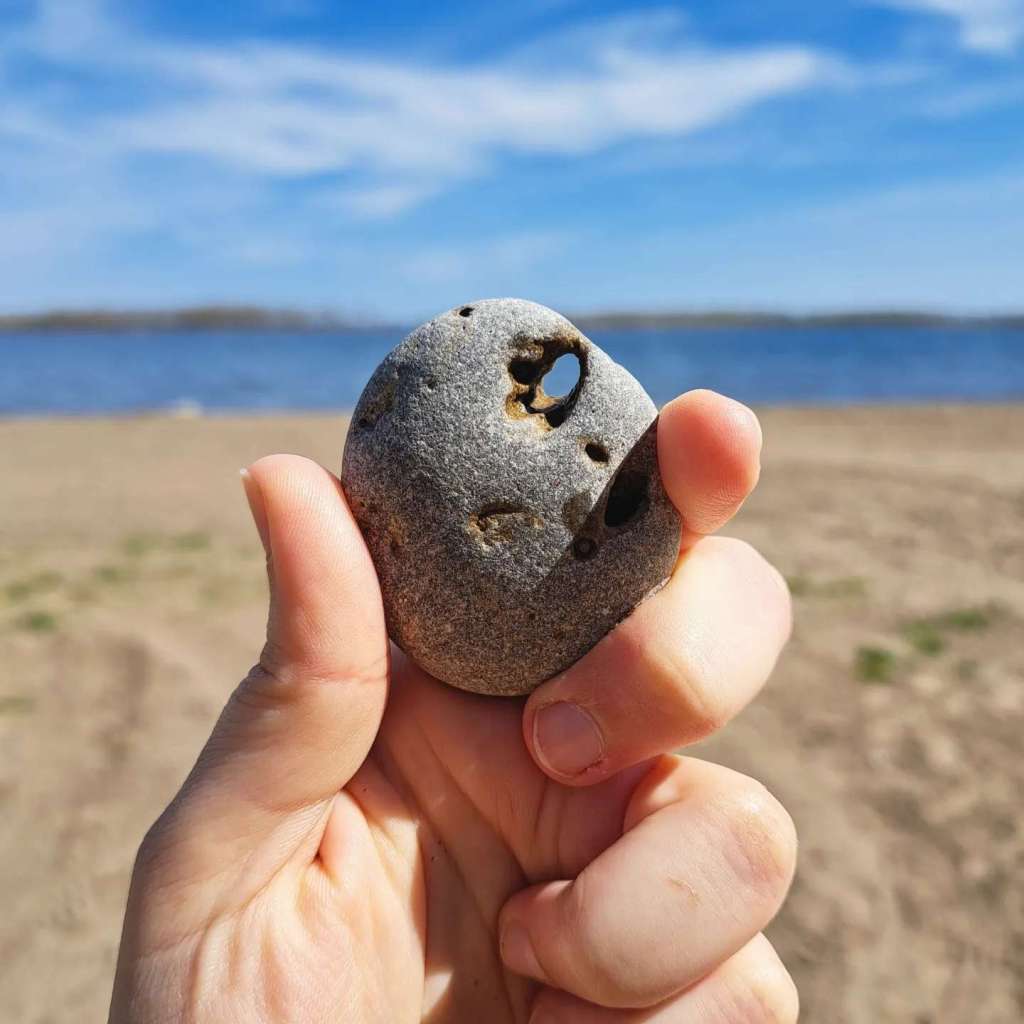
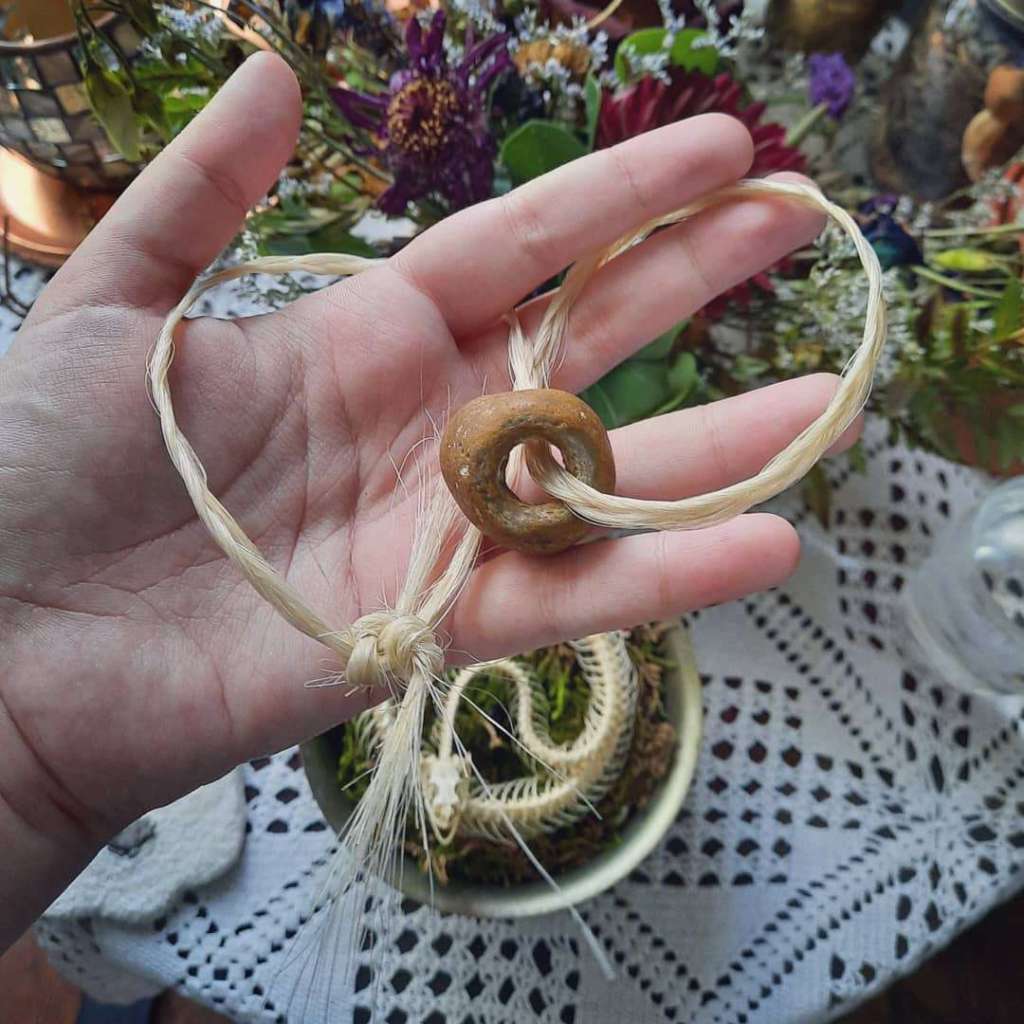
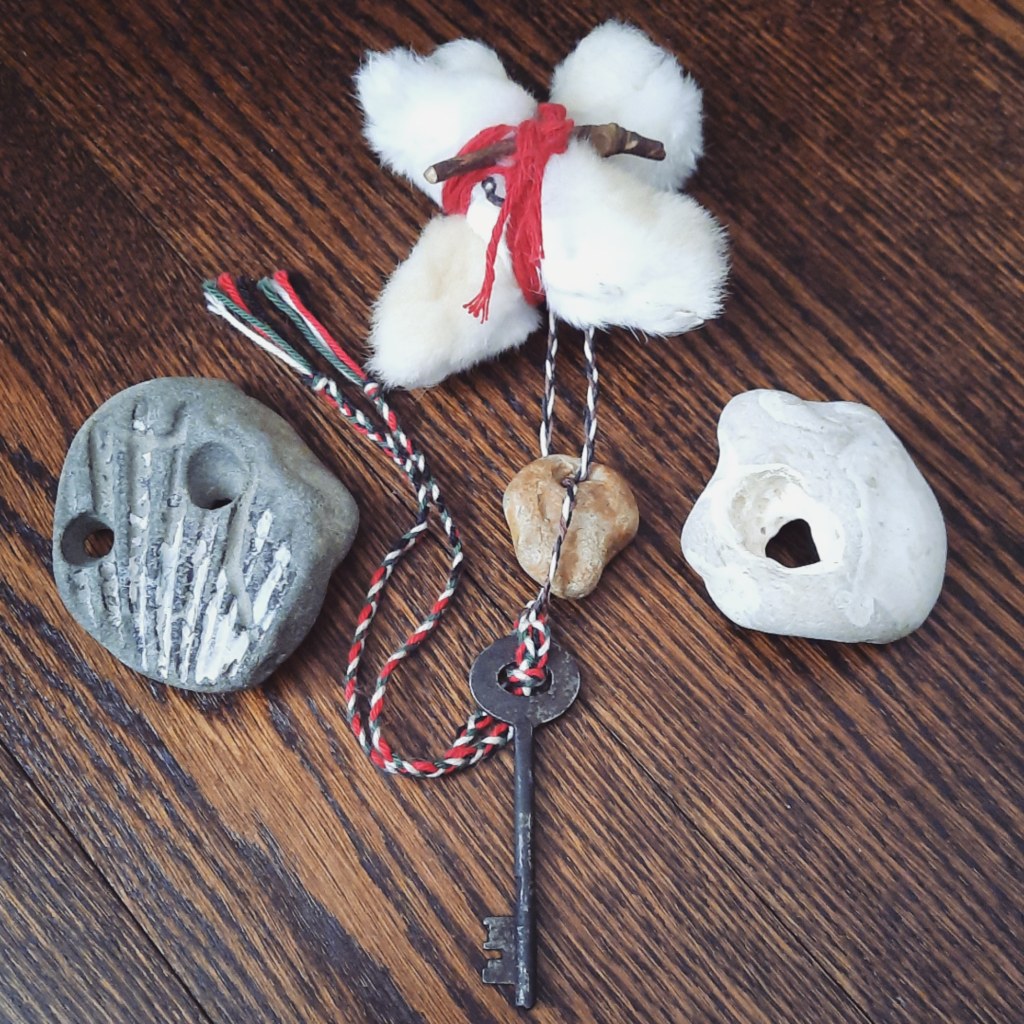
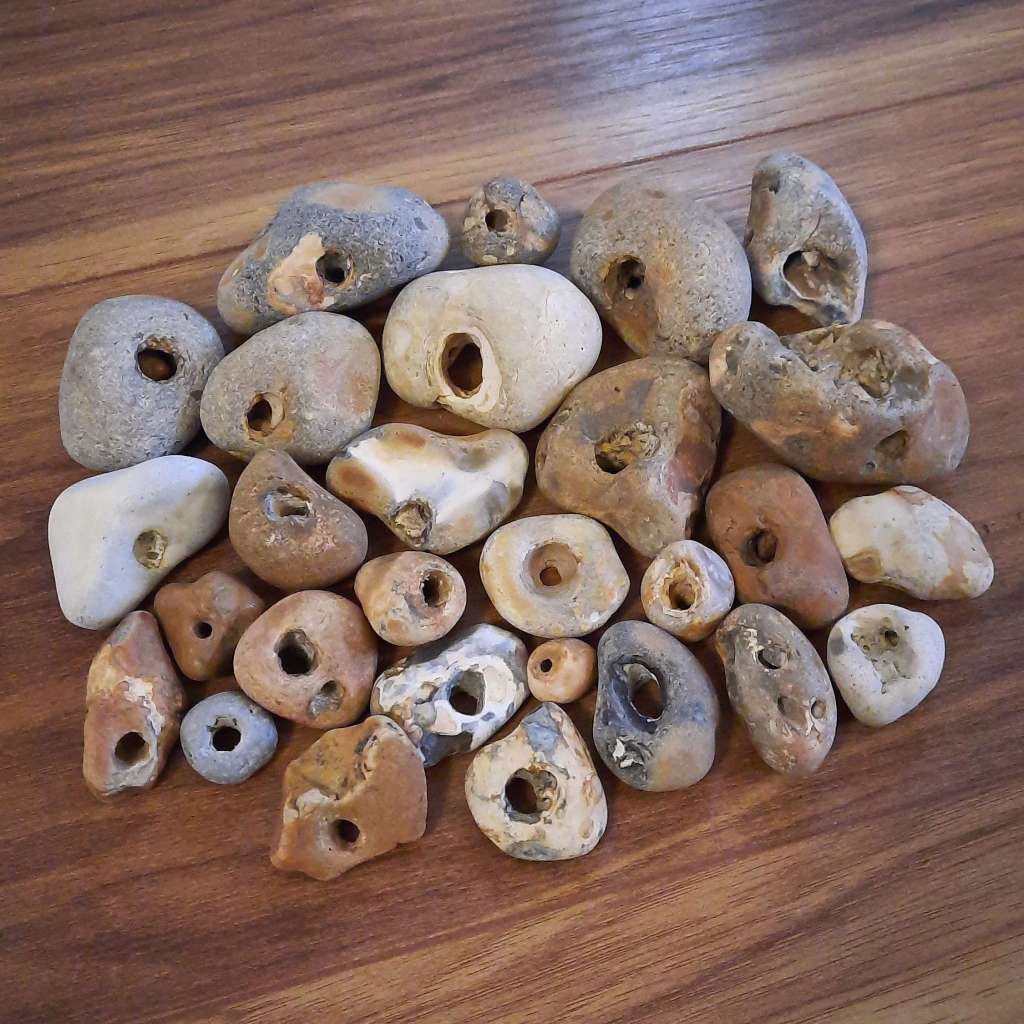
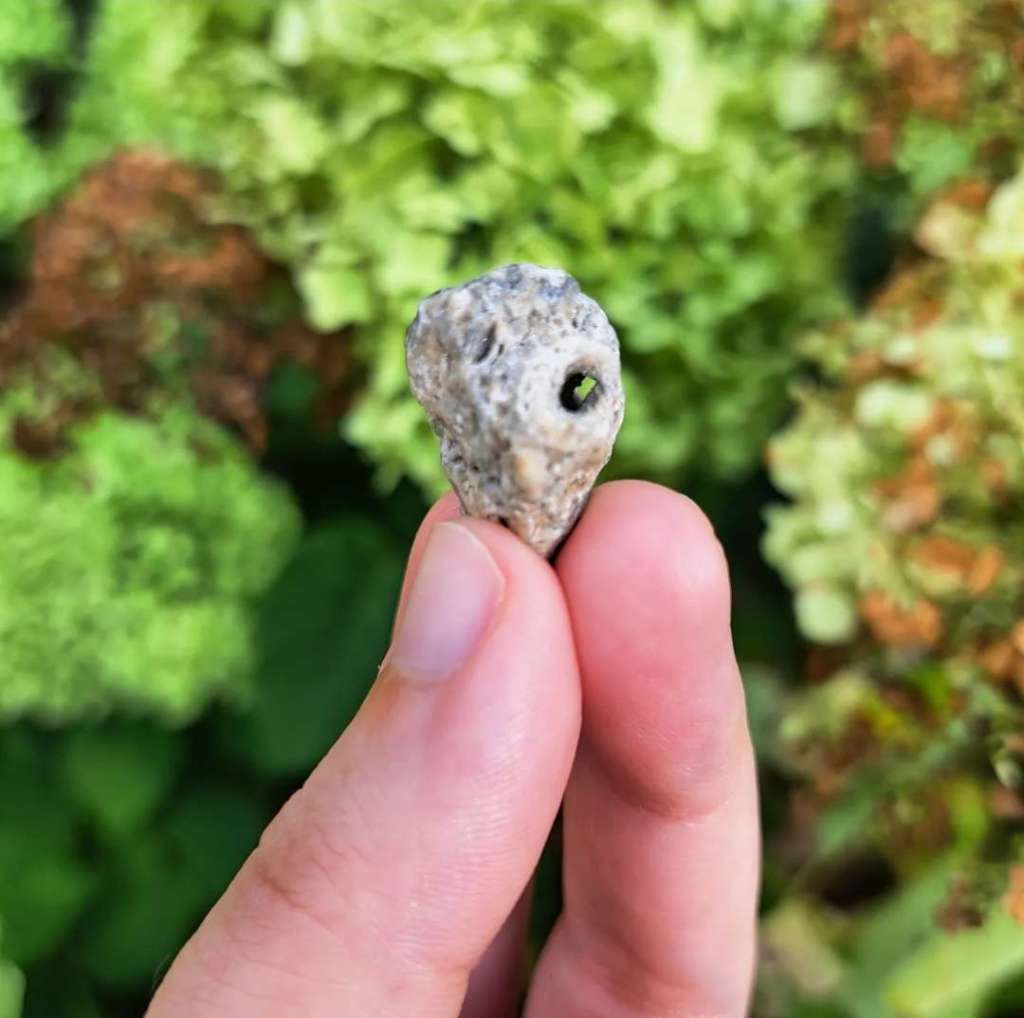
 With Cunning & Command